
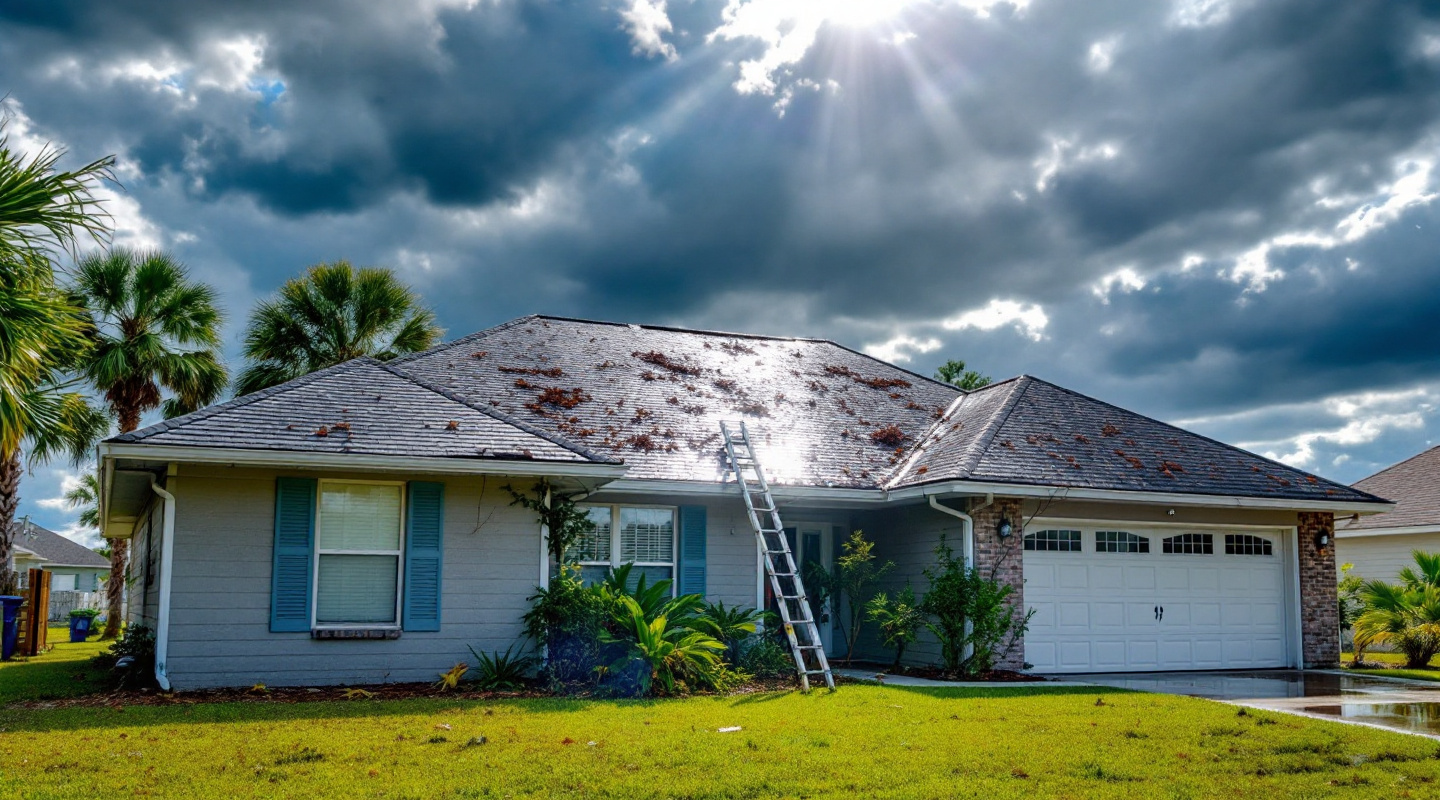
The Storm Has Passed — Now the Clock Starts
A fast-moving storm just tore through your neighborhood. Maybe you heard something hit the roof. Maybe you’re already seeing water stains spreading across your ceiling. The adrenaline fades fast, and suddenly you’re standing in your living room trying to decide what to do first — call your insurance company, call a roofer, or just wait and see if it’s really that bad.
Waiting is the one option that almost always makes things worse. South Carolina storms — especially the severe thunderstorms and tropical systems that batter North Charleston from late spring through fall — can drive water through the smallest breach in minutes. A missing shingle or a cracked ridge cap that looks minor from the ground can allow hundreds of gallons of water into your attic before the next rain even arrives.
The good news: there’s a clear sequence of steps that protects both your home and your insurance claim. Follow it in order, and you’ll be in the strongest possible position. Skip steps or do them out of sequence, and you risk losing money you were entitled to recover.
Step One: Stay Safe and Do a Ground-Level Assessment
Don’t Go on the Roof Yourself
The first instinct after a storm is to climb up and take a look. Resist it. Storm-damaged roofs can have compromised decking, hidden soft spots, and slippery debris that aren’t visible from the ladder. Every year, homeowners are seriously injured doing exactly this. A professional roofer has the safety equipment, the training, and — critically — the experienced eye to spot damage that a homeowner will miss entirely.
From the ground, do a slow walk around the full perimeter of your house. Look for missing or visibly shifted shingles, granule buildup in your gutters or downspout outlets, dented flashing around chimneys or vents, and any debris that landed on the roof surface. Check inside your attic if it’s safe to access — look for daylight through the decking, wet insulation, or active dripping.
Photograph Everything Before Anyone Touches It
This step is non-negotiable. Insurance adjusters are trained to look for evidence that damage existed before a storm, or that it was worsened by delayed action. Your timestamped photographs from immediately after the storm are your single strongest piece of evidence that the damage is storm-related and documented at the point of loss.
Shoot wide angles to establish context, then move in tight on every area of visible damage. Capture your gutters, your downspouts, the ground around your home’s perimeter, and any interior water damage. If you have hail damage, photograph a measuring tape next to the largest hailstone you can find — hail size matters significantly to insurance adjusters, and anything above one inch in diameter typically triggers full replacement coverage on most standard policies.
Step Two: Emergency Roof Repair Comes Before the Insurance Call
Why Tarping First Is the Right Call
This surprises most homeowners, but emergency roof repair — specifically getting a professional tarp installed — should happen before your insurance adjuster sets foot on your property. That’s not a workaround; it’s actually what most homeowner policies require. Nearly every standard policy includes a clause obligating you to take reasonable steps to prevent further damage after a loss event. If you skip tarping and a second rainstorm causes additional water intrusion, your insurer may deny the subsequent damage as a separate, preventable loss.
A properly installed emergency tarp isn’t just throwing a blue poly sheet over the hole. Done right, it’s a reinforced polyethylene tarp rated for at least 10 mils thickness, secured with wood battens screwed into the decking — not just draped over the ridge. This approach can keep a damaged section watertight through multiple additional rain events while the claim and permanent repair process plays out. Expect to pay between $300 and $700 for a professional emergency tarping service on a standard residential roof, depending on slope, access, and the size of the affected area.
Document the Tarp Installation Too
Once the tarp is in place, photograph that as well. Your documentation trail now shows the pre-tarp damage and the mitigation steps you took. This is exactly what an insurance adjuster wants to see, and it removes any question about whether you took your mitigation obligation seriously.
Step Three: File Your Claim With the Right Information in Hand
What to Have Ready Before You Call
When you contact your insurance company, have your policy number, the date and approximate time of the storm event, your ground-level photographs, and a written note of any damage you observed inside the home. If a local weather service or news report documented the storm — which is common with named tropical systems and severe thunderstorm warnings in the North Charleston area — note that too. Official weather records corroborating storm activity in your zip code can strengthen your claim significantly.
Ask your insurer specifically about your Actual Cash Value versus Replacement Cost Value coverage. Many homeowners don’t realize these are different until the check arrives. ACV policies depreciate your roof based on age and condition, meaning a 15-year-old asphalt shingle roof might only yield a fraction of replacement cost. RCV policies pay the full cost to restore the roof to like-new condition, with the depreciation recovered after repairs are complete and receipts are submitted. Knowing which you have changes how you negotiate and what you should expect.
The Adjuster Visit: What Actually Happens
An insurance adjuster will schedule an inspection, typically within 5 to 14 days of a major storm event — longer after widespread regional damage when adjusters are stretched thin. You have every right to have your roofer present during the adjuster’s inspection. A qualified roofing contractor can point out damage the adjuster might otherwise miss or minimize, particularly with hail impacts on shingles, which can be subtle but cause significant granule loss that accelerates deterioration over the following 12 to 24 months.
If the adjuster’s estimate feels low or excludes damage you know is there, you can request a re-inspection or bring in a public adjuster. You don’t have to accept the first number.
How to Spot Storm-Chasing Contractors Before They Spot You
After any significant storm in North Charleston, out-of-state roofing crews arrive within 24 to 48 hours. They canvas neighborhoods, knock on doors, and often make aggressive offers — sometimes promising to handle your entire claim for free, or asking you to sign documents before you’ve spoken to your insurer. These “storm chasers” are one of the most persistent problems the roofing industry faces, and homeowners who sign with them often end up with substandard repairs and contractors who vanish when problems arise six months later.
A few things worth knowing: South Carolina requires roofing contractors to be licensed through the SC Contractors’ Licensing Board. The specific license class that covers residential roofing is a Specialty Contractor license in the Roofing specialty, or a General Contractor license. You can verify any contractor’s license status at the SC LLR website before signing anything. An out-of-state crew that can’t produce a current SC license should not be on your roof.
Also verify that the contractor carries both general liability insurance and workers’ compensation. If a worker is injured on your property and the contractor lacks workers’ comp coverage, you could be held liable. Ask for certificates of insurance naming you as an additional insured, and call the insurer directly to confirm the policy is active — a 60-second phone call that could save you from significant legal exposure.
The most reliable indicator of a trustworthy local contractor is longevity. A company with roots in your region, established supplier relationships, and a track record of completed residential roof repair projects locally has far more to lose by doing bad work than a crew that arrived last Tuesday and will be gone by next month.
The 48-Hour Summary: Right Order, Right Outcome
The sequence matters more than any single step. Safety assessment and documentation come first, before anything is touched. Emergency tarping comes next — protecting the structure and satisfying your policy’s mitigation requirement simultaneously. Then you call your insurer, armed with photographs, dates, and a professional assessment in hand. Your adjuster visit goes better when your contractor is present. And you vet every contractor thoroughly before signing anything.
Hixons Roofing has worked alongside North Charleston homeowners through countless storm seasons, and the cases that go smoothest are always the ones where homeowners followed this sequence without improvising. The cases that get complicated — denied claims, underpaid settlements, repairs that don’t hold — almost always trace back to one step done out of order or skipped entirely.
Good roof repair after storm damage isn’t just about patching what broke. It’s about doing it in a way that protects your warranty, satisfies your insurer, and leaves you with a roof that performs for the next decade. Shortcuts taken in the first 48 hours have a way of showing up on your roof — and in your wallet — years later.
Written by the Hixons Roofing team — licensed South Carolina roofing contractors with years of hands-on experience in storm damage repair and emergency roof repair across the Lowcountry.
If your roof took a hit and you need a straight assessment from a local contractor who knows this region, contact Hixons Roofing at hixonsroofing.com to schedule your inspection.