
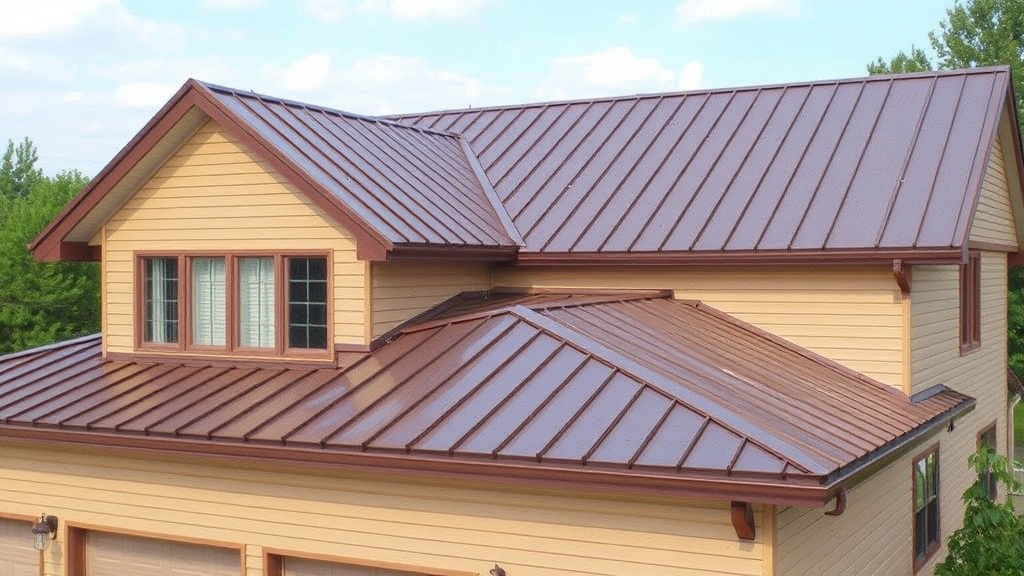
A Roof That Outlives Three Asphalt Replacements — Without the Triple Cost
A standard asphalt shingle roof lasts roughly 20 to 25 years under normal conditions. A properly installed residential metal roof? Expect 40 to 70 years, depending on the material and coating. Do that math once and the economics shift considerably — especially when you factor in roofing cost over the full life of a home.
Metal roofing has also changed dramatically from the corrugated barn panels of decades past. Today’s residential options include sleek standing seam systems, wood-grain-textured steel that mimics cedar shake, and exposed-fastener panels engineered specifically for homes. Choosing the right one takes more than a quick Google search — it takes understanding what each system actually does on a real house in a real climate.
This guide covers everything: system types, honest cost ranges, installation timelines, what can go wrong, and what to look for in a qualified metal roofer before you sign anything.
The Three Main Types of Residential Metal Roofing
Standing Seam: The Premium Choice
Standing seam metal roofing is the system most architects specify when they want longevity without compromise. The panels interlock at raised seams, leaving zero exposed fasteners on the roof surface. That design matters enormously — exposed screws are the most common point of failure on any metal roof, and standing seam eliminates them entirely from the field of the panel.
The system also allows for thermal expansion. Metal moves with temperature changes, and standing seam panels float in their clips rather than being rigidly screwed down. On a South Carolina summer day when a dark roof surface can reach 160°F, that movement accommodation prevents the oil-canning and fastener pull-through that shortens cheaper systems.
Standing seam is the most expensive residential metal roofing option, typically running $12 to $18 per square foot installed for steel, and higher for aluminum or copper. On a 2,000 square foot home in the Columbia or Charleston area, you’re looking at a total investment of $24,000 to $36,000 depending on roof complexity and pitch.
Tuff Rib and Exposed-Fastener Panels: The Value Option
Tuff Rib is a corrugated-style exposed-fastener panel that’s been a staple of agricultural and residential metal roofing for decades. The panels are screwed directly through the face of the metal into the deck below, which means the fastener washers are the system’s primary defense against water intrusion.
This isn’t inherently a problem — when installed correctly with quality washers and proper lap sealing, Tuff Rib performs well. The issue is that exposed fasteners require periodic inspection. Those washers degrade faster than the steel itself, especially in the UV-intense summers common to Georgia and South Carolina. Most installers recommend inspecting fasteners every five to seven years and replacing degraded washers before they allow moisture in.
The upside is cost. Tuff Rib typically runs $5 to $9 per square foot installed — a meaningful difference on a full roof replacement. For outbuildings, garages, and budget-conscious residential projects, it remains a solid choice when installed by someone who understands its maintenance requirements.
TimberSteel and Steel Shake: When Aesthetics Drive the Decision
TimberSteel and similar stone-coated or embossed steel shingle products bridge the gap between traditional aesthetics and metal performance. These panels are stamped or coated to replicate cedar shake, slate, or clay tile — and from the street, the resemblance is convincing.
They’re typically installed as interlocking shingle-style panels, making them more forgiving on complex roof geometries than large-format standing seam. Installed costs generally fall in the $10 to $15 per square foot range, positioning them between Tuff Rib and premium standing seam.
One thing to verify before choosing any steel shake product: the coating warranty versus the panel warranty. Some manufacturers offer 50-year panel warranties but only 30-year coating warranties. Once a coating fades or chalks, you’re not getting the color you paid for — even if the roof is still technically waterproof.
What Residential Metal Roofing Actually Costs in 2026
Breaking Down the Real Numbers
Roofing cost depends on four main variables: material choice, roof complexity, local labor rates, and whether tear-off is required. A simple gable roof on a single-story home is dramatically cheaper to work on than a multi-plane hip roof with dormers, skylights, and multiple pipe penetrations.
For a typical 1,800 to 2,200 square foot home in the Aiken or Augusta area, here’s a realistic breakdown by system type:
- Tuff Rib / Exposed-fastener panel: $9,000 – $18,000 installed, including tear-off of one existing layer.
- TimberSteel / Steel shake: $18,000 – $30,000 installed, depending on profile and complexity.
- Standing seam: $22,000 – $40,000+ installed — higher on steep or complex rooflines.
Those ranges account for labor, materials, underlayment, flashing, and disposal. They do not account for structural repairs discovered during tear-off — a common reality on older homes where decking has softened around penetrations or along rafter tails. Budget an additional $500 to $2,500 for minor deck repairs on any older home.
The Energy Efficiency Factor That Changes the ROI Calculation
Many homeowners focus on purchase price and overlook operating cost. An unpainted or dark metal roof absorbs heat. A light-colored or coated metal roof — particularly one with a reflective finish rated by the Cool Roof Rating Council — can reduce attic temperatures meaningfully during peak summer heat.
In climate zones like coastal South Carolina, DOE research has shown that reflective roofing can reduce cooling loads, which translates to real HVAC savings over time. Homeowners with poor attic insulation often see the biggest gains. Ask your contractor about Kynar-coated panels and what the substrate reflectance rating is — that number matters more than the color name on the sample card.
Installation: What to Expect and When Things Go Wrong
Timeline and Disruption
A residential metal roofing installation on a standard home typically takes two to four days for a straightforward design and a full crew. Standing seam on a complex roof with multiple penetrations can stretch to five or six days. Exposed-fastener panel work tends to move faster.
The factors that extend timelines: unexpected deck rot discovered during tear-off, weather holds, special-order materials that weren’t staged on-site before work began, and intricate flashing work around chimneys or skylights. Any contractor who guarantees a one-day completion on a full standing seam replacement is either working dangerously fast or hasn’t assessed the job properly.
The Mistakes That Haunt Homeowners Five Years Later
Hixons Roofing has served homeowners across South Carolina and Georgia for years, and the same installation failures show up repeatedly on roofs we’re called to inspect or repair. The most common: improperly sealed ridge caps, missing or undersized valley flashing, and exposed-fastener panels installed with insufficient lap distance between panels.
That last one is subtle but serious. Tuff Rib panels require a specific side-lap overlap — typically one full corrugation. Cutting that short to save material on a steep or complex section creates a capillary path for wind-driven rain. On a coastal home near Charleston where summer storms push water sideways, that shortcut fails fast.
Another issue: installing metal directly over existing shingles without proper ventilation planning. Metal traps heat differently than shingles. Without addressing soffit and ridge ventilation, attic temperatures spike and moisture accumulates — negating the performance benefits you paid for.
Maintaining a Metal Roof Over Its Lifespan
What Actually Needs Attention
Metal roofing’s biggest selling point is low maintenance — but low doesn’t mean zero. The practical maintenance checklist for most residential metal systems includes: annual visual inspection for fastener degradation (on exposed systems), clearing debris from valleys and gutters, checking sealant around penetrations every three to five years, and watching for any galvanic corrosion if dissimilar metals are in contact (copper flashing touching steel panels, for instance).
Scratches and cut edges on Galvalume steel panels should be touched up with zinc-rich paint within a season of installation. Left bare, cut edges oxidize — and while Galvalume’s self-healing properties slow the process, an exposed edge on a panel end that’s in constant contact with moisture will eventually rust through.
How to Find a Qualified Metal Roofer
The residential metal roofing market has attracted a wave of contractors who know shingles but are learning metal on your dime. The difference between a qualified metal roofer and an inexperienced one isn’t always obvious on a quote — but it shows up clearly on the roof within three years.
Ask any prospective contractor three specific questions: What manufacturer training or certification do they hold for the system they’re installing? Can they show you a completed standing seam or TimberSteel project within the last twelve months that you can actually visit or photograph? And who specifically on their crew has installed this system — not just the company, but the crew lead showing up on your job?
Residential roofing contractors in South Carolina must hold a valid state license. Verify it through the SC Labor, Licensing and Regulation board before any contract is signed. A license number on a business card means nothing until you’ve confirmed it’s active, bonded, and not under complaint review. That ten-minute check has saved more than a few local homeowners from significant financial loss.
Making the Final Decision: Is Metal Right for Your Home?
Residential metal roofing makes the most financial sense when you plan to stay in the home long-term, when you’re replacing an older roof that’s reached the end of its service life, or when your current roof has had repeated repair issues that suggest systemic failure. It also makes sense in high-wind or high-hail zones where asphalt degrades faster than its rated lifespan suggests.
It makes less sense as a short-term flip upgrade — the premium over asphalt shingles rarely returns dollar-for-dollar in a quick resale, though it can accelerate a sale in a competitive market. The strongest argument for metal is simply durability: one roof for the life of the home, properly installed, is hard to argue against once you’ve run the numbers honestly.
Choose your system based on your budget, your roof’s geometry, and your tolerance for maintenance — not on whichever sample the salesperson happens to be pushing that week.
Written by the Hixons Roofing team — experienced residential roofing contractors serving homeowners across South Carolina and Georgia, specializing in metal roofing installation and long-term roof performance.
To get a straight assessment and accurate quote on a metal roof for your home, reach out to Hixons Roofing at hixonsroofing.com.