
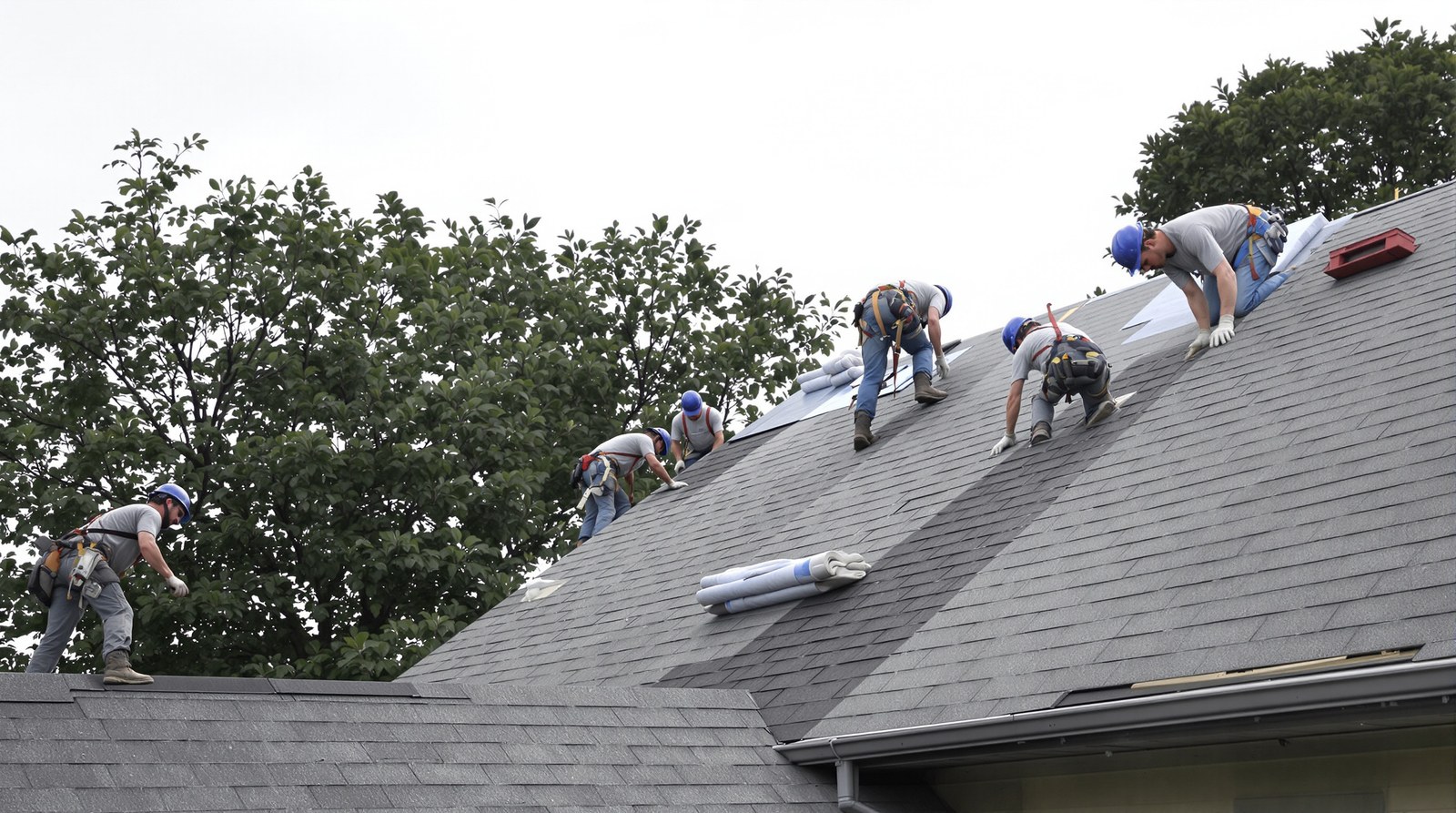
The Roof Replacement Process Starts Before the Crew Shows Up
A typical residential roof replacement in South Carolina runs somewhere between $8,000 and $18,000, depending on square footage, material choice, and what surprises are hiding under your old shingles. That’s not a small check to write. So before a single nail gets pulled, you should know exactly what you’re paying for — and what the next 48 to 72 hours are going to look like at your house.
The roof replacement process has a rhythm most homeowners don’t see until it’s already happening around them. Knowing that rhythm in advance means fewer surprises, smarter questions, and a much better shot at a job done right.
Your Pre-Job Walkthrough and Materials Delivery
A few days before the job starts, your contractor should do a pre-installation site visit — not just drop off shingles and disappear. During this visit, the crew lead should walk the perimeter with you, confirm the shingle color and style you selected, and flag any known trouble spots like soft decking near a chimney or flashing that needs to be replaced.
Materials typically arrive one to two days before the job. You’ll see a large pallet of shingles dropped in your driveway or yard — often 2,000 to 3,000 pounds of material for an average home. Clear your driveway and move vehicles the night before. That pallet is going to be there for a bit, and delivery trucks don’t maneuver gently.
What to Do Before the Crew Arrives
Prep work on your end matters more than most contractors tell you. Take down any wall hangings, mirrors, or shelving units on interior walls — especially on upper floors. The percussion from nail guns and the constant foot traffic on the roof transmits surprising vibration through the structure. Framed photos have been known to fall.
Cover anything in your attic you don’t want coated in debris. Even with careful tearoff, small particles of old shingles and dried felt paper will sift through the decking gaps. Move cars, bikes, and patio furniture well clear of the roofline — falling nails and shingle scraps have a surprising range.
Day One of the Roof Replacement Process: Tearoff and Decking Inspection
Day one is the loudest. If you work from home, consider a coffee shop or library for the morning — the tearoff phase sounds like controlled chaos from inside the house.
Tearoff: Faster Than You’d Expect, Messier Than You’d Like
An experienced crew can strip an average 2,000-square-foot roof in two to four hours. They work in sections, pulling old shingles and felt paper down with roofing shovels and pitchforks, loading everything directly into a dumpster or dump trailer parked alongside the house. Magnetic rollers sweep the lawn for nails — usually twice — but plan to do your own pass before kids or pets go outside.
One thing most homeowners don’t anticipate: the smell. Old felt paper and baked-on roofing tar have a sharp, petroleum odor when disturbed. It dissipates quickly outdoors but can drift through open windows. Keep the house buttoned up on tearoff day.
The Decking Inspection — Where Hidden Costs Live
Once the old roof is stripped, the crew walks every inch of the exposed decking looking for soft spots, rot, or damaged sheathing. This is the most important 30 minutes of the entire job, and it’s where budget surprises happen.
In South Carolina’s humid climate — especially in coastal areas and low-lying spots around Aiken — moisture damage to the decking is common. Expect to pay roughly $70 to $120 per sheet of decking that needs replacement, with the average job requiring two to six sheets. A good contractor will show you each damaged piece before replacing it and document everything with photos. If yours doesn’t, ask.
For a deeper look at what this phase involves on asphalt roofs specifically, our article on Asphalt Shingle Re-Roofing: What to Expect from Start to Finish walks through the material-specific details.
Underlayment and Ice-and-Water Shield Installation
After decking repairs, the crew installs the underlayment — typically a synthetic felt product — across the entire roof. In South Carolina, building code requires ice-and-water shield along eaves and in valleys. Even if you’ve never seen a freeze, that rubberized membrane is your last line of defense when wind-driven rain finds its way under lifted shingles during a hurricane or severe thunderstorm. This layer matters far more than it gets credit for.
Day One Afternoon or Day Two: New Roof Installation Begins
Shingle installation typically begins the same afternoon on smaller roofs or early on day two for larger ones. This is the phase that changes the look of your home fastest — and where the job either holds up for 25 years or starts failing in five.
Starter Course, Field Shingles, and Proper Nailing Patterns
Proper new roof installation starts with a starter strip along the eaves — a step many budget contractors skip to save 20 minutes. That strip seals the bottom edge of your first shingle course and prevents wind from lifting the tabs. Skipping it voids most shingle manufacturer warranties and creates a vulnerable edge right where water pools during heavy rain.
Field shingles go on in overlapping courses from the bottom up. The nailing pattern matters enormously: most manufacturers specify four to six nails per shingle, placed in a specific nail zone. Nails driven too high — a common shortcut called “high nailing” — dramatically reduce wind resistance. In a coastal South Carolina storm, that difference can mean losing half your roof versus losing none of it.
Flashing, Ridge Caps, and the Details That Define Quality
Flashing around chimneys, skylights, and wall intersections is where most roofs leak first. Quality flashing installation takes time — step flashing on walls requires weaving each piece behind siding, not just slapping caulk over a continuous strip. Ask your contractor whether they’re using new metal flashing or reusing the old material. Reusing old, bent flashing on a new roof is a shortcut that typically shows up as a leak within two to three years.
Ridge cap installation finishes the peak of the roof. High-profile ridge caps offer better wind resistance than three-tab shingles cut and folded — another small detail that separates a durable residential roof replacement from one that just looks good for the first season.
What the Roof Replacement Process Feels Like From Inside the House
Expect noise levels similar to someone hammering directly above your head — because that’s exactly what’s happening. Nail guns fire fast, and the rhythm is relentless during active installation. Most full residential roof installations wrap up within one to two days, so the disruption is real but short.
Pets are often more stressed by this process than their owners. Keep dogs and cats in an interior room away from exterior walls. The vibration and sound can cause anxiety, and open access gates for crew members create escape opportunities.
Your attic will also get warmer than usual during installation, since the old roof’s thermal mass is gone and fresh black shingles absorb heat rapidly. This is temporary, but keep it in mind if you have anything temperature-sensitive stored up there.
Day Two or Three: Final Inspection, Cleanup, and Walkthrough
The Magnetic Nail Sweep — Don’t Skip Confirming This Happened
A thorough cleanup is part of the job, not a courtesy. The crew should run magnetic nail sweepers across every inch of your lawn and driveway — multiple passes, not one quick drag. Ask to walk the perimeter yourself before the crew leaves. Finding a roofing nail with your bare foot or your car tire is entirely avoidable, and it’s a reasonable expectation on a job this size.
Dumpsters or trailer loads should be hauled within 24 hours of job completion. If your contract doesn’t specify debris removal timing, add it before you sign.
Your Final Walkthrough — What to Actually Look For
Before the crew leaves, do a walkthrough with the project lead. Walk the perimeter and look at the ridge line from the street — it should be straight, with no visible humps or dips. Check that all pipe boots and vents have new collars or proper flashing, not just caulk. Confirm the gutters are cleared of shingle granules, which accumulate heavily during installation and can dam up water flow if left behind.
Ask for the manufacturer warranty documentation and the contractor’s workmanship warranty in writing before they pull out of the driveway. A reputable contractor will have both ready. If yours can’t produce them on the spot, that’s information worth having.
Questions to Ask Before You Sign a Roof Replacement Estimate
Getting a roof replacement estimate from multiple contractors is standard advice — but most homeowners don’t know what to compare beyond the bottom-line price. Two bids that look similar on paper can represent dramatically different scopes of work.
- Does the estimate include decking replacement, or is that an add-on billed per sheet on job day?
- What underlayment product is specified, and does it meet SC building code requirements for your roof pitch?
- Is new flashing included at all penetrations, or will old flashing be reused?
- What is the workmanship warranty period, and is it transferable if you sell the home?
The transferable warranty question is one most homeowners never think to ask — but it can add real value at resale. A 10-year workmanship warranty that transfers to a new buyer is a selling point. One that terminates at sale is not.
For specifics on what a residential roof installation in this region involves, the team’s Roofing Installation in Aiken SC & Augusta (CSRA) page lays out the process and what local homeowners should expect from the first call to final inspection.
How Long Does the Roof Replacement Process Actually Take?
A straightforward residential roof replacement on a home between 1,500 and 2,500 square feet typically takes one to two days of active work. Larger homes, complex roof geometries with multiple valleys and dormers, or jobs requiring significant decking replacement can push that to three days. Metal roofing installations — standing seam in particular — generally run three to five days due to the precision fabrication involved.
Weather is the wild card, especially in South Carolina where afternoon thunderstorms appear without much warning from May through September. A reputable crew will not install shingles on wet decking — it traps moisture and voids warranties. That may mean a one-day pause mid-job. Build that possibility into your mental timeline.
Hixons Roofing has completed hundreds of residential roof replacements across South Carolina and the CSRA, and the jobs that go smoothest are always the ones where the homeowner came in knowing what to expect. The process isn’t complicated — but the details stack up fast, and knowing which ones matter keeps you in control of a significant investment.
A well-installed new roof should perform for 25 to 30 years on asphalt shingles and 40-plus years on metal. Getting there starts with understanding exactly what’s happening on your roof, one day at a time.
Written by the Hixons Roofing team — experienced roofing contractors serving South Carolina homeowners with roof replacement, metal roofing, and storm damage repair across the CSRA and Lowcountry.
Schedule your roof replacement consultation or request a quote at hixonsroofing.com.