
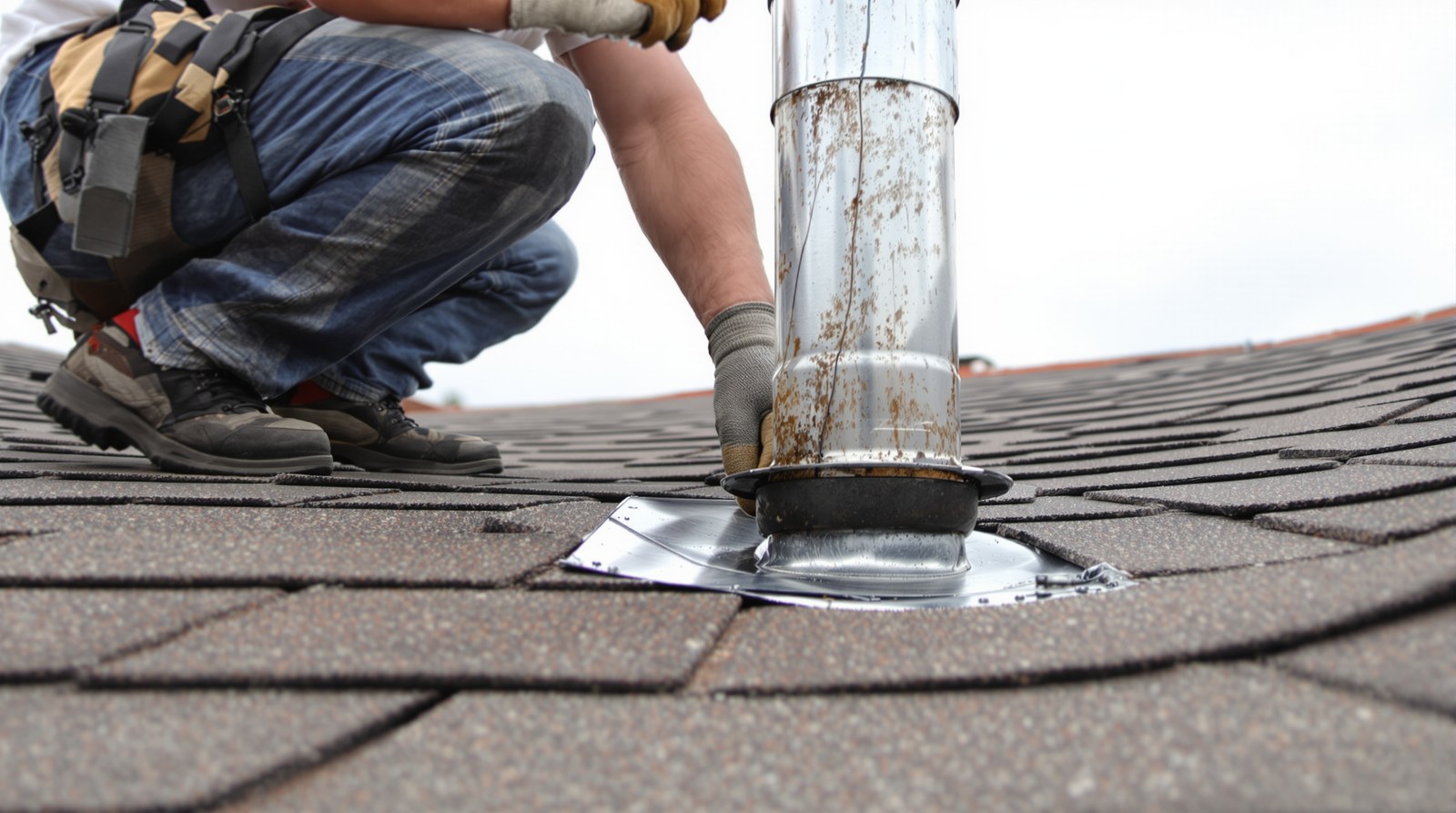
The Leak Nobody Expects — Until the Ceiling Stains
A dark ring on your bedroom ceiling. A musty smell that won’t go away no matter how much you clean. Water dripping near a bathroom vent during a heavy downpour. These are classic symptoms of one of the most overlooked failure points on any roof: a deteriorating vent pipe boot.
The vent pipe — that plastic or metal pipe sticking up through your shingles — connects to your home’s plumbing drain system, releasing sewer gases safely above the roofline. The rubber or metal flashing collar (the “boot”) around its base is what keeps water out. And it fails quietly, often for months before you ever see a water stain inside.
Vent pipe roof repair is one of the most common calls we receive, and also one of the most misdiagnosed. Homeowners assume the problem is their shingles. Roofers who don’t look carefully miss the boot entirely. Meanwhile, water works its way down the pipe, soaks the decking, and starts rotting framing before anyone realizes what’s happening.
Why Vent Pipe Boots Fail — And Why South Carolina Accelerates It
The Material Science Behind the Failure
Standard vent pipe boots use a rubber gasket — usually neoprene or EPDM — that forms a watertight seal around the pipe. That rubber is in direct contact with UV radiation, temperature swings, and ozone every single day. Over time, it hardens, cracks, and pulls away from the pipe, leaving a gap that channels rainwater straight down into your roof deck.
Manufacturer spec sheets for standard neoprene boots typically list a service life of 10 to 15 years under normal conditions. But South Carolina’s climate is not normal conditions.
How the Lowcountry Climate Destroys Rubber Faster
The combination of intense UV exposure, high humidity, and wide temperature swings in South Carolina — particularly in coastal areas around Charleston and Summerville — degrades rubber gaskets significantly faster than what manufacturers test for in controlled environments. A boot that might last 15 years in a mild northern climate can show cracking and shrinkage in 7 to 10 years here.
Add in the region’s heavy rain events. The Lowcountry regularly sees 50 to 60 inches of rain annually, and when a tropical system pushes through, you can get several inches in a matter of hours. That kind of pressure testing will find every gap in a compromised boot — fast.
The Freeze-Thaw Wildcard in Upstate and Midlands SC
Homeowners in the Aiken and Columbia areas face a different version of the same problem. Winters in central South Carolina bring enough freeze-thaw cycles to cause the rubber gasket to contract and expand repeatedly. Each cycle works the seal a little looser. By the time spring storms arrive, what looked like a minor shrinkage crack has become a reliable entry point for water.
What a Failing Boot Actually Looks Like — From the Ground and the Attic
Exterior Signs Worth Knowing
Binoculars are your friend here. From the ground or a safe vantage point, look at every pipe that penetrates your roof. A healthy boot fits snugly around the pipe with no visible gaps, cracks, or lifted edges. What you don’t want to see: rubber that looks dry and grayish instead of black, any visible separation between the gasket and the pipe, shingles around the base of the boot that are curling or stained dark, or lead or galvanized metal flashing that’s visibly rusted.
One thing most homeowners don’t notice: boots often fail at the uphill side of the pipe first. Water pools there during rain events, so that’s where the gasket takes the most punishment. If the boot looks fine from the front, check the back side before concluding it’s okay.
Interior Warning Signs That Demand Immediate Attention
A water stain on the ceiling below or near a bathroom is the most obvious signal, but by the time you see that, the leak has likely been going on for weeks. Catch it earlier by checking your attic after a heavy rain. Look for water staining on the decking or rafters near any pipe penetrations. Feel around the insulation for damp spots. A flashlight and 10 minutes in the attic after a storm can save you thousands in structural repairs.
If you smell mildew in a bathroom or bedroom and can’t find the source, the attic is worth investigating before you replace drywall or flooring.
What Vent Pipe Roof Repair Actually Involves
The Basic Boot Replacement
A straightforward vent pipe boot replacement on a standard asphalt shingle roof typically runs between $150 and $400 per boot, depending on pipe diameter, roof pitch, and how many layers of shingles are involved. The surrounding shingles need to be carefully lifted and sometimes replaced if they’ve been compromised by water or if the boot flashing slipped beneath them incorrectly. Done right, this is a 1 to 2 hour job for an experienced crew.
The fix involves removing the old boot, cleaning the pipe and surrounding deck area, installing a new boot with proper overlap under the uphill shingles and over the downhill shingles, and sealing the gasket to the pipe with an appropriate sealant. A common mistake in DIY repairs or rushed jobs: installers just caulk the old cracked boot and call it done. That holds for one season at best.
When the Damage Goes Deeper
If a boot has been failing silently for a year or more, the repair scope changes significantly. Wet decking develops rot. Rot spreads to adjacent framing. Mold colonizes insulation and can reach drywall. At that point, you’re not just replacing a $25 rubber boot — you’re replacing decking sections, treating for mold, and potentially repairing ceiling material from the inside. That escalation can push total costs into the $800 to $2,500 range depending on how far the damage spread.
Hixons Roofing has seen this scenario dozens of times across South Carolina — a small boot repair that was delayed becomes a multi-trade project. The lesson is consistent: roof leak repair is almost always cheaper the earlier it’s addressed.
Upgrading to a Better Boot
Standard rubber boots have improved in recent years, but if you’re in a coastal area or on a roof that gets heavy sun exposure, consider upgrading to a two-piece metal or silicone-based boot system. Silicone boots in particular have proven far more durable in high-UV environments, with field lifespans that consistently outlast standard EPDM. The cost premium is typically $50 to $100 per boot — almost always worth it in South Carolina’s climate.
Red Flags That Your Roofer Got It Wrong
Not every vent pipe boot repair is done correctly, and knowing what a proper repair looks like protects you from paying twice. A reputable residential roof repair contractor should pull back the surrounding shingles, not just seal over them. The new boot flashing should slide under the uphill course of shingles — if it’s sitting entirely on top, water will run beneath it during a driving rain.
Caulk should be used sparingly and only to seal the gasket-to-pipe connection, not as a substitute for proper flashing overlap. If the contractor finishes in under 20 minutes and applies a generous bead of caulk around the entire boot perimeter, that’s a warning sign the job wasn’t done correctly.
Also ask whether the deck was inspected beneath the boot before the new one went on. Soft or discolored wood under a failed boot means moisture has already done damage. Installing a new boot over rotted decking is like putting a fresh patch over a rusted floor panel — it looks fine until it doesn’t.
When to Call for Emergency Roof Repair vs. Scheduling a Standard Visit
It’s Raining Right Now — What Do You Do?
Active water intrusion during a storm qualifies as an emergency. If water is visibly dripping through your ceiling or you can see daylight through a gap around a pipe from the attic, call for emergency roof repair. Tarping over the affected area while you wait for a full repair crew protects the structure from additional damage and keeps your interior livable.
If the stain is old and dry, and you discovered the issue during routine inspection, that’s a standard service call — typically scheduled within a few days. Don’t let the non-emergency feel of a dry stain convince you to wait months, though. The next significant rain event will remind you why the repair mattered.
How Often Should You Inspect Your Boots?
A visual inspection of all pipe penetrations should happen at least once a year — spring is ideal in South Carolina, before hurricane season picks up. If your roof is 8 years or older, have a professional look at every boot. By the 10-year mark, budget for proactive replacements even if you don’t see obvious cracking yet, particularly if the existing boots are standard neoprene.
Roof repair for homes is far less disruptive and expensive when it’s driven by scheduled inspections rather than emergency calls after water is already inside the structure.
The Fix Is Small. The Damage It Prevents Isn’t.
A rubber boot that costs less than $30 at a supply house protects tens of thousands of dollars in structural framing, insulation, drywall, and flooring below it. The math on proactive vent pipe roof repair is about as clear as it gets in home maintenance. Catching a failed boot before it’s caused rot means a straightforward $200 fix. Catching it after a year of slow leaking means a potentially significant structural repair — and a mold remediation conversation with your insurance company.
Hixons Roofing has served South Carolina homeowners across the Midlands, Lowcountry, and CSRA for years, and the pattern holds across every market we work in: the homeowners who do annual inspections spend far less on repairs over the life of their roof than those who wait for visible damage to appear.
Schedule your inspection before the next storm season. A trained eye can assess every penetration on your roof in under an hour — and what they find, or don’t find, tells you exactly where you stand.
Written by the Hixons Roofing team — South Carolina roofing specialists with hands-on experience in residential and commercial roof repair across the Lowcountry, Midlands, and CSRA.
To schedule a roof inspection or get an honest assessment of your vent pipe flashing, contact Hixons Roofing at hixonsroofing.com.