
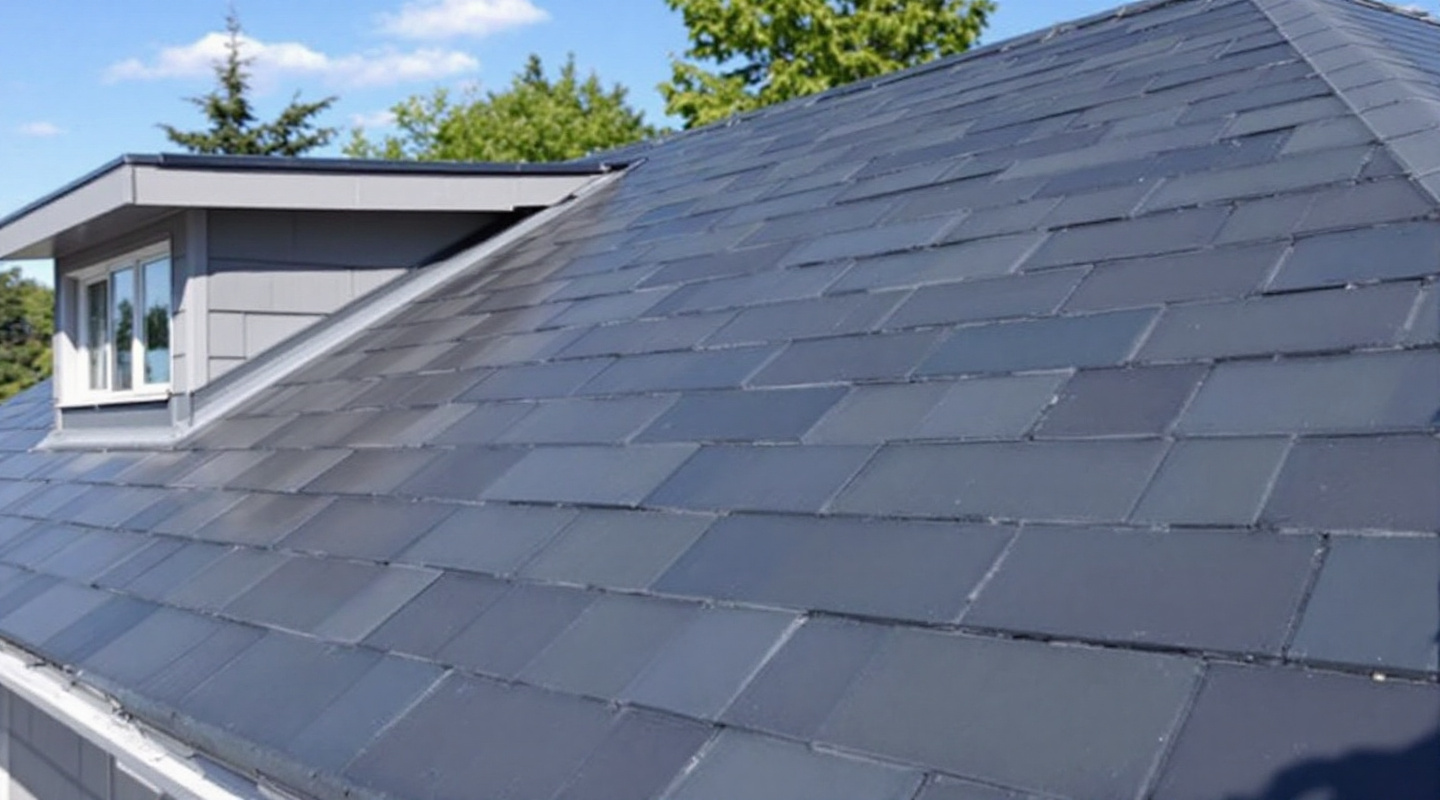
The Weight Problem Nobody Mentions at the Showroom
Authentic slate roofing is stunning. It’s also, quite literally, heavy enough to collapse a roof that wasn’t designed for it. Natural slate tiles typically weigh between 800 and 1,500 pounds per roofing square (that’s a 10×10 foot section), compared to 250–400 pounds for standard asphalt shingles.
Older South Carolina homes — particularly the bungalows and ranch-styles common in Aiken and the surrounding CSRA — were engineered for asphalt loads. Installing real slate on those roof structures without a full engineering assessment and likely structural reinforcement isn’t just a budgeting problem; it’s a safety issue. We’ve walked attics in this region where existing rafters were already undersized for code, let alone for the demands of natural stone.
High-quality synthetic slate, by contrast, typically weighs 40–50 pounds per square — less than asphalt. That single fact changes the economics of the entire project for most SC homeowners.
What Authentic Slate Roofing Actually Costs Over 30 Years
The Upfront Price Tag
Natural slate roofing material alone runs between $600 and $1,500 per roofing square depending on the quarry source — Vermont slate commands premium prices, while imported Spanish or Chinese slate comes in at the lower end but varies significantly in quality. Add skilled installation labor, and a complete natural slate roof on a 2,000 sq ft South Carolina home can run $40,000 to $80,000 or more.
That estimate doesn’t include structural reinforcement. If your home needs sistered rafters or additional sheathing to handle the load — and many do — add another $5,000 to $15,000 to that number.
The Hidden Maintenance Equation
Natural slate is frequently sold as a “lifetime” roof, and the stone itself can last 100+ years in ideal conditions. The problem: the flashing, underlayment, and fasteners surrounding the slate won’t last nearly that long. In South Carolina’s humidity-heavy climate, copper flashing (the preferred option for slate) lasts 50–70 years but costs significantly more than standard aluminum. Cheaper galvanized flashing can fail in 20–30 years — and when flashing fails on a slate roof, you’re looking at labor costs most homeowners underestimate.
Because authentic slate is brittle and requires a specialist to walk on without cracking tiles, routine repairs aren’t something any roofing crew can handle. Experienced residential roofing contractors who actually work with natural slate are rare in inland South Carolina. Expect to pay a premium for every service call, or wait weeks for availability.
The 30-Year Total Picture
Running the full numbers over three decades — including installation, structural work, flashing replacement, occasional tile repair, and cleaning — a natural slate roof on a mid-sized SC home typically costs $65,000 to $100,000 total. That’s not a number designed to shock you out of the idea. It’s just what the math produces when you account for every line item.
How Synthetic Slate Performs — and Where It Falls Short
The Material Science Has Genuinely Improved
A decade ago, synthetic slate had a reputation for looking plasticky up close. That’s changed. The leading manufacturers now produce polymer-composite and rubber-based slates that are genuinely difficult to distinguish from natural stone at street level. Some products achieve the variation in texture and tone that makes real slate so visually compelling.
Manufacturer spec sheets from premium synthetic slate lines list Class 4 impact resistance ratings — the highest category available — and wind ratings up to 110 mph. For South Carolina homeowners who’ve watched storms roll through the Lowcountry, those specs matter in ways they don’t in, say, Vermont.
The Lifespan Question
Here’s where honest contractors have to be straight with you: synthetic slate carries manufacturer warranties of 40–50 years, but the oldest premium synthetic products have only been on roofs for about 25–30 years. We don’t have a complete long-term dataset the way we do with natural slate, which has centuries of real-world performance behind it.
What we do know is that UV degradation is the primary aging factor for polymer-composite products — and South Carolina delivers more UV exposure than most northeastern states where these products were initially tested. A synthetic slate roof in Charleston faces meaningfully different conditions than the same product on a home in Massachusetts. Quality installation with proper ventilation helps significantly, but it’s a variable worth understanding before you commit.
Synthetic Slate Costs Over 30 Years
Premium synthetic slate material typically runs $150 to $400 per roofing square, with installation bringing the total for a 2,000 sq ft home to $12,000–$22,000. Maintenance costs are minimal — no specialist required, any qualified residential roofing crew can make repairs, and replacement tiles are generally available and affordable. Over 30 years, total cost of ownership typically falls in the $15,000–$28,000 range. That’s a meaningful gap compared to natural slate, and it doesn’t require structural modifications for most existing homes.
South Carolina’s Climate Is a Real Factor in This Decision
Heat, Humidity, and What They Do to Roofing Materials
South Carolina’s summers combine sustained heat — regularly above 95°F — with humidity levels that hover between 70 and 90 percent for months at a time. That combination accelerates degradation in ways that temperate-climate roofing specs don’t fully capture.
Natural slate handles heat well; it’s stone and thermally stable. Moisture, however, is a different issue. Slate is porous at the microscopic level, and repeated wet-dry cycles in a humid climate contribute to the delamination process that eventually causes tiles to flake and split. In coastal South Carolina, salt air adds another layer of complexity — it accelerates corrosion on any metal components around the slate.
For synthetic slate, heat is the primary concern. Darker synthetic tiles can reach surface temperatures above 160°F on a summer afternoon in Aiken, and sustained heat cycling degrades polymer bonds over time. Lighter-colored synthetic slate, or products with built-in UV stabilizers, perform noticeably better in SC conditions. Ask your roofing contractors for products specifically tested in high-UV environments, not just general-market specs.
Ventilation Matters More Than Most People Realize
Proper attic ventilation isn’t just a building code checkbox — it’s what separates a 25-year synthetic roof from a 45-year one in a Southern climate. Heat buildup in an underventilated attic degrades underlayment, warps decking, and accelerates the aging of any roofing material from below. Hixons Roofing has been serving South Carolina homeowners for years, and one consistent finding across inspections in the Columbia area is that inadequate ventilation is the single most common reason roofs fail prematurely, regardless of the material on top.
Appearance: Closing the Gap
The Honest Visual Comparison
Stand across the street from a high-end synthetic slate roof and a natural slate roof, and most people cannot tell the difference. Get within 10 feet, and trained eyes start to see it — the slight regularity in texture, the uniformity of color variation that real quarried stone doesn’t have.
For the overwhelming majority of residential settings, that distinction is irrelevant. Where it matters is in historic districts — parts of Charleston’s historic neighborhoods, for example, have strict review board requirements about roofing materials. If your home falls under historic preservation guidelines, check before assuming synthetic slate will satisfy the review process. Some boards accept premium synthetics; others require authentic materials.
Style Flexibility With Synthetic
One genuine advantage synthetic slate has over the real thing: it’s available in a much wider range of colors, sizes, and profiles. Natural slate is quarried in specific color families — blue-gray, green, purple, red — based on geology. Synthetic products can be manufactured in nearly any palette, which gives homeowners more flexibility to match existing architecture or neighborhood aesthetics.
Making the Call: Which Option Actually Makes Sense for Your Home
Authentic slate roofing makes sense for a narrow set of circumstances: a home with existing structural capacity for the weight, a homeowner planning to stay for multiple decades, a historic district that mandates it, and a budget that absorbs the full cost without strain. Those conditions align less often than the showroom pitch suggests.
For the vast majority of South Carolina homeowners — especially those in standard residential construction in Aiken, Columbia, or the greater Lowcountry — high-quality synthetic slate delivers 85–90% of the visual appeal at roughly 25–35% of the total 30-year cost. That’s a calculation worth taking seriously.
What matters most is pairing whichever material you choose with skilled installation. A premium synthetic slate product installed poorly will underperform a mid-grade product installed by experienced roofing contractors who understand SC’s specific climate demands. Get multiple quotes, ask specifically about local experience with slate-style installations, and don’t skip the ventilation conversation.
Written by the Hixons Roofing team — South Carolina’s residential roofing specialists with hands-on experience installing and inspecting slate, synthetic slate, metal, and shingle roofing across the CSRA, Midlands, and Lowcountry.
If you’re weighing slate roofing options for your South Carolina home and want a straight assessment based on your actual structure and budget, reach out to Hixons Roofing at hixonsroofing.com to schedule a consultation.