
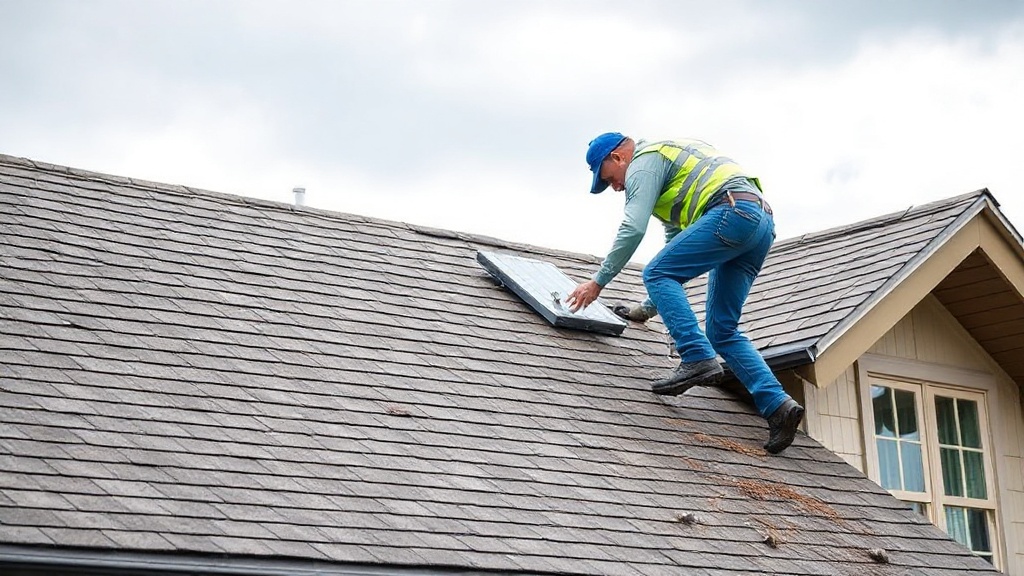
The Assumption That Costs Homeowners Thousands
A surprising number of homeowners skip roof inspections because they assume the roof looks fine from the driveway. That logic holds up right until it doesn’t — and the failure usually shows up as a water stain on the ceiling after a hard summer storm, not a visible cave-in from the street.
The gap between “looks fine” and “is fine” is exactly what a professional roof inspection is designed to close. And no, it isn’t just a contractor looking for an excuse to sell you something new. A real inspection follows a systematic process that takes 45 minutes to two hours depending on roof size, pitch, and access. Here’s what actually gets checked — and why each part matters.
What a Professional Roof Inspection Actually Covers
The Exterior Surface: More Than Just Missing Shingles
The surface examination is where most people think the job begins and ends. An inspector does check for missing shingles, but that’s maybe 10% of what they’re evaluating. The more telling signs are subtler: granule loss that exposes the asphalt mat underneath, shingles that have started to curl or cup at the edges, and cracking patterns that indicate the material has gone brittle from UV exposure.
In the CSRA, asphalt shingles take a harder beating than in most of the country. Augusta and Aiken sit in a climate zone where summer surface temperatures on a dark roof can exceed 160°F — and that thermal cycling year after year accelerates granule shedding. An experienced inspector knows what accelerated aging looks like here versus what it looks like in a milder climate, and that local knowledge changes how they read the surface.
Flashing: The Most Overlooked Failure Point
Ask most homeowners what roof flashing is, and you’ll get a blank stare. Ask most roofing contractors what causes the majority of leak calls, and they’ll say flashing — every time. Flashing is the metal sealing that bridges the roof surface to vertical elements: chimneys, skylights, dormers, and roof-to-wall transitions.
Flashing fails in two ways. It pulls away from the substrate over time due to thermal expansion, or it corrodes and develops pinholes that are invisible from ten feet away. Either failure lets water in, but the damage shows up well away from the actual breach point — which is why so many homeowners are convinced the leak is coming from somewhere other than where it actually is.
Gutters, Soffits, and the Drainage Picture
A roof inspection that ignores the drainage system is incomplete. Gutters full of granule sediment tell an inspector that the shingles above them have shed significant protective material. Soffits and fascia boards that show rot indicate persistent moisture — often from gutters that overflow because they’re clogged, undersized, or pulling away from the fascia.
These aren’t separate problems from the roof itself. Water that can’t drain properly backs up under the shingles at the eave line, which is one of the most common causes of ice dam damage in colder climates and moisture intrusion in South Carolina during sustained rainfall events.
The Attic: The Evidence Room
This is the part of the inspection that surprises most homeowners. A thorough inspector goes into the attic — not just onto the roof. The underside of the roof deck tells a story that the surface can’t. Dark staining or soft spots in the sheathing reveal past or active leaks. Insufficient insulation depth or blocked soffit vents indicate a ventilation problem that will shorten the roof’s lifespan regardless of shingle quality.
Poor attic ventilation is a significant factor in premature roof failure that rarely gets discussed until a replacement estimate lands on the table. When hot, humid air gets trapped under the roof deck in a CSRA summer, it accelerates shingle degradation from below while the sun accelerates it from above. Fixing the shingles without addressing the ventilation is like replacing tires without fixing the alignment.
Structural Assessment: What’s Underneath It All
Beyond the surface materials, an inspector evaluates the underlying structure. Rafters or trusses that show signs of sagging, cracking, or moisture damage are a more serious finding than worn shingles — and they affect what kind of repair or replacement solution makes sense. A roof that’s sagging at the ridge line isn’t a shingle problem; it’s a structural problem that requires a different scope of work entirely.
Checking the decking — the plywood or OSB layer between the structural framing and the shingles — is also part of this phase. Soft or spongy decking discovered during a tear-off is one of the most common cost surprises homeowners encounter during replacement projects. A pre-replacement inspection that identifies compromised decking upfront allows for accurate budgeting. In the Augusta area, a roof replacement on a typical 2,000 sq ft home runs roughly $8,000–$15,000 for asphalt shingles, but decking replacement can add $1,500–$3,500 depending on how much is affected.
How Drone Technology Is Changing the Inspection Process
Steep-pitch roofs, multi-story homes, and post-storm safety concerns have pushed many roofing contractors toward drone-assisted inspections. A drone can capture high-resolution imagery of every square foot of a roof in under 20 minutes, producing documentation that a ground-level walkthrough simply cannot match.
The practical value isn’t just speed — it’s accuracy. A drone photo of a damaged ridge cap or a popped nail pattern gives a homeowner visual proof of the issue rather than a verbal description. It also creates a timestamped record that’s useful for insurance claims. For a closer look at how this technology works and why it matters, the team at Hixons Roofing put together a detailed piece on drone roof inspections and how the technology is changing what’s possible.
When a Roof Inspection Is Genuinely Necessary — Not Optional
After Any Significant Storm
The CSRA and South Carolina Lowcountry see a consistent pattern of severe weather: summer thunderstorms that drop golf ball-sized hail, tropical systems that push up from the coast, and occasional straight-line wind events that exceed 60 mph. After any of these, a post-storm inspection isn’t optional — it’s the only way to document damage before it spreads and before an insurance claim window closes.
Hail damage in particular is deceptive. A shingle that takes a hail hit doesn’t fail immediately; it cracks the granule bond and creates a bruise that accelerates moisture infiltration over the following months. Homeowners who skip the post-storm inspection often discover the damage 12–18 months later when they’re outside the insurance claim window.
Before Buying or Selling a Home
A general home inspector evaluates dozens of systems in a few hours. The roof gets 15–20 minutes of attention, usually from the ground with binoculars. That’s not sufficient for a system that costs $10,000–$20,000 to replace. A dedicated roof inspection from a qualified roofing contractor before closing gives buyers real leverage — or real protection from an unexpected capital expense in year one of ownership.
When the Roof Is 10+ Years Old
Standard 3-tab asphalt shingles carry 20–25 year warranties, but in high-UV, high-humidity environments like Augusta, real-world performance often runs shorter. Once a roof crosses the 10-year mark, annual inspections give you a baseline for tracking change. You’re not looking for a reason to replace — you’re building a documented service history that helps you plan and budget accurately.
If you want a structured approach to what to look for each spring, the spring roof inspection checklist for South Carolina homeowners breaks it down by system in a way that’s actually useful for non-professionals.
When Something Looks Off Inside the House
A water stain on a ceiling, a damp smell in the attic, or paint bubbling near an exterior wall are all downstream symptoms of a roofing problem. By the time these signs appear, the breach has usually been active long enough to cause secondary damage — insulation, sheathing, sometimes framing. A roof inspection at this point isn’t about deciding whether to act; it’s about scoping exactly what needs to be done and where the money should go first.
What You Should Expect to Pay — and What to Watch Out For
Inspection fees from reputable roofing contractors near you typically run $150–$400 depending on roof complexity, size, and whether drone equipment is used. Some contractors offer free inspections as part of their service model; that’s not inherently a red flag, but it does mean you should pay attention to whether the inspection report is detailed and specific or vague and designed to funnel toward a sale.
A credible inspection report names specific locations, describes specific conditions, and distinguishes between issues that require immediate action and issues to monitor. If an inspector tells you verbally that you need a full replacement without providing documentation, ask for a written summary. Any qualified roofing contractor near you should be able to produce one. When searching for roofing companies near you, look for contractors who carry both a state license and manufacturer certification — the latter indicates they’ve been trained on the specific products they install, which affects warranty coverage significantly.
The Honest Answer on Whether You Need One Right Now
If your roof is under five years old, was installed by a licensed contractor, and you haven’t had a significant storm in the past year, you can reasonably wait until the five-year mark for a formal inspection. If any of those conditions aren’t true — age, installation quality, or recent weather — schedule one now rather than waiting for symptoms to appear.
Catching a failed flashing repair or a ventilation deficiency early costs a few hundred dollars. Letting it run until the decking is compromised or mold has established in the attic insulation can push roof leak repair costs into the $3,000–$8,000 range before you’ve even addressed the underlying breach. The math on early inspection is straightforward. Hixons Roofing has served homeowners across the CSRA for years, and the pattern holds consistently: the calls that hurt the most are always the ones that could have been caught 18 months earlier.
Written by the Hixons Roofing team — licensed roofing contractors serving the CSRA and South Carolina with expertise in residential and commercial roof inspection, repair, and replacement.
To schedule a roof inspection with Hixons Roofing, visit hixonsroofing.com.