
Two Metal Roofs That Look Nothing Alike — and Perform Even More Differently
A homeowner in Aiken recently called us after getting two wildly different quotes for a metal roof replacement. One contractor had spec’d standing seam metal roofing. Another had quoted Tuff Rib panels. Same square footage, same metal gauge — but a $9,000 price difference. She had no idea she was comparing two completely different products.
That gap isn’t a sales trick. It reflects a genuine difference in how these two panel systems are engineered, installed, and how long they hold up under the specific punishment that South Carolina and Georgia summers dish out. Understanding what you’re actually buying matters — both for your wallet and for your roof’s 30-year future.
Both options fall under the broad category of metal roofing for homes, but that’s roughly where the similarities end. One is a premium architectural system; the other is a workhorse panel with a different set of tradeoffs. Neither is universally better — but one is almost certainly better for your specific situation.
What Exactly Is Standing Seam Metal Roofing?
The Engineering Behind the Panel
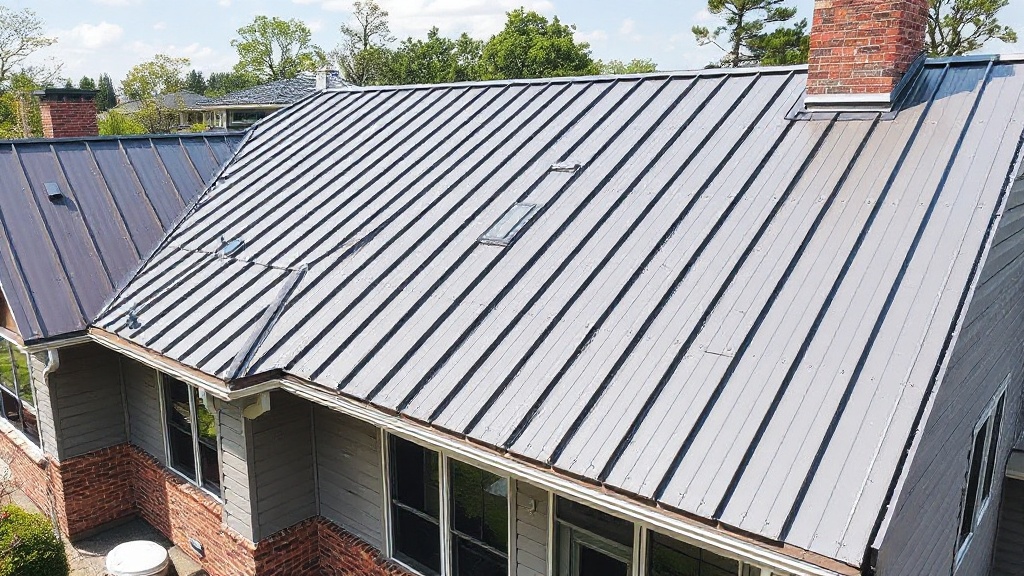
Standing seam metal roofing gets its name from the raised interlocking seams that connect panels vertically along the roof. The fasteners are completely hidden — clipped beneath the seam rather than driven through the face of the panel. That single design detail changes everything about how the roof performs.
Because no screw penetrates the metal surface, there’s no exposed fastener to back out over time, no washer to deteriorate in UV heat, and no point of entry for water infiltration. The panels float on concealed clips that allow thermal expansion and contraction without stressing the metal. On a South Carolina roof that swings from 28°F in January to 105°F on a July afternoon, that movement adds up — a 16-foot steel panel can expand nearly a quarter inch across that temperature range.
What It Looks Like on a House
Architecturally, standing seam is clean and modern. The raised ribs run in straight vertical lines with no visible hardware, giving homes a sharp, intentional look that photographs well and holds its appearance for decades. It works beautifully on craftsman bungalows in Columbia’s historic neighborhoods, contemporary builds near Charleston, and traditional low-country homes alike.
Panel widths typically run 12 to 18 inches, and rib heights vary from 1 to 2.5 inches. Those choices affect both the aesthetic and the water-shedding performance — taller ribs handle heavier rainfall more aggressively, which matters in areas of the CSRA that can absorb 50+ inches of rain annually.
What Is Tuff Rib Metal Roofing?
Exposed Fastener, Different Philosophy
Tuff Rib is a corrugated-style exposed fastener panel — a ribbed metal sheet screwed directly through the face of the panel into the decking below. The screws sit in the flat of the panel, sealed with rubber washers. It’s a simpler, faster system to install, which is reflected directly in the roofing cost.
Tuff Rib panels are wider (typically 36 inches), thinner, and go up quickly. A crew that takes three days to install a standing seam system on a 2,000-square-foot home can often complete a Tuff Rib installation in one to two days. That speed differential is real, and it significantly affects the labor portion of your roofing installation quote.
Where Tuff Rib Actually Makes Sense
Tuff Rib earns its place on agricultural buildings, pole barns, workshops, and outbuildings across Georgia and South Carolina. It also works well on low-slope secondary structures — detached garages, covered porches, utility sheds — where budget matters more than architectural refinement.
Some homeowners also choose Tuff Rib for rear-facing roof sections hidden from street view, pairing it with a more finished product on the visible slopes. That’s a legitimate cost-management strategy, and one worth discussing with your installer before you commit to a single system for the whole roof.
The Cost Difference — and What’s Actually Driving It
Real Numbers From Real Projects
Across residential roofing installations in the Augusta and Aiken markets, Tuff Rib metal roofing typically runs $4.50–$7.00 per square foot installed, depending on roof complexity, pitch, and panel color. Standing seam metal roofing installation on the same home generally ranges from $9.00–$14.00 per square foot installed — sometimes higher on steep or complex rooflines.
On a 2,000-square-foot home, that translates to a rough range of $9,000–$14,000 for Tuff Rib versus $18,000–$28,000 for standing seam. Those numbers can shift based on decking condition, trim work, and regional labor rates, so treat them as directional rather than fixed. If you’re searching for roofing cost near you in the CSRA or Lowcountry, an in-person assessment is the only way to get an accurate figure.
Why Standing Seam Costs More — and Why That’s Often Worth It
The premium for standing seam isn’t just markup. The panels themselves cost more to manufacture. The concealed clip system requires more precision in layout and installation. Installers need additional training and certification from manufacturers to work with floating-clip systems properly — and that expertise costs more per hour.
The long-term math often favors standing seam, though. Exposed fastener systems require periodic re-torquing or replacement of the screws and washers — typically every 10–15 years in hot, humid climates. That maintenance visit runs $500–$1,500 depending on roof size. Standing seam systems, properly installed, can go 40–50 years with minimal intervention beyond clearing debris from valleys and gutters.
Durability and Performance in the South Carolina and Georgia Climate
Heat, Humidity, and UV — the Relentless Triple Threat
Both systems outperform asphalt shingles in heat reflectivity. A bare galvalume or painted steel panel reflects significantly more solar radiation than a dark asphalt shingle, which directly affects attic temperatures and cooling loads. Energy Star-rated metal panels can reduce cooling energy use by a meaningful margin — the DOE estimates reflective metal roofing can lower attic temperatures by 50°F or more compared to standard shingles.
But the two systems respond differently to humidity. Tuff Rib’s exposed fastener holes, even when properly sealed, create micro-vulnerabilities over time. In high-humidity coastal environments like Charleston, Mount Pleasant, or the South Carolina Lowcountry, moisture infiltration at fastener points — and the rust that follows — is the most common failure mode we see on aging exposed fastener roofs.
Standing seam’s sealed, hidden fastener system gives moisture far fewer entry points. On homes within 10–15 miles of saltwater environments, that difference matters considerably. Salt-laden air accelerates corrosion at any exposed metal surface, and every screw head on a Tuff Rib roof is an exposed surface.
Wind Resistance in Hurricane Country
South Carolina and coastal Georgia sit in active hurricane and tropical storm corridors. Standing seam panels, when clipped and seamed correctly, consistently outperform exposed fastener panels in high-wind events. The interlocking seam creates a continuous mechanical connection across the roof plane — there’s no row of individual fastener points that can progressively fail as wind load increases.
After significant storm seasons, the storm damage repair calls we receive are disproportionately from homes with exposed fastener metal or aging asphalt — not standing seam. That pattern is consistent enough to be instructive. If wind resilience matters to you (and in this region, it should), standing seam is the more defensible choice.
Appearance, Home Style, and Resale Value
What Buyers and Appraisers Actually See
Curb appeal isn’t vanity — it affects resale value in measurable ways. Standing seam’s clean profile reads as a premium upgrade to buyers and appraisers. Tuff Rib’s corrugated look, while functional, reads as utilitarian. On a $400,000 home in a well-maintained neighborhood, a Tuff Rib roof can actually suppress perceived value, even if it’s structurally sound.
That said, Tuff Rib in the right context — a farmhouse on acreage, a rustic cabin, a rural property — can look entirely intentional and appropriate. Context matters enormously. A corrugated metal roof on a 1,200-square-foot farmhouse in Edgefield County reads differently than on a $350,000 craftsman in a suburban Columbia subdivision.
Color and Finish Options
Both systems are available in a wide palette of Kynar 500 or PVDF-coated finishes that hold color for decades without significant fading. Charcoal, matte black, galvalume silver, dark bronze, and classic red are popular across both systems. Standing seam manufacturers typically offer more profile and finish options because the product line targets a higher price point with more design-conscious buyers.
For our Augusta metal roofing installation projects, we’ve seen matte charcoal standing seam become particularly popular on newer builds and renovations — it photographs sharply and holds its color in the intense summer sun without the chalking that affects lower-grade painted panels.
Making the Call: Which Panel Fits Your Project?
The Questions That Actually Drive the Decision
Before defaulting to whichever option costs less upfront, run through these real filters. How long do you plan to own the home? If you’re in a five-year window, Tuff Rib may serve you fine. If you’re planning to stay 20+ years or pass the property on, standing seam’s reduced maintenance and longer service life make the premium easier to justify.
Is the structure a primary residence or an outbuilding? The answer to that question alone settles most cases. And what does your immediate neighborhood look like? A metal roofing installation that clashes architecturally with surrounding homes — even a durable one — can create resale friction you didn’t anticipate.
For homeowners in the Columbia metro area exploring their options, our team has installed both systems across a range of residential styles. You can review what’s possible on our Columbia SC metal roofing installation page for context on how both panels perform locally.
Roof Maintenance for Homeowners: What Each System Asks of You
Roof maintenance for homeowners looks different depending on which system is overhead. With standing seam, the checklist is short: keep debris out of valleys and gutters, inspect flashings annually, and watch for any sealant deterioration around penetrations like vents or chimneys. A 30-minute annual walk-around covers it.
Tuff Rib demands more attention. Every 10–15 years, a qualified roofer should inspect and re-torque or replace the fasteners — especially on south and west-facing slopes that take the most UV and thermal cycling. Missing that window can turn a minor maintenance task into a water infiltration problem that damages decking and insulation.
Hixons Roofing has been serving homeowners across South Carolina and Georgia for years, and the clearest pattern we’ve seen is this: most regrets come from choosing Tuff Rib on a primary residence to save money upfront, then facing fastener maintenance costs that narrow the gap significantly over a 20-year horizon.
Choose the system that fits your structure, your climate exposure, and your realistic ownership timeline — not just the number at the bottom of the first quote you receive.
Written by the Hixons Roofing team — experienced metal roofing specialists serving the CSRA, South Carolina, and Georgia with residential and commercial roofing installations.
To get a straight assessment on which metal roofing system fits your home and budget, schedule a consultation with Hixons Roofing at hixonsroofing.com.