
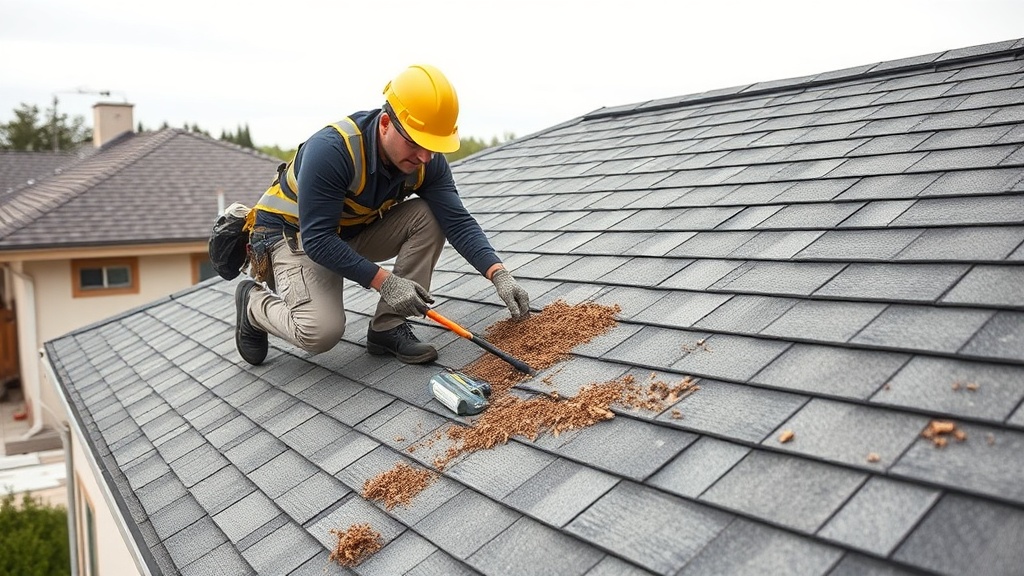
Your roof survived another summer of brutal South Carolina heat. It weathered the occasional tropical system that rolled through Georgia. But here’s what most homeowners don’t realize: the damage happening right now—in the weeks after these seasonal beatings—is costing you hundreds, sometimes thousands, more than a simple inspection would.
The question isn’t whether you need roof maintenance. It’s when you should schedule it to actually prevent problems instead of just discovering them too late.
Why Roof Maintenance Timing Matters More Than You Think
Schedule your inspection at the wrong time, and you’re essentially documenting damage that’s already happened. Schedule it strategically, and you’re catching small issues before they cascade into emergencies.
Here’s the reality: a missing shingle costs about $15 to replace. That same missing shingle, left undetected through a rainy season, can lead to wood rot, insulation damage, and interior ceiling repairs totaling $3,500 or more. The window between “easy fix” and “insurance claim” is narrower than most homeowners realize.
The Real Cost of Poor Timing
In South Carolina and Georgia, we see this pattern repeat every year. Homeowners schedule their roof maintenance in late spring—right after storm season begins. By then, winter’s freeze-thaw cycles and spring’s heavy rains have already done their damage. You’re not preventing problems; you’re discovering them after the fact.
Or worse, homeowners skip annual maintenance entirely until they notice a leak. At that point, you’re not looking at preventive roof maintenance costs ($300-600 for a thorough inspection and minor repairs). You’re looking at roof repair for homes starting at $1,200 and climbing fast depending on what’s hidden beneath that visible problem.
The Two Best Times for Roof Maintenance (And Why They Work)
Professional roofers will tell you there are two optimal windows for scheduling your annual inspection in our region. Each serves a different strategic purpose.
Early Fall: The Pre-Winter Defense
September through early November is the golden window for roof maintenance for homeowners in South Carolina and Georgia. Here’s why this timing is brilliant:
You’re inspecting after summer’s intense UV exposure and heat but before winter weather arrives. Any damage from thermal expansion, sun degradation, or late-season storms gets caught while weather conditions are still ideal for repairs. Your contractor isn’t rushing to beat incoming rain, and materials seal properly in moderate temperatures.
More importantly, you’re preparing your roof for the seasonal challenges ahead. Winter in our region might not mean snow and ice like up north, but we face freeze-thaw cycles that exploit any weakness. That slightly lifted shingle edge? In February, water seeps under it, freezes overnight, expands, and transforms a $20 repair into a $800 problem.
Late Winter/Early Spring: The Post-Storm Assessment
February through early April offers your second strategic window. This timing focuses on catching winter damage before spring’s heavy rainfall season and summer’s heat amplify any issues.
If you experienced any winter storms, this inspection documents damage while it’s still fresh—critical for insurance claims if needed. You’re also getting ahead of the busy spring season when contractors’ schedules fill up and emergency repairs spike.
For commercial property managers, this timing aligns perfectly with fiscal year planning. Many businesses handle commercial roof maintenance planning in Q1, budgeting for necessary repairs before they become emergencies that disrupt operations.
Which Window Should You Choose?
Here’s the insider perspective: alternate between both if your roof is over 10 years old or you’ve had previous repairs. For newer roofs in good condition, early fall inspection offers the best prevention-to-cost ratio. You’re catching problems before winter compounds them, and you’re scheduling during a season when contractors have more availability and competitive pricing.
What Professional Roof Maintenance Actually Includes
Not all roof inspections are created equal. Some companies offer a “free inspection” that’s really just a sales pitch for replacement. Others do a cursory glance from the ground. Here’s what comprehensive preventive roof maintenance should actually involve:
Surface-Level Inspection
A qualified technician physically walks your roof, examining shingle condition, checking for curling, cracking, or missing granules. They’re looking at flashing around chimneys and vents—these transition points are where 80% of leaks originate. They inspect the condition of sealants and caulking, which degrade faster in our intense southern sun than most materials.
For metal roofing, they’re checking panel seams, fastener integrity, and any signs of corrosion or thermal movement. Standing seam metal roofing requires different maintenance attention than asphalt shingles, though both benefit from the same seasonal timing.
Drainage System Evaluation
Your gutters and downspouts aren’t separate from your roof—they’re part of the same water management system. Professional maintenance includes clearing debris, checking for proper pitch and flow, and ensuring downspouts direct water away from your foundation. A clogged gutter backing water under your shingles can cause more damage in one heavy rain than years of normal wear.
This is where gutter repair and maintenance intersects with roof longevity. Many homeowners don’t realize their “roof leak” is actually a drainage problem that’s easily solved before it becomes structural.
Attic and Interior Assessment
This is what separates thorough maintenance from a basic inspection. A technician should check your attic for signs of water intrusion, proper ventilation, and insulation condition. Inadequate ventilation causes premature shingle failure—your roof literally cooks from the inside out during summer.
They’re also looking for signs of pest intrusion, mold growth, or structural issues that aren’t visible from the exterior. Finding these early prevents the kind of surprises that make homeowners ask “when to replace roof” years before they should need to.
Documentation and Maintenance Report
You should receive a detailed report with photos documenting your roof’s condition, any issues found, recommended repairs with priority levels, and timeline expectations. This documentation serves multiple purposes: it helps you budget for repairs, provides proof of maintenance for warranty claims, and creates a history that’s valuable if you sell your home.
The Real Investment: What Roof Maintenance Costs in 2026
Let’s talk numbers, because “how much does a new roof cost” is often the question that makes homeowners realize they should have invested in maintenance years ago.
Annual Maintenance Investment
A comprehensive professional inspection with minor maintenance (cleaning, resealing, replacing a few damaged shingles) typically runs $300-600 for residential properties. Commercial roof maintenance costs more—usually $800-1,500 depending on building size and roof type—but the ROI is even more dramatic given the higher replacement costs.
If the inspection reveals needed repairs, you’re looking at additional costs: flashing repairs run $200-500, valley repairs $300-800, and more extensive shingle replacement $600-1,800 depending on the affected area.
The Alternative Cost
Skip maintenance for 3-5 years, and here’s what happens: minor issues compound into major failures. That national average for roof replacement in 2026? We’re looking at $8,500-15,000 for asphalt shingle roofs on typical homes, $18,000-35,000 for metal roofing systems. In Charleston, Mount Pleasant, and Columbia—where home values run higher—expect the upper end of those ranges.
Here’s the math that makes maintenance obvious: spending $400 annually for 15 years ($6,000 total) while extending your roof’s lifespan to 25-30 years versus skipping maintenance and replacing your roof at year 18 ($12,000-15,000). The maintenance approach saves you $6,000-9,000 while giving you a decade more service.
Hidden Value: Warranty Protection
Most people don’t realize that virtually every roofing warranty—manufacturer and contractor—requires proof of regular maintenance. Miss your annual inspections, and you may void coverage worth thousands. That inspection isn’t just preventing problems; it’s protecting your investment in ways that don’t show up until you need to file a claim.
How Maintenance Timing Extends Your Roof’s Lifespan
A roof’s rated lifespan—20 years for standard asphalt shingles, 30+ years for architectural shingles, 40-70 years for metal—assumes proper maintenance. Without it, subtract 20-30% from those numbers.
The Compound Effect of Small Problems
Roof deterioration isn’t linear; it’s exponential. A roof in good condition degrades slowly. Once moisture penetrates the protective layers, deterioration accelerates dramatically. Wood decking that stays dry for 20 years can rot through in 18 months once water regularly reaches it.
This is why timing your maintenance strategically matters so much. Catching that vulnerable shingle before winter weather exploits it prevents the moisture intrusion that accelerates everything else. You’re not just fixing one shingle—you’re preventing a cascade of problems that would have emerged over the next 2-3 years.
Regional Factors in South Carolina and Georgia
Our climate is particularly hard on roofs. UV intensity in areas like Aiken, Augusta, and Summerville breaks down shingle composition faster than moderate climates. Summer heat in Columbia regularly pushes attic temperatures above 140°F, causing thermal cycling that fatigues materials. Coastal humidity in Charleston and Mount Pleasant promotes algae growth and accelerates metal corrosion.
Regular maintenance addresses these regional stressors before they compound. Algae removal isn’t cosmetic—it’s preventing organisms that hold moisture against your shingles. Resealing flashing isn’t optional in our climate—thermal expansion opens gaps that our intense rain exploits immediately.
Creating Your Maintenance Schedule (And Actually Sticking to It)
Knowledge without action doesn’t protect your roof. Here’s how to make annual maintenance automatic instead of something you remember only when you see a leak.
Choose Your Timing and Calendar It
Right now, decide: early fall or late winter/early spring? Look at your calendar and block out a week in that window. Don’t schedule the inspection itself yet—just reserve the timeframe. This psychological trick makes it real before life gets busy.
Set a reminder for 8 weeks before that window to actually schedule your inspection. Contractors’ calendars fill up, especially during optimal weather. Booking 6-8 weeks ahead ensures you get your preferred timing rather than settling for whenever they have availability.
Create a Maintenance File
Start a simple digital or physical file for roof documentation. Include your original installation paperwork, warranty documents, and every inspection report moving forward. When you inevitably sell your home, this documented maintenance history can add thousands to your asking price—buyers pay premiums for homes with proven care.
This file also makes insurance claims infinitely easier if storm damage occurs. You have documented proof of your roof’s pre-storm condition and maintenance history.
Budget for Reality
Here’s what experienced homeowners know: budget $500-800 annually for roof care, even if inspections typically cost less. Some years you’ll spend only $350. Other years, your inspection will reveal a repair that costs $600. Over time, it averages out, and you’re never caught off-guard by necessary maintenance.
For commercial properties, budget 1-2% of your roof’s replacement cost annually for maintenance and minor repairs. A $30,000 replacement value means $300-600 annual budget. It sounds like a lot until you realize that proper maintenance can delay replacement by 5-10 years—a return of $30,000 on a $3,000-6,000 investment.
When to Call the Professionals (And What to Ask)
You’ve decided on your timing. Now you need the right contractor—someone who views maintenance as genuine prevention, not just an opportunity to pitch replacement.
Red Flags to Avoid
Be wary of contractors who immediately recommend replacement without thorough inspection. Most roofs have years of viable life remaining with proper repairs. Also avoid anyone unwilling to provide a detailed written inspection report. You’re paying for documentation as much as the inspection itself.
Free inspections sound appealing, but they often come with pressure tactics. A contractor charging $100-150 for a standalone inspection has different incentives than one offering “free” inspection contingent on you hiring them for repairs.
Questions to Ask Hixons Roofing (Or Any Contractor)
When you contact a roofing professional, ask these specific questions: What does your inspection process include? Will I receive a written report with photos? What’s your experience with my specific roof type (asphalt shingle, metal, etc.)? How do you prioritize recommended repairs—what needs immediate attention versus what can wait?
Also ask about their service area response time. If you’re in North Charleston, Summerville, or Beech Island, you want a contractor familiar with local weather patterns and building codes who can respond quickly if urgent repairs become necessary.
Why Local Experience Matters
A contractor operating across South Carolina and Georgia understands regional nuances that national chains miss. They know how coastal salt air affects materials differently in Charleston than dry inland heat affects roofs in Aiken. They’re familiar with local building codes, inspector requirements, and weather patterns that impact timing and repairs.
Companies like Hixons Roofing, with established presence across the region, have seen thousands of roofs through multiple weather cycles. That experience translates to better problem recognition and more accurate assessments of what your roof actually needs versus what someone could sell you.
Your Next Step: Protecting Your Investment Before the Weather Does
Your roof is likely the most expensive component of your home—and the one that protects everything else. Whether it’s an asphalt shingle roof over your family home or a commercial metal roof protecting your business assets, strategic maintenance isn’t an expense. It’s insurance that actually prevents claims rather than just paying for damage after it happens.
The best time to schedule your annual roof maintenance? Before you need emergency roof repair for homes or face an unexpected replacement conversation. The second-best time is right now, while you’re thinking about it and before the next seasonal weather pattern tests every weak point you haven’t addressed.
If you’re in Aiken, Augusta, Charleston, Mount Pleasant, Columbia, Summerville, North Charleston, or surrounding areas of South Carolina and Georgia, Hixons Roofing provides comprehensive maintenance inspections timed to protect your specific roof type against regional weather challenges. Whether you need residential preventive care or commercial roof maintenance planning, scheduling your inspection during the optimal seasonal window means catching small issues while they’re still small—and inexpensive.
Don’t wait for a leak to tell you what an inspection could have revealed months earlier. Your roof is talking to you right now through subtle signs of wear and vulnerability. The question is whether you’ll listen while fixes are simple, or ignore it until problems become impossible to miss—and expensive to solve.