
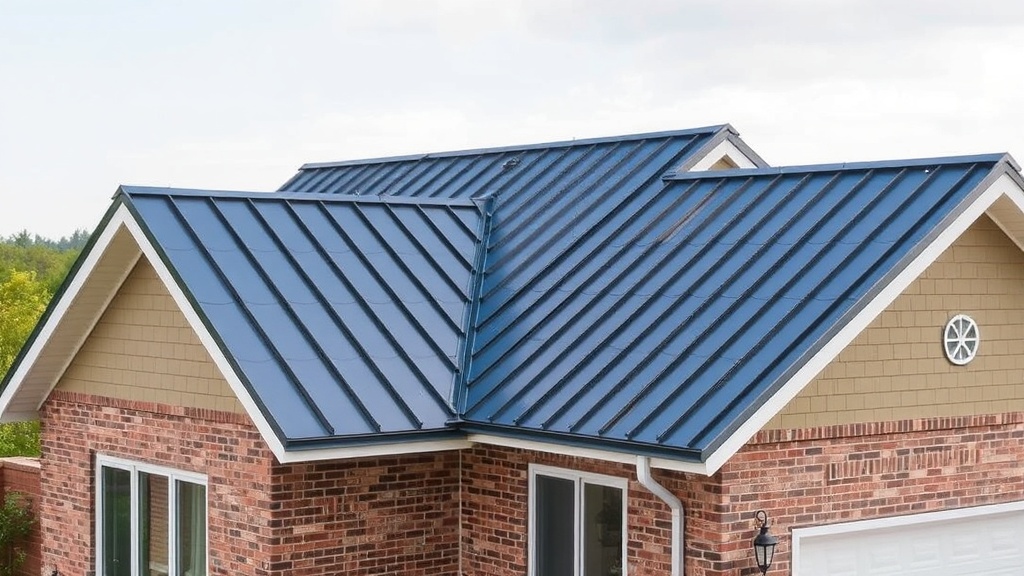
The Number That Stops Augusta Homeowners Cold
A typical asphalt shingle roof replacement in the Augusta area runs $8,000–$14,000. A comparable steel roofing system? You’re looking at $18,000–$32,000, depending on pitch, square footage, and profile. That gap is real, and it deserves an honest conversation — not a sales pitch.
But here’s the calculation most homeowners miss: asphalt shingles in the CSRA last 15–20 years under ideal conditions. Augusta’s conditions are rarely ideal. Between sustained summer heat pushing into the upper 90s, humidity that never really lets go, and a storm season that has put plenty of roofs to the test, the average asphalt roof in this region needs replacement closer to the 12–15 year mark. Steel roofing, properly installed, carries a manufacturer lifespan of 40–70 years.
Run those numbers across two or three roofing cycles and the math starts to shift. Whether steel roofing in Augusta GA makes financial sense for your home depends on a few specific factors — and that’s exactly what this guide works through.
What the CSRA Climate Actually Does to Your Roof
Heat Load and Thermal Cycling
Augusta summers are punishing at ground level. On the roof surface, it’s a different world entirely. Dark asphalt shingles can reach surface temperatures of 150–170°F on a clear July afternoon — well above the air temperature. That kind of sustained heat accelerates the breakdown of asphalt binders, causing shingles to become brittle, crack, and lose granules faster than the warranty timeline assumes.
Steel roofing with a quality reflective coating behaves differently. Energy Star-rated metal roofing panels can reflect a significant portion of solar radiation rather than absorbing it, which keeps attic temperatures lower and reduces the thermal stress on the roof system itself. Homeowners frequently report noticeable drops in cooling costs after switching — in the range of $50–$100 per month during peak summer months, though exact savings depend heavily on attic insulation and HVAC efficiency.
Humidity, Algae, and Moisture Intrusion
High humidity is the quiet enemy of asphalt shingle roofing. The CSRA’s moisture levels create ideal conditions for algae and moss growth, which holds water against the shingle surface and speeds up deterioration. You’ve almost certainly seen those dark streaking stains on roofs around Augusta — that’s algae, and it’s doing structural damage even when it just looks cosmetic.
Steel roofing is non-porous. Algae and moss have no foothold. There’s no granule loss, no water absorption, and no organic material for biological growth to feed on. From a moisture management standpoint, steel is simply a more durable substrate for this climate.
Storm Exposure and Wind Resistance
The CSRA sits in a corridor that sees tropical storm remnants, strong convective storms, and occasional severe weather events that test roof assemblies hard. Asphalt shingles begin to show wind damage at sustained speeds around 60–70 mph, depending on the product grade. Steel roofing systems — particularly standing seam profiles — are engineered to handle winds of 120–140 mph, and their concealed fastener design eliminates one of the most common failure points in exposed-fastener systems.
After major storm events, the pattern Hixons Roofing sees repeatedly in the field is telling: neighborhoods with a mix of asphalt and metal roofs show dramatically fewer insurance claims on the metal side. That’s not anecdotal — it’s what’s on the damage reports.
Steel Roofing vs. Asphalt Shingles: A Real Cost Comparison
Upfront Cost vs. Lifecycle Cost
For a 2,000 square foot home in Augusta, here’s how the numbers typically stack up in 2026:
- Asphalt shingle roof: $9,000–$14,000 installed, with replacement likely needed at the 13–17 year mark in this climate.
- Residential metal roofing (steel standing seam): $20,000–$30,000 installed, with a realistic lifespan of 50+ years and minimal maintenance costs.
Over a 50-year period, an Augusta homeowner with asphalt shingles will likely face two to three full replacements, plus ongoing repair and maintenance costs. Total outlay: potentially $30,000–$50,000 in today’s dollars, not accounting for inflation in materials and labor. The steel roof, installed once, costs less over the same period and delivers better performance throughout.
Insurance and Resale Value
Many homeowners don’t factor in the insurance angle. Several carriers offer premium discounts for Class 4 impact-rated metal roofing — discounts that can run 20–30% on the dwelling coverage portion of your policy, depending on your insurer. Over a decade, that adds up to real money.
On the resale side, residential metal roofing consistently shows up in buyer surveys as a high-value feature, particularly in markets where buyers understand storm risk. Remodeling Magazine’s cost-vs-value research has historically placed metal roofing among the stronger-performing exterior upgrades for resale. While specific ROI percentages vary by market, Augusta-area real estate agents routinely note that a steel roof is a meaningful differentiator in a competitive listing.
Where Steel Roofing Makes the Most Sense — and Where It Doesn’t
Homes That Benefit Most
Steel roofing delivers its strongest return on homes where the owner plans to stay long-term — 15 years or more. It also makes particular sense on homes with complex rooflines or steep pitches where labor costs for future asphalt replacements will be high, and on properties with a history of storm damage or chronic shingle failure.
Homes with significant tree coverage deserve a specific note: overhanging branches are harder on asphalt than on steel, but falling limbs are a different matter. A steel roof won’t prevent physical impact damage from heavy debris, though its structural integrity often means damage stays localized rather than spreading.
When Asphalt Still Makes Sense
Asphalt shingle roofing isn’t a bad product — it’s the right product for the right situation. If you’re planning to sell within five to seven years, the math rarely supports the premium of steel. If your budget is constrained and the roof needs to be replaced now, a quality architectural shingle product at 30-year spec is a sound decision. Good asphalt shingle roofing, installed correctly with proper underlayment and ventilation, still performs well in the Augusta market.
The mistake we see in residential roofing is homeowners choosing the cheapest available product to save money now, then paying for it in repairs and early failure. Mid-grade architectural shingles are almost always worth the modest upgrade from 3-tab in this climate.
What to Know Before You Get a Quote
Profile and Fastener System Matter More Than Most People Know
Not all steel roofing is the same. There are two primary profiles: standing seam (concealed fastener) and exposed fastener panels. Standing seam is the premium option — cleaner aesthetically, dramatically better at preventing water infiltration, and the profile most manufacturers back with their full warranty. Exposed fastener systems cost less but introduce long-term maintenance needs as fastener seals degrade.
For most Augusta residential applications, standing seam is the right call. The price difference between the two is meaningful but not enormous in the context of a full roof investment.
Gauge, Coating, and the Questions to Ask Your Contractor
Steel panels come in different gauges — typically 24 or 26 gauge for residential use. Thicker (lower gauge number) panels are more durable and more resistant to hail damage. 24-gauge is the standard for quality residential metal roofing for homes; 26-gauge is acceptable but sits at the lower end of what we’d recommend in storm-exposed areas like the CSRA.
The coating matters just as much. Kynar 500 (PVDF) coatings offer the best UV and fade resistance. Cheaper polyester coatings will chalk and fade faster in Augusta’s sun. This is the kind of spec detail that separates a 40-year roof from one that looks tired in 15.
When getting quotes, ask every contractor to specify the gauge, the coating type, and the manufacturer — and ask to see the actual warranty document, not a summary. A manufacturer’s warranty that requires certified installer credentials to be valid is common; make sure your contractor holds that certification.
Roof Maintenance for Homeowners With Steel Roofs
One of the genuine advantages of steel is how little it demands. Roof maintenance for homeowners with metal roofing is mostly about keeping gutters clear, removing debris from valleys, and having a professional inspection every five to seven years. There’s no granule shedding to monitor, no cracking to patch, and no algae treatment cycle.
That said, steel roofs aren’t zero-maintenance. Exposed fastener systems need periodic resealing. Flashings — particularly around chimneys, skylights, and penetrations — are the most common failure point on any roof system and deserve attention during inspections. Catching a minor flashing issue early costs a few hundred dollars. Catching it after it’s been leaking for two seasons costs considerably more.
Hixons Roofing has served Augusta-area homeowners for years, and across hundreds of roofing projects, the pattern is consistent: the roofs that perform longest are the ones where the homeowner treated the installation as an investment and followed through with basic inspection discipline — not the ones where the cheapest bid won and maintenance got skipped.
Making the Call
Steel roofing in Augusta GA isn’t right for every homeowner, but for the right situation — long-term ownership, storm-exposed location, high energy costs, or a home that’s seen multiple asphalt replacements already — it’s a genuinely sound financial decision, not just an upgrade. The upfront premium is real. So is the 50-year math.
Get at least two quotes, ask for full spec sheets on whatever product is being proposed, and compare lifecycle cost rather than just installation price. That single shift in how you evaluate the bids will lead you to the right answer for your specific home.
Written by the Hixons Roofing team — residential and commercial roofing specialists serving Augusta, GA and the surrounding CSRA with expertise in metal roofing, asphalt shingle systems, and full roof replacement.
To get a straight assessment of whether steel roofing makes sense for your home, request a quote from Hixons Roofing at hixonsroofing.com.