
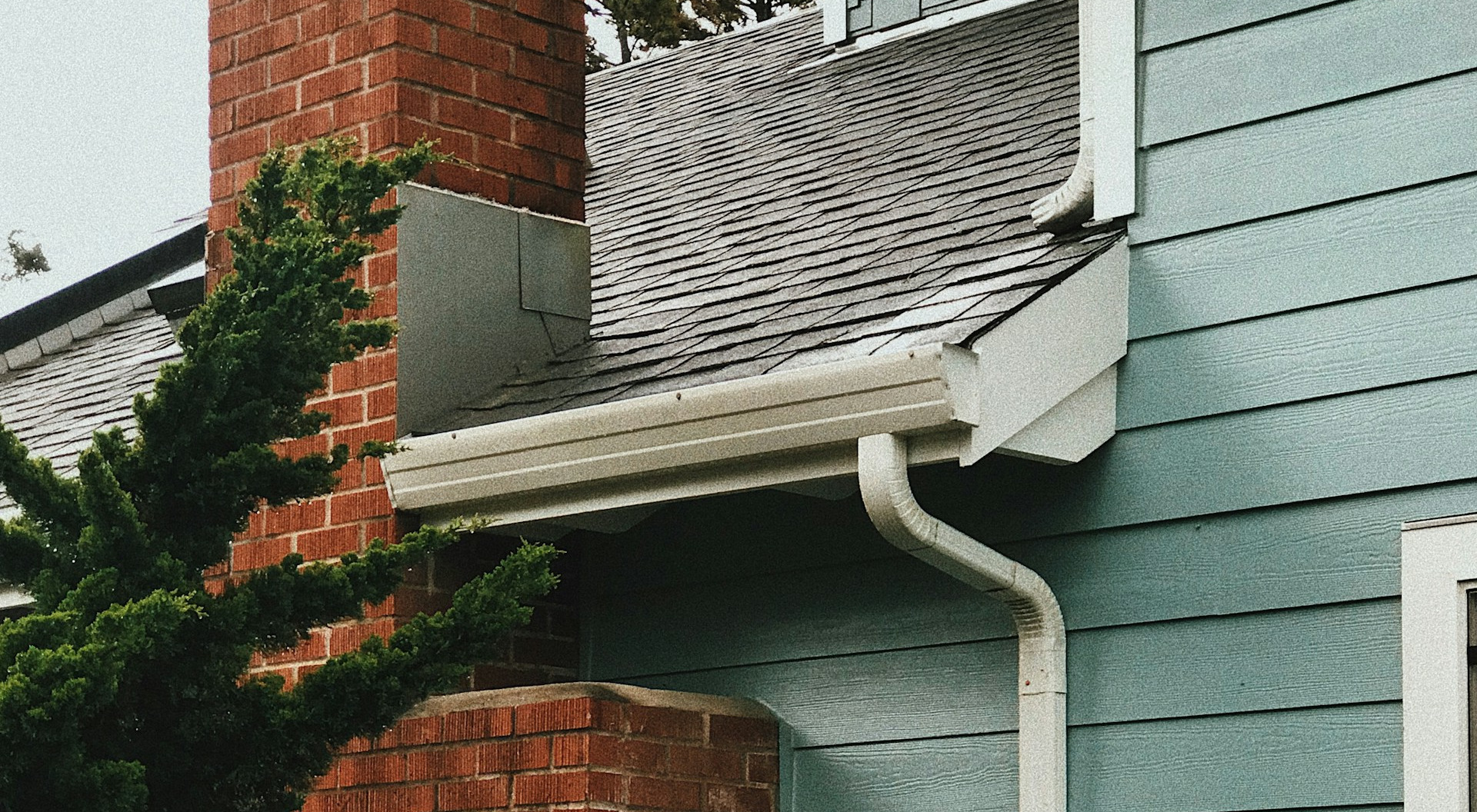
You wouldn’t patch together a roof from mismatched shingles and hope for the best. So why would you do the same thing with your gutters?
Yet that’s essentially what sectional gutters are: pieces snapped together with seams every ten feet, each one a potential failure point waiting for the next Southern downpour. Meanwhile, seamless gutters run the entire length of your roofline as a single, continuous piece—no weak spots, no joints collecting debris, no seams popping open when your home needs protection most.
The difference isn’t cosmetic. It’s structural, financial, and if you’ve ever watched water cascade over the side of your gutters during a summer thunderstorm, you know it’s personal.
How Seamless Gutters Actually Work (And Why Most Homeowners Get This Wrong)
Here’s what most people don’t realize: seamless gutters aren’t manufactured in a factory and shipped to your home. They’re created on-site, custom-formed to your exact roofline measurements.
A professional gutter installation crew shows up with a portable roll-forming machine mounted on a truck. They feed flat aluminum coil into one end, and a perfectly shaped gutter emerges from the other—cut to the precise length of your home’s edge. No gaps. No overlapping sections. Just one continuous piece.
The Manufacturing Process That Changes Everything
That on-site fabrication is what eliminates the biggest weakness in traditional sectional systems: the seams. When gutters are formed as a single piece, you remove roughly 80-90% of potential leak points right from the start.
Sectional gutters, by contrast, come in pre-cut 10-foot sections that installers connect using slip joints, rivets, and sealant. Each connection is a compromise—a place where water can eventually find its way through.
Why the Seamless Design Handles Southern Weather Better
If you live anywhere from Charleston & Mount Pleasant to Columbia, you know what a real rainstorm looks like. We’re not talking drizzle. We’re talking 2-3 inches in an hour, the kind of deluge that tests every component of your home’s water management system.
Seamless gutters handle that volume without the weak points where sections meet. There’s simply less that can go wrong when water is rushing through at full force.
The Real Cost Breakdown: Why Seamless Gutters Cost More Upfront But Less Over Time
Let’s talk numbers, because the price difference is usually the first thing homeowners notice.
In 2026, sectional gutters typically run $3-$5 per linear foot installed. Seamless gutters cost $6-$12 per linear foot. On a typical 150-foot installation, that’s the difference between $450-$750 for sectional versus $900-$1,800 for seamless.
Sticker shock? Maybe. But here’s the calculation most people miss.
The Hidden Maintenance Costs of Sectional Systems
Sectional gutters require resealing every 3-5 years. That’s $200-$400 each time for materials and labor. Over a 20-year lifespan, you’re looking at 4-6 resealing jobs totaling $800-$2,400.
Add in the higher likelihood of section replacements when joints fail (typically $150-$300 per repair), and suddenly that “cheaper” option is costing you more than seamless gutters would have from day one.
What Water Damage Actually Costs When Gutters Fail
The bigger number? Foundation damage from persistent leaks. When sectional gutter seams split and water pours directly against your home’s foundation, you’re not looking at a $200 repair bill. You’re looking at $3,000-$10,000 for foundation work.
Even minor water intrusion into your basement or crawl space can run $1,500-$3,000 to remediate once mold starts growing. Compare that to the one-time investment in seamless gutters, and the math changes completely.
Installation Differences That Affect Performance for Decades
The way gutters get installed matters as much as the type you choose. But seamless systems have built-in advantages that sectional gutters simply can’t match.
Custom Fitting vs. Generic Sections
Because seamless gutters are formed on-site to your exact measurements, they fit your roofline perfectly. No stretching sections to reach corners. No awkward joints in visible spots. No compromising the ideal slope because you’re limited by pre-cut lengths.
Sectional gutters force installers to work with what’s available. Need 47 feet? You’re getting five 10-foot sections with one cut short—and five potential leak points instead of zero.
The Slope Factor Most DIYers Miss
Proper gutter slope is critical: too flat and water pools, too steep and it overwhelms downspouts. The ideal is 1/4 inch of drop per 10 feet of run.
With seamless installation, professionals can achieve that precise slope across the entire length without interruption. Sectional systems have to maintain slope between sections, where joints can create unintended dips or rises that trap water and debris.
Why Professional Installation Matters More Than You Think
Here’s what contractors won’t always tell you: sectional gutters are marketed as DIY-friendly because the industry makes money selling you materials for a system that’ll need fixing. Seamless gutters require professional equipment and expertise—which is exactly why they last longer.
When Hixons Roofing handles a gutter installation, we’re not just hanging metal on your house. We’re engineering a water management system matched to your home’s specific pitch, rainfall patterns, and architectural details. That level of customization isn’t possible with off-the-shelf sections.
Performance in Heavy Rain: Where Sectional Systems Show Their Age
The true test of any gutter system comes during peak water flow. And in the Southeast, that means those summer storms that turn your street into a river.
How Seams Become Sieves Under Pressure
Water doesn’t politely flow through sectional gutter seams. It forces them open. Over time, thermal expansion and contraction weaken the sealant. Ice (yes, we get it occasionally in Aiken and Augusta) pries joints apart. Wind stress creates micro-movements that crack even freshly sealed connections.
When a 2-inch-per-hour downpour hits, those compromised seams don’t just drip. They gush. We’ve seen sectional gutters lose 30-40% of their water volume through failed joints during heavy rain—meaning nearly half the water that should be flowing to downspouts is instead pouring onto your foundation.
Debris Accumulation at Joint Points
There’s another problem: sectional gutter seams create turbulence in water flow. That turbulence drops debris right at the joints, where leaves and pine needles pack tight and create dams.
Seamless gutters maintain smooth, consistent flow. Debris keeps moving toward downspouts instead of piling up at seams. That means fewer clogs, less frequent cleaning, and better performance when you need it most.
Lifespan Comparison: What 20 Years of Weather Actually Does
Both systems use similar materials—typically aluminum, sometimes copper or steel. So why does lifespan differ so dramatically?
The Weak Link in Every Sectional System
Aluminum gutters can theoretically last 25-30 years. But that’s for the material, not the system. Sectional gutters fail at the seams long before the aluminum itself wears out.
Most sectional systems need significant repairs or replacement within 10-15 years. Seamless systems routinely hit 20-25 years with minimal maintenance beyond occasional cleaning.
What Expansion and Contraction Do to Joints
In the Southeast, we see temperature swings from the low 20s in winter to over 100°F in summer. That’s an 80-degree range. Aluminum expands and contracts with every cycle, and sectional gutter joints bear the stress of that movement.
Seamless gutters move as a single unit. There’s nowhere for stress to concentrate and create failure points.
Making the Choice: When Each System Makes Sense
So is there ever a good reason to choose sectional gutters in 2026? Honestly, the cases are rare—but they exist.
When Sectional Might Be the Right Call
If you’re working on a rental property you plan to sell within 2-3 years, sectional gutters get you to functional at the lowest upfront cost. If you’re in a temporary situation or dealing with a small shed or detached garage, the longevity advantage of seamless doesn’t matter as much.
But for your primary residence? For a home you’re keeping long-term? The calculus overwhelmingly favors seamless.
Why Seamless Is the Default Choice for Serious Homeowners
When Hixons Roofing evaluates gutter installation and roofing projects across the region, we recommend seamless gutters for about 95% of residential applications. The performance gap is just too significant to ignore.
Yes, you pay more upfront. But you’re buying decades of reliable protection instead of years of periodic repairs. You’re investing in a system that actually does its job when a storm dumps three inches of rain in an afternoon.
The Regional Factor: Why Location Matters
Southern weather is particularly hard on sectional systems. The combination of heavy rainfall, high humidity, temperature swings, and occasional ice creates the perfect conditions for seam failure.
If you lived in the desert Southwest with 8 inches of annual rainfall, sectional gutters might hold up fine. But from the coast to the midlands, seamless is the smart play.
Getting It Done Right: What Professional Installation Actually Means
Even the best seamless gutters fail if they’re poorly installed. Slope, hanger spacing, downspout placement, and end cap sealing all matter.
That’s where working with experienced professionals makes the difference. Hixons Roofing has installed thousands of gutter systems across South Carolina and Georgia. We know how to account for your specific roof pitch, handle complex rooflines with dormers and valleys, and size systems for actual peak rainfall rates—not generic industry standards.
When we say we serve areas from the coast to the midlands, we mean we understand the different weather patterns in Charleston and Mount Pleasant versus Columbia. That local expertise shapes every installation decision.
The bottom line? Seamless gutters aren’t just a premium option—they’re the right option for homes that need to handle real Southern weather for real Southern lifespans. The upfront cost difference disappears fast when you’re not paying for repairs every few years and never dealing with foundation damage from persistent leaks.
If you’re ready to invest in a gutter system that actually protects your home instead of just decorating the roofline, reach out to Hixons Roofing. We’ll evaluate your specific situation, provide straight answers about what you need, and install a seamless system that’ll still be doing its job two decades from now.