
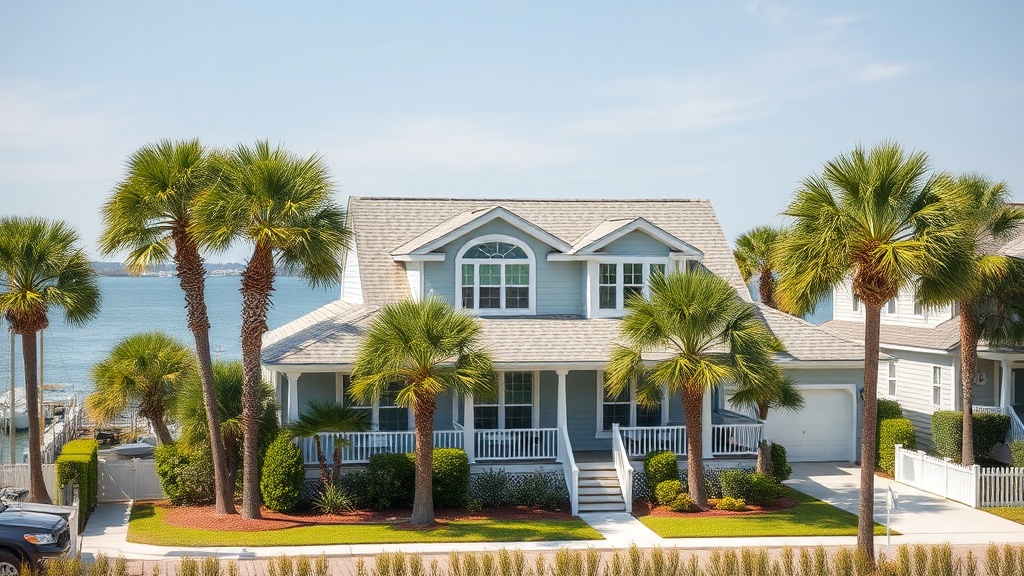
A single storm in September 2025 caused over $180 million in roof damage across the Charleston area. Yet the real threat to your Mount Pleasant home isn’t the dramatic hurricane that makes headlines—it’s the invisible assault happening right now, while you read this sentence. Salt particles are crystallizing in microscopic roof crevices, moisture is migrating through your underlayment, and UV radiation is breaking down protective coatings at the molecular level.
Welcome to roofing Mount Pleasant style, where coastal living demands a completely different approach to protecting your home.
Why Standard Roofing Practices Fail in Coastal Conditions
Drive thirty miles inland, and roofing becomes remarkably straightforward. Standard asphalt shingles last their expected 20-25 years. Fasteners don’t corrode prematurely. Underlayment doesn’t face constant humidity cycling.
But here in Mount Pleasant, those same materials and installation methods can fail in half that time.
The Salt Air Factor Most Homeowners Underestimate
Salt doesn’t just affect metal—though that’s where you’ll notice it first. Every time ocean moisture evaporates from your roof surface, it leaves behind salt crystals that work their way into every material. Asphalt shingles become brittle faster. Sealant strips lose adhesion. Even architectural-grade shingles that should last 30 years often show significant degradation by year 15 in coastal roofing environments.
The real problem? You won’t see it happening. There’s no dramatic moment when your roof suddenly fails. Instead, you get gradual weakening that leaves you vulnerable when the next tropical system arrives.
Hurricane Wind Uplift: The 140 MPH Question
Mount Pleasant sits squarely in a high-velocity hurricane zone, which means your roof must meet wind ratings that would seem excessive inland. We’re talking about uplift forces exceeding 60 pounds per square foot—enough to peel off improperly installed roofing materials like wrapping paper.
Here’s what most people don’t realize: builder-grade roofing installed to minimum code might technically pass inspection, but it’s engineered for survival, not durability. After a Category 2 hurricane passes through with 110 MPH sustained winds, that roof might remain attached—but with enough edge lifting, seal damage, and fastener stress that you’re looking at premature replacement within 5-7 years instead of 20.
Roofing Materials That Actually Survive the Lowcountry
Not all roofing materials are created equal when salt air meets 95-degree heat meets sudden afternoon thunderstorms. Some materials marketed as “premium” fail faster here than basic options installed correctly.
Metal Roofing: The Coastal Champion
There’s a reason you see metal roofing proliferating across Mount Pleasant neighborhoods. When properly specified for coastal environments, metal roofing for homes delivers 50+ year lifespans even under constant salt exposure. The key phrase? “Properly specified.”
Not all metal roofs are coastal-ready. You need Galvalume or aluminum substrates with Kynar 500 or similar fluoropolymer coatings rated for coastal exposure. Cheaper polyester-coated panels will chalk and fade within 7-10 years. And those exposed fasteners on cheaper metal systems? They’re corrosion points waiting to leak.
Standing seam metal roofing eliminates exposed fasteners entirely, with concealed clips that allow thermal expansion while maintaining waterproof integrity. For Mount Pleasant’s temperature swings and hurricane winds, it’s the gold standard—which is why Charleston’s Premier Luxury Roofing Contractor Since 1984 installs more standing seam systems every year.
Impact-Rated Asphalt Shingles: Your Budget-Conscious Option
If metal roofing isn’t in your budget, don’t default to basic three-tab shingles. Impact-rated architectural shingles with Class 4 hail ratings and enhanced wind warranties (130+ MPH) provide significantly better coastal performance. You’re looking at a 15-20% cost premium over standard shingles, but a potential 40-60% longer lifespan in salt air conditions.
Look for shingles with algae-resistant granules—crucial in our humid climate where black streaks aren’t just cosmetic issues but signs of organic growth that accelerates deterioration. Brands offering “coastal formulation” products use modified asphalt blends and specialized adhesives that tolerate heat cycling better.
What About Tile and Slate?
Concrete and clay tiles perform well in coastal environments—the materials themselves resist salt beautifully. The challenge? Installation complexity and weight. Your roof structure must support 900-1200 pounds per square versus 250-400 for asphalt or metal. That often means structural reinforcement, especially in older homes.
Slate offers incredible longevity but faces the same weight issues, plus limited local installation expertise. When a slate roof needs repair after storm damage, finding qualified residential roofing contractors who can properly work with the material becomes challenging.
The Underlayment Nobody Sees But Everyone Needs
Here’s insider knowledge most homeowners never learn: your visible roofing material is actually your second line of defense. The underlayment beneath it—that synthetic or felt layer you never see—determines whether minor seal failures become major leaks.
Why Felt Paper Doesn’t Cut It Anymore
Traditional #30 felt underlayment breaks down rapidly under coastal conditions. It absorbs moisture, develops wrinkles, tears during installation, and degrades from heat. In Mount Pleasant’s climate, felt can deteriorate significantly even before your finish roofing goes on.
Synthetic underlayment changed the game. Products like Titanium UDL, GAF FeltBuster, or Owens Corning ProArmor provide waterproofing that lasts as long as your roof. They don’t wrinkle, they handle foot traffic during installation, and they resist UV exposure for months if installation gets delayed. For coastal roofing applications, synthetic underlayment isn’t premium—it’s baseline.
Ice and Water Shield in the Lowcountry?
Yes, even though we rarely see ice. Self-adhering ice and water shield membranes provide exceptional protection in vulnerable areas: valleys, roof-to-wall transitions, around penetrations, and along eaves. During wind-driven rain events—which Mount Pleasant experiences regularly—this rubberized membrane prevents water infiltration that would bypass standard underlayment.
The best residential roofing contractors apply ice and water shield across the entire roof deck in high-wind coastal zones. It’s expensive—adding $1,500-$3,000 to a typical residential roof—but it’s also the difference between a roof that sheds hurricane rains and one that develops interior water damage.
Fastener Selection: The Detail That Determines Longevity
Nobody calls a roofing company asking about fastener specifications. But five years from now, fastener choice might be the reason you’re calling for emergency repairs—or not calling at all.
When Galvanized Isn’t Good Enough
Standard galvanized nails and screws corrode in salt air. You’ll see rust stains streaking down from nail heads within 3-5 years. As fasteners corrode, they lose holding power. Shingles lift. Water penetrates. The damage cascades.
Stainless steel fasteners cost 3-4 times more than galvanized, but they don’t corrode. For metal roofing applications near the coast, they’re non-negotiable. For asphalt shingle roofs, hot-dipped galvanized fasteners (not electroplated) provide adequate corrosion resistance at reasonable cost.
Fastener Placement and Wind Uplift
How fasteners are installed matters as much as what they’re made from. High-wind roofing requires enhanced fastener patterns—six nails per shingle instead of four, fasteners placed in the adhesive strip zone, and starter strip secured every six inches instead of twelve.
These details aren’t visible once installation completes, which is why choosing experienced roofing Mount Pleasant contractors with coastal expertise matters. Summerville & North Charleston’s Trusted Roofing Contractor understands that installation details invisible to homeowners are precisely what keeps roofs attached during September storms.
Moisture Management: Your Hidden Enemy
Coastal homes face moisture challenges that have nothing to do with leaks. High humidity, temperature differentials, and limited evaporation windows create conditions where moisture accumulates in attic spaces and roof assemblies.
Ventilation Requirements Change Near the Coast
Standard ventilation ratios (1 square foot of net free area per 150 square feet of attic space) often prove inadequate in coastal climates. The combination of high humidity, elevated temperatures, and limited nighttime cooling means attics stay hot and damp longer.
Ridge vents combined with proper soffit intake provide continuous airflow that mechanical ventilation can’t match. Solar-powered attic fans help during peak summer months, but passive ventilation does the heavy lifting year-round. Inadequate ventilation doesn’t just shorten shingle life—it creates conditions for mold growth and structural wood deterioration you won’t discover until problems become expensive.
The Condensation Problem in Metal Roofs
Metal roofing for homes provides excellent durability, but metal’s thermal conductivity creates condensation risks. When cool morning air hits a metal roof that’s radiated heat overnight, condensation forms on the underside. Without proper underlayment and ventilation, that moisture drips onto roof decking.
This is why metal roof installations require vapor-permeable synthetic underlayment and enhanced ventilation. Cutting corners on these components saves $800 during installation but can lead to $8,000 in decking replacement five years later.
Hurricane Preparedness: Before the Watches Get Posted
By the time Charleston area residents start seeing hurricane watches, it’s too late for meaningful roof preparation. Hurricane readiness happens during installation and through proactive maintenance.
The 72-Hour Pre-Storm Inspection
When you see a tropical system developing in the Atlantic with potential Charleston impacts, take two hours for a roof inspection. Look for lifted shingle corners, loose flashing, clogged gutters, and nearby tree branches. These aren’t issues you can fix yourself, but identifying them lets you call for emergency service while contractors still have availability.
Most people don’t realize: the best roofing company near me during hurricane season is the one you’ve already established a relationship with before storm warnings. Contractors prioritize existing customers when emergency calls flood in.
Post-Storm Documentation
After any significant wind event, document your roof’s condition with photos before making temporary repairs. Insurance claims often require evidence of storm damage versus pre-existing conditions. Take photos from ground level showing all roof sections, plus close-ups of any visible damage.
Then get a professional inspection within 2-3 weeks. Some damage—like seal failures, minor membrane tears, or fastener loosening—isn’t visible from ground level but will worsen with every subsequent rain event. Catching it early often means simple repairs instead of major reconstruction.
Choosing Roofing Materials for Your Mount Pleasant Home
There’s no single “best” roofing material for coastal conditions—your optimal choice depends on budget, architectural style, and longevity expectations. But there are clear tiers of performance.
The 20-Year Plan: Impact-Rated Shingles
For homeowners planning to stay 15-20 years, high-quality architectural shingles with impact ratings and enhanced wind warranties provide solid value. Expect to pay $8,500-$12,500 for a 2,000 square foot roof with proper coastal-grade underlayment and installation. This gets you through two decades of Charleston weather with one roof replacement and minimal maintenance.
The 50-Year Plan: Metal or Tile
If this is your forever home, metal or tile roofing makes financial sense despite higher upfront costs. A standing seam metal roof runs $18,000-$28,000 for that same 2,000 square foot home, but it’s the last roof you’ll install. Factor in one avoided re-roofing ($12,000 in 2045 dollars), and the lifetime cost advantage becomes clear. Plus, metal roofing for homes delivers energy efficiency benefits—typically 15-25% cooling cost reduction—that compound over decades.
What About Solar Integration?
Solar shingles installation makes sense in Mount Pleasant’s sunny climate, but requires careful planning with your roofing materials. Retrofitting solar onto existing roofs works best with metal roofing’s structural advantages. Installing solar during a roof replacement maximizes value—you’re already paying for staging, permits, and labor.
The key consideration: solar panels last 25-30 years, so your roof needs comparable longevity. Installing solar panels on a 10-year-old asphalt shingle roof means removing and reinstalling those panels for a roof replacement before the panels reach end-of-life.
Protecting Your Investment in Paradise
Living in Mount Pleasant means accepting that your home faces environmental challenges most American homeowners never consider. Your roof isn’t just protecting you from occasional rain—it’s the barrier between your family and one of the most demanding climates in the country.
But here’s the reality check: premium roofing materials and expert installation aren’t luxuries in coastal environments. They’re the baseline for reasonable longevity and avoided catastrophic failure. You can’t cheat coastal physics with budget shortcuts.
The homeowners who thrive here understand this isn’t about finding the cheapest roofing quote—it’s about finding residential roofing contractors who understand salt air corrosion, hurricane wind dynamics, and moisture management. It’s about choosing roofing materials engineered for coastal durability, not just marketed with coastal aesthetics.
Since 1984, Hixons Roofing has specialized in the unique demands of Lowcountry roofing. We’ve watched hurricane seasons come and go, we’ve seen which materials survive and which fail, and we’ve refined installation techniques that keep roofs attached and watertight through conditions that would destroy standard construction.
Your Mount Pleasant roof deserves that level of expertise. When you’re ready to discuss roofing options engineered for coastal reality rather than coastal marketing, reach out to our team. Because the next hurricane season isn’t a question of if—it’s a question of when, and whether your roof is ready.