
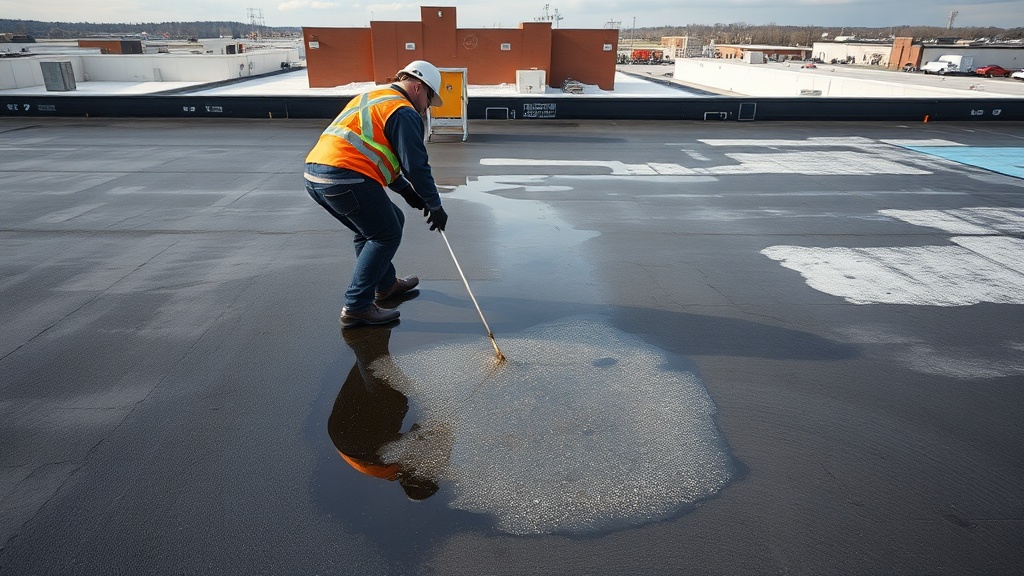
Here’s something most property owners don’t realize: that puddle on your flat roof isn’t just sitting there harmlessly. It’s actively working to destroy your roof, usually starting within 48 hours. And by the time you see water stains on your ceiling, the actual damage is typically three times worse than what’s visible.
Flat roofs fail differently than pitched roofs, and understanding why could save you thousands in emergency repairs. Whether you’re managing a commercial building in Columbia or own a modern home with a flat roof section in Charleston, the causes are surprisingly predictable—and mostly preventable.
Let’s dig into why flat roof repair is one of the most common calls roofing contractors receive, and more importantly, what you can do about it.
The Physics Problem: Why Flat Roofs Are Built to Leak
Calling them “flat” is actually a misnomer. A properly installed flat roof should have a minimum slope of 1/4 inch per foot. But here’s the issue: even with that slope, water doesn’t sheet off like it does on a pitched roof. It pools, sits, and waits for the tiniest weakness.
Gravity works against flat roofs in ways it doesn’t affect traditional pitched systems. Every imperfection in the membrane, every microscopic crack in a seam, every slightly raised bolt becomes a potential entry point. Water doesn’t rush past these vulnerabilities—it sits directly on them for hours or days, testing them relentlessly.
The 48-Hour Rule Most Contractors Won’t Mention
Standing water that remains on a flat roof for more than 48 hours after rainfall starts degrading most roofing membranes. TPO and EPDM systems lose elasticity. PVC becomes brittle. Modified bitumen softens and separates from its base layers.
This is why commercial roofing inspections focus so heavily on drainage. It’s not about whether water gets on your roof—that’s inevitable. It’s about how quickly it gets off.
The Big Three: What Actually Causes Most Flat Roof Leaks
After analyzing thousands of roof leak repair jobs across South Carolina and Georgia, three culprits emerge as responsible for roughly 80% of all flat roof failures. Let’s break them down.
Ponding Water: The Silent Roof Killer
Remember that 1/4 inch per foot slope we mentioned? Over time, structural settling, inadequate drainage design, or simple installation errors create low spots where water collects. These “ponds” might look harmless, but they’re accelerating your roof’s aging process by a factor of three.
Here’s what happens: UV rays penetrate standing water and break down the protective coatings on your membrane. Algae and moss start growing, creating a layer that traps moisture against the roofing material. Freeze-thaw cycles in winter months expand and contract that water, creating microscopic tears that become major leaks.
Most concerning? Ponding water adds significant weight to roof structures. A single inch of standing water across a 1,000 square foot section adds over 5,000 pounds of load. On older commercial buildings in areas like Aiken and Augusta, this can stress structural supports beyond their design limits.
Membrane Seam Failures: Where Good Roofs Go Bad
Your flat roof membrane—whether TPO, EPDM, PVC, or modified bitumen—comes in rolls. That means seams. And seams are always the weakest link.
Heat-welded seams on TPO and PVC roofs should create a bond stronger than the membrane itself when done correctly. But “correctly” requires specific temperatures, proper overlap, clean surfaces, and experienced technicians. If the installer was rushing, if it was too cold or windy, or if they cut corners on surface prep, those seams will fail—usually within 3-5 years.
EPDM roofs use adhesive or tape at seams, which presents a different problem: adhesion relies on perfect surface preparation and can deteriorate faster than the rubber itself. A seam that looks fine from the roof surface might be completely separated underneath, channeling water directly into your building envelope.
Flashing Failures: The Detail Work Nobody Sees
Walk onto any flat roof and you’ll see penetrations everywhere: HVAC units, vent pipes, drains, skylights, parapet walls. Each one requires custom flashing—the metal or membrane pieces that seal the transition between the roof surface and the vertical element.
This is where residential roofing and commercial roofing really differ in complexity. A commercial building might have dozens of roof-mounted units, each one a potential leak point. And here’s the kicker: flashing typically fails years before the main roof membrane.
The expansion and contraction from temperature swings in South Carolina and Georgia summers—where roof surface temperatures can hit 170°F—work flashing loose over time. Sealants dry out and crack. Metal flashings develop stress fractures. The roof membrane pulls away from vertical surfaces.
Most property owners don’t notice until water is already dripping onto equipment or inventory below.
The Hidden Culprits: Less Common but Just as Destructive
Beyond the big three, several other issues cause flat roof leaks that often get misdiagnosed or overlooked entirely.
Blistering and Bubbling: Trapped Moisture Working from Inside
Sometimes the enemy is already inside your roof system. Moisture trapped between membrane layers during installation or absorbed through poor ventilation creates blisters—raised bubbles in the roof surface. As temperatures fluctuate, these blisters expand and contract, eventually rupturing and creating direct pathways for water infiltration.
Thermal Shock and Material Fatigue
A black EPDM roof in August can be 170°F during the day and drop to 85°F at night. That 85-degree swing happens daily for years. Every material has a fatigue limit—a point where repeated expansion and contraction causes molecular breakdown. For most flat roofing materials in the Southeast, that limit arrives between years 15 and 25, depending on installation quality and maintenance.
Unfortunate Design Decisions
Some leaks were baked in from day one. Insufficient drainage, inadequate slope, incompatible material choices, or cost-cutting during initial installation create problems that no amount of maintenance can fully overcome. If you’re dealing with chronic leaks despite repeated repairs, design flaws might be the real culprit.
Prevention: The Strategies That Actually Work
Here’s the truth most roofing companies won’t emphasize: prevention costs about one-tenth of what emergency roof repair runs. But it requires consistency.
The Quarterly Inspection Protocol
Four times per year—ideally aligned with seasons—someone needs to walk your flat roof with a checklist. You’re looking for standing water 48 hours after rain, new cracks or separations at seams, deteriorating sealant around flashing, debris blocking drains, and any surface changes like blistering or unusual wear patterns.
For commercial properties in Summerville or North Charleston, this isn’t optional—it’s insurance against catastrophic failure. Hixons Roofing offers inspection services that catch problems at the $500 repair stage instead of the $15,000 emergency stage.
Drainage Maintenance: Boring but Critical
Clear your roof drains and scuppers monthly during fall when leaves are dropping, and quarterly the rest of the year. A single blocked drain can create ponding across hundreds of square feet. Install drain screens to catch debris before it creates blockages.
Immediate Response to Minor Issues
See a small blister? A separated seam edge? A crack in flashing sealant? Address it immediately. These problems never get better on their own—they only accelerate. A tube of compatible sealant and 15 minutes of work can prevent a leak that causes thousands in interior damage.
Repair vs. Replacement: The Decision Framework
This is where property owners often make expensive mistakes, either repairing a roof that should be replaced or replacing one that has years of serviceable life left.
When Flat Roof Repair Makes Sense
If your roof is under 15 years old, the damage is localized to specific areas (less than 30% of total surface), and the underlying structure is sound, repair is usually the right call. Modern materials and techniques can patch sections seamlessly, often with warranties of 5-10 years on the repair work.
Common repairable issues include isolated seam failures, flashing around specific penetrations, small sections with blistering or punctures, and localized ponding that can be addressed with tapered insulation systems.
When Roof Replacement Is the Only Real Answer
If your roof is over 20 years old, you’re seeing multiple leak points across different areas, there’s visible sagging or structural concerns, or you’ve done multiple repairs in the past three years, it’s time for a full replacement conversation.
Here’s the calculation nobody wants to hear but everyone needs to: if repair costs exceed 40% of replacement cost, and your roof is in the back half of its expected lifespan, replacement is almost always the smarter financial move. You’re not just stopping current leaks—you’re preventing the next five years of emergency repairs.
The Coating Alternative
For roofs that are structurally sound but showing age, professional coating systems offer a middle ground. Modern elastomeric coatings can add 10-15 years to a roof’s life, seal minor imperfections, improve energy efficiency with reflective surfaces, and cost 40-60% less than full replacement.
Not every roof qualifies—excessive ponding water, severely degraded membranes, or structural issues rule out coating—but it’s worth discussing with experienced contractors.
What to Expect: The Repair and Replacement Process
Understanding what professional flat roof repair actually involves helps you evaluate contractors and set realistic expectations.
Professional Diagnosis Comes First
Legitimate contractors don’t guess. They conduct moisture scans to map exactly where water has penetrated, inspect the entire roof system including areas showing no obvious problems, and provide detailed documentation of findings with photos and condition assessments.
At Hixons Roofing, this diagnostic phase determines whether you’re looking at a $1,500 repair or a $45,000 replacement—and we show you exactly why.
The Repair Timeline
Most isolated repairs take 1-3 days depending on scope and weather conditions. Larger projects involving multiple areas or coating applications might run 5-10 days. Full replacements on commercial buildings can take 2-6 weeks depending on size and complexity.
Weather Windows Matter More on Flat Roofs
Unlike pitched roof work, flat roof installation and repair requires perfect weather windows. Rain during application is catastrophic. Extreme heat affects material adhesion. High winds contaminate surfaces. Your contractor should be monitoring forecasts carefully and willing to reschedule rather than compromise installation quality.
Choosing the Right Contractor for Flat Roof Work
This isn’t like hiring someone to replace shingles. Flat roofing requires specific expertise, specialized equipment, and manufacturer certifications that many general roofing contractors simply don’t have.
Look for contractors with documented commercial roofing experience even if your project is residential—commercial standards are higher. Verify manufacturer certifications for your specific membrane type (TPO, EPDM, PVC, etc.). Ask about their moisture detection equipment and diagnostic process. Request references from projects at least five years old so you can evaluate long-term performance.
Red flags include contractors who diagnose from the ground without roof access, provide quotes without moisture scanning, pressure you toward replacement without explaining repair options, or offer prices dramatically lower than other estimates (usually means inferior materials or shortcuts).
In markets across South Carolina and Georgia—from Mount Pleasant to Beech Island—Hixons Roofing has built a reputation on thorough diagnostics, transparent pricing, and solutions that match your actual needs rather than our profit margins. We’ve repaired roofs that other contractors wanted to replace, and we’ve recommended replacement when property owners hoped repair would work.
The difference is expertise backed by integrity.
Stop Leaks Before They Start
Flat roof leaks are predictable, preventable, and—when caught early—surprisingly affordable to fix. The property owners who avoid catastrophic failures and emergency repairs aren’t lucky. They’re proactive.
They inspect quarterly. They address minor issues immediately. They work with contractors who understand the physics of flat roofing systems and the specific challenges of the Southeast climate.
If you’re seeing water stains, fighting chronic leaks, or simply haven’t had your flat roof inspected in over a year, don’t wait for the next thunderstorm to reveal how bad things have gotten. Contact Hixons Roofing for a comprehensive flat roof assessment. We serve commercial and residential properties throughout South Carolina and Georgia, and we’ll tell you exactly what you’re dealing with—and exactly what it’ll take to fix it right.
Because the best time to fix a flat roof leak was six months ago. The second best time is right now.