
At 2:47 AM, a massive oak branch crashes through your bedroom ceiling during a thunderstorm. Rain pours into your home. Your family huddles in the living room while water spreads across the hardwood floors. In six hours, that initial roof damage could cost you an additional $15,000 in interior damage—unless you know exactly what to do right now.
This is when emergency roof repair becomes the difference between a manageable crisis and a catastrophic loss. Here’s everything you need to know about emergency tarping when disaster strikes your South Carolina or Georgia home.
What Emergency Roof Tarping Actually Is (And What It Isn’t)
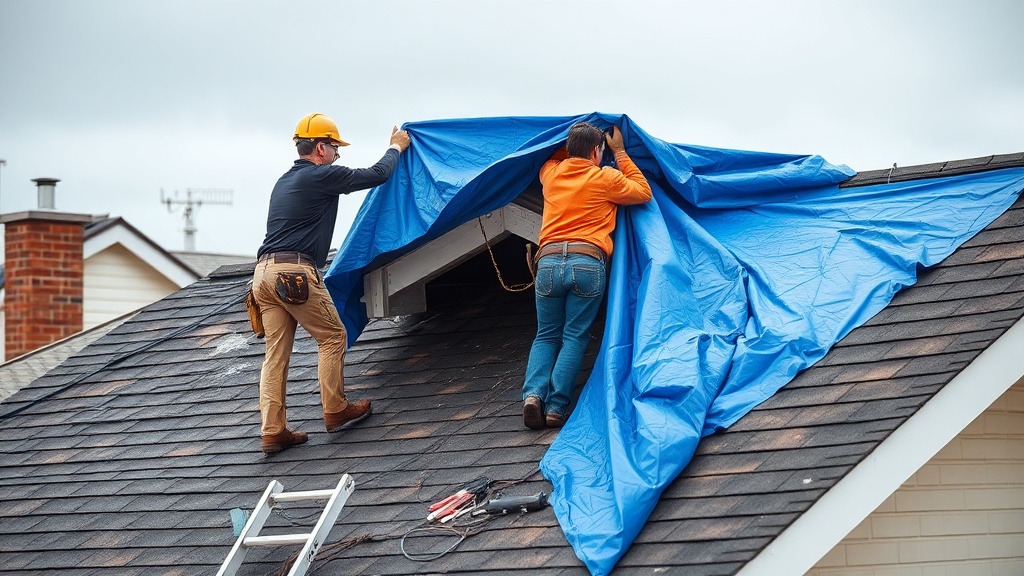
Emergency tarping is temporary roof protection installed after sudden damage—typically from storms, falling trees, or severe weather events. A professional emergency roofer secures heavy-duty waterproof tarps over damaged sections to prevent water intrusion until permanent roof repair can be completed.
But here’s what most homeowners don’t realize: tarping is a stopgap measure, not a solution. It buys you time—usually 90 days maximum—to arrange for proper repairs without your home suffering continuous water damage during the interim.
What Emergency Tarping Covers
Professional emergency roof tarping services include:
- Initial damage assessment to identify all compromised areas
- Removal of debris that could puncture the tarp
- Installation of heavy-duty, UV-resistant tarps (typically 6-mil or thicker)
- Secure fastening with boards and specialized roofing nails to withstand wind
- Documentation and photos for insurance claims
- Temporary weatherproofing of the damaged section
What It Doesn’t Include
Emergency tarping is not a replacement for actual roof repair for homes. The service doesn’t include:
- Interior water damage remediation
- Structural repairs to rafters or decking
- Permanent roofing materials installation
- Gutter repair or replacement
- Mold remediation (which may become necessary if tarping is delayed)
Understanding these boundaries helps you set realistic expectations when you’re searching for “roof leak repair near me” at 3 AM.
Response Times: How Fast Can Help Actually Arrive?
After major storms hit areas like Charleston, Columbia, or Augusta, emergency roof repair requests surge simultaneously. This creates a reality gap between what you need and what’s actually possible.
Normal Conditions
During typical weather, reputable roofing repair companies like Hixons Roofing can often respond within 2-4 hours for genuine emergencies. Some services offer same-day tarping when you call during business hours.
After Widespread Storm Damage
Here’s the hard truth: after a major hurricane or severe storm system affects South Carolina or Georgia, response times can stretch to 24-72 hours or longer. Companies operate on a triage system, prioritizing the most severe cases where active water is entering living spaces.
In 2026, after severe weather events, some homeowners in Summerville and Mount Pleasant waited up to five days for emergency services because demand overwhelmed available crews.
How to Improve Your Response Time
You can move up the priority list by:
- Calling immediately when damage occurs, not waiting until morning
- Clearly communicating the severity (active leaking vs. visible damage without water intrusion)
- Having your address ready and providing safe access instructions
- Asking if the company works with subcontractors during high-demand periods
Most people assume all damage requires immediate response, but companies prioritize active water intrusion over exposed but currently dry areas.
The Real Cost of Emergency Roof Tarping
Emergency tarping costs vary dramatically based on several factors most homeowners don’t consider when frantically calling for help.
Typical Price Ranges
Standard emergency tarping in South Carolina and Georgia typically costs:
- Small damage (10×10 feet or less): $300-$600
- Medium damage (10×20 feet): $600-$1,200
- Large damage (20×30 feet or more): $1,200-$3,000+
These prices reflect middle-of-the-day service during normal weather conditions.
Premium Pricing Scenarios
Expect higher costs for:
- After-hours service: Add 25-50% for nights, weekends, or holidays
- High-demand periods: Prices can double after major storms when crews are overwhelmed
- Difficult access: Steep pitches, multiple stories, or challenging roof access increase labor costs
- Extensive prep work: Significant debris removal or dangerous conditions add to the final bill
Here’s what residential roof repair professionals won’t always mention upfront: that “simple tarping” might require two hours of dangerous debris removal before a single tarp gets installed.
Beware Storm Chasers
After major weather events, out-of-state contractors flood affected areas offering suspiciously cheap emergency services. Many disappear before completing work or demand cash payments that insurance won’t cover. Always verify licensing and local references, even in crisis situations.
Insurance Coverage: What You Need to Document Right Now
Most homeowners insurance policies cover emergency tarping as part of preventing further damage—but only if you handle the documentation correctly from minute one.
What Insurance Typically Covers
Standard policies usually cover emergency tarping costs when:
- The damage resulted from a covered peril (storm, falling tree, etc.)
- The tarping was necessary to prevent additional damage
- You contacted a licensed, insured roofing repair company
- You documented the damage and repair process thoroughly
Most policies reimburse tarping costs as part of your overall claim, not as a separate deductible event.
Critical Documentation Steps
Before the emergency roofer arrives, protect your claim by:
- Taking extensive photos and videos of all damage from multiple angles
- Documenting the cause (photograph the fallen tree, hail-damaged shingles, etc.)
- Recording the timestamp of when damage occurred (if known)
- Photographing interior damage including water stains, affected belongings, and structural issues
- Keeping all receipts for tarping services and any emergency mitigation
Companies like Hixons Roofing routinely provide documentation packages specifically designed for insurance claims, including photos, written assessments, and detailed invoices.
Call Your Insurance Immediately
Contact your insurance company within 24 hours of damage, even before tarping is complete. Many policies require prompt notification, and delays can complicate claims. Ask specifically about emergency mitigation coverage and whether they require estimates from multiple contractors.
What Happens After the Tarp Goes Up
The tarp is secured, the immediate crisis has passed, and you can finally breathe. But what most homeowners don’t realize is that the next 48 hours determine whether you’re looking at a $3,000 repair or a $25,000 nightmare.
Immediate Next Steps (First 48 Hours)
Get a comprehensive inspection. The emergency crew assessed only what they needed to see for tarping. You need a full roof inspection to identify all damage, including issues that aren’t immediately obvious like compromised decking or damaged flashing.
Address interior water damage. Even if the tarp stopped additional water, existing moisture begins growing mold within 24-48 hours. Run dehumidifiers, remove soaked materials, and consider professional water damage restoration.
Secure estimates for permanent repair. Don’t wait until the tarp fails. Get detailed quotes from licensed contractors for complete roof repair—this typically takes 1-2 weeks to schedule even without weather complications.
Monitoring Your Temporary Protection
Emergency tarps require active monitoring, especially in areas like Aiken, Beech Island, and North Charleston where afternoon thunderstorms are common. Check your tarp after every significant weather event:
- Look for lifting corners or edges where wind could get underneath
- Check that securing boards haven’t shifted or loosened
- Inspect for new punctures or tears
- Watch for water pooling that could tear the tarp under weight
Most emergency tarping fails because homeowners assume it’s a “set it and forget it” solution. It’s not.
Timeline for Permanent Repair
Tarps are designed to last 90 days in optimal conditions, but South Carolina and Georgia weather is rarely optimal. UV exposure, temperature fluctuations, and wind stress degrade tarps faster than you’d expect.
Plan for permanent residential roof repair within 30-45 days. After major storms, material shortages and contractor backlogs can extend this timeline, making early scheduling critical.
Choosing the Right Emergency Roofer When Seconds Count
At 3 AM with water pouring into your home, you’re vulnerable to making expensive mistakes. Here’s how to choose wisely even under pressure.
Non-Negotiable Requirements
Your emergency roofer must have:
- Proper licensing for South Carolina or Georgia (verify online immediately)
- Active insurance including liability and workers’ compensation
- Local presence with verifiable address and established reputation
- 24/7 availability with real human answers, not just voicemail
- Clear pricing explained before work begins, even in emergencies
Red Flags to Avoid
Even in crisis, walk away from contractors who:
- Demand full payment before starting work
- Pressure you to sign insurance assignment paperwork immediately
- Can’t provide proof of insurance when asked
- Offer prices dramatically lower than competitors (especially after storms)
- Use out-of-state phone numbers with no local office
Why Local Matters
Local roofing repair companies understand regional weather patterns, common damage types, and insurance procedures specific to South Carolina and Georgia. They’re also still around when you need warranty service—unlike storm chasers who vanish after collecting payment.
Hixons Roofing has served the region for years, maintaining relationships with local insurance adjusters and building suppliers that translate to faster service and smoother claims when you’re in crisis mode.
Your Emergency Action Plan
Print this section and keep it accessible. When disaster strikes, you won’t have time to research.
Immediate Actions (First 30 Minutes)
- Ensure family safety—evacuate affected rooms
- Stop additional water damage using buckets, towels, or plastic sheeting if safe
- Document everything with photos and video
- Call your insurance company to report damage
- Contact an emergency roofer (save Hixons Roofing’s number now: check their website at hixonsroofing.com)
While Waiting for Emergency Services
- Move valuables away from water damage
- Place buckets under active leaks
- Turn off electricity to affected areas if water is present
- Do not attempt roof access in dangerous conditions
- Keep a timeline log of events and actions taken
After Tarping Is Complete
- Get written documentation of services performed
- Schedule comprehensive roof inspection within 48 hours
- Obtain estimates for permanent repair from at least two contractors
- Follow up with insurance adjuster to schedule damage assessment
- Monitor tarp condition after every weather event
The homeowners who handle roof emergencies successfully are those who prepared before disaster struck. They have contact information ready, they understand the process, and they know that temporary tarping is just the first step in a longer journey.
When storm damage compromises your roof, every hour matters. Whether you’re in Charleston, Columbia, Augusta, or anywhere across South Carolina and Georgia, Hixons Roofing provides emergency roof repair services backed by local expertise and a commitment to protecting your home when you need it most. Don’t wait for the next storm to find out if your roof can take the hit—and don’t wait hours after damage to secure professional emergency tarping that prevents a repairable crisis from becoming a total loss.