
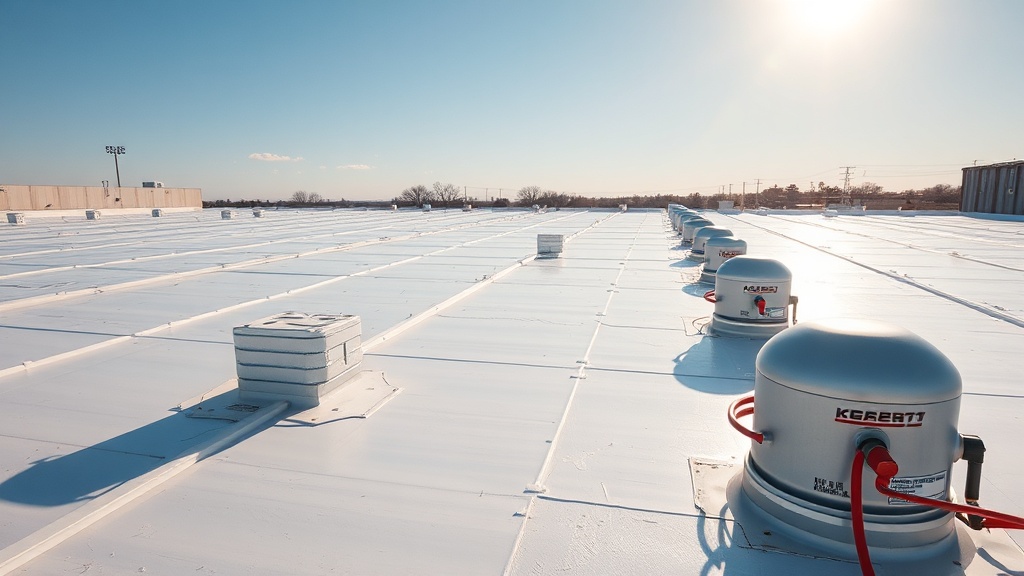
Your roof reaches 160°F on a typical South Carolina summer afternoon. That scorching surface turns your attic into an oven and forces your air conditioner into overdrive. Meanwhile, the building next door with a white roof stays 50 degrees cooler. The difference? Cool roof technology that’s been quietly saving property owners thousands of dollars annually.
But here’s what most people don’t know: cool roof systems don’t work the same way in every climate. South Carolina’s combination of intense sun and high humidity creates unique challenges that make some cool roofing solutions brilliant investments and others disappointing wastes of money.
Let’s examine whether cool roof systems actually deliver on their promises in our region, and more importantly, whether they’ll save you enough money to justify the cost.
What Makes a Roof “Cool” and How Does It Actually Work?
Cool roof systems aren’t just white paint slapped on shingles. They’re engineered materials designed to reflect solar radiation and emit absorbed heat more efficiently than traditional roofing.
The technology relies on two key properties: solar reflectance (how much sunlight bounces off instead of being absorbed) and thermal emittance (how quickly the roof releases any heat it does absorb). A dark asphalt shingle might reflect only 5-15% of solar energy, while cool roof systems can reflect 65-90%.
The Science Behind the Savings
When sunlight hits a traditional dark roof, most of that energy converts to heat. That heat radiates into your attic, pushing temperatures to 140-160°F on summer days. Your insulation slows this heat transfer, but doesn’t stop it. Eventually, that thermal energy migrates into your living space, forcing your AC to work harder.
Cool roofing systems break this cycle. By reflecting most solar energy before it converts to heat, they keep your roof surface 50-60 degrees cooler. In South Carolina’s climate, this translates to attic temperatures dropping from 150°F to 90-100°F. That’s a game-changer for your cooling costs.
Types of Cool Roofing Materials
Several cool roof options work well in South Carolina:
- Reflective coatings: Applied over existing roofs, these elastomeric or acrylic coatings create a reflective barrier. They’re popular for commercial roofing applications and flat roofs.
- Light-colored metal roofing: Metal roofs with reflective paint or coatings naturally reflect solar energy. They’re increasingly common for both residential and commercial properties.
- Cool asphalt shingles: Specially formulated shingles use reflective granules to bounce back solar radiation while maintaining traditional appearance.
- Single-ply membranes: White TPO or PVC membranes are standard for flat commercial roofs, offering exceptional reflectivity.
The right choice depends on your building type, budget, and aesthetic preferences. But do they actually save money in South Carolina’s specific climate?
The Real Numbers: Energy Savings in South Carolina’s Climate
Here’s where marketing promises meet reality. Cool roof manufacturers tout energy savings of 20-70%, but those numbers often come from studies in dry desert climates like Arizona or California.
South Carolina’s humid subtropical climate changes the equation. Our high humidity reduces the cooling benefit because moist air conducts heat more efficiently than dry air. However, recent studies specific to the Southeast reveal compelling data.
Residential Energy Savings Data
A 2025 study by Clemson University examined cool roof performance on Charleston-area homes. The findings: residential properties with cool roof systems reduced cooling costs by 12-18% during summer months. For a typical 2,000 square-foot home spending $180 monthly on summer cooling, that’s $22-32 in monthly savings, or $130-190 annually.
Those numbers might seem modest, but they compound over a roof’s 25-30 year lifespan. More importantly, homeowners reported significantly improved comfort in upstairs rooms, which often translates to setting thermostats higher and saving even more.
Commercial Properties See Bigger Returns
Commercial roofing applications show more dramatic results. Large flat roofs absorb massive amounts of heat, and commercial buildings typically run AC during all business hours.
A Columbia warehouse that switched to a white TPO membrane in 2024 documented 23% cooling cost reduction. Their annual savings exceeded $4,800. A North Charleston retail building with 15,000 square feet of roof space saved $6,200 in the first year after applying reflective coating.
The larger your roof surface and the more you run your AC, the faster cool roofing systems pay for themselves.
Does the Investment Actually Pay Off?
Energy savings sound great until you see the price tag. Cool roofing materials and installation typically cost 10-25% more than standard options. So when does that premium actually make financial sense?
Residential Roof Installation Cost Analysis
For a typical residential roof replacement in South Carolina, here’s how the numbers break down:
Standard asphalt shingles: $8,000-12,000 for an average home
Cool roof asphalt shingles: $9,200-13,800 (15% premium)
Light-colored metal roofing: $14,000-22,000
Using our earlier savings estimate of $130-190 annually, cool asphalt shingles take 6-9 years to recoup the extra cost through energy savings alone. Metal roofing takes longer to break even on energy savings, but offers other benefits like longevity and durability.
The Hidden Value Most People Miss
Here’s what residential roofing contractors won’t always tell you: the payback calculation isn’t just about energy bills. Cool roofs extend HVAC system lifespan by reducing runtime. They also often qualify for insurance discounts and utility rebates.
Santee Cooper and several electric cooperatives in South Carolina offer rebates for energy efficient roofing installations. These rebates can offset 10-20% of the premium cost. Additionally, some insurance companies provide 5-10% discounts on homeowners insurance for impact-resistant cool roofing materials.
When you factor in these benefits plus extended AC lifespan, the payback period often shrinks to 4-6 years.
Commercial Properties: Faster ROI
Commercial roofing investments show even better returns. A reflective coating over an existing flat roof costs $2-4 per square foot. For a 10,000 square-foot commercial roof, that’s $20,000-40,000.
With annual savings of $4,000-7,000 for medium-sized commercial properties, you’re looking at a 5-7 year payback. Larger buildings with higher cooling loads see even faster returns.
Better yet, reflective coatings extend roof life by reducing thermal cycling and UV damage. This delays costly roof replacement by 5-10 years, representing significant additional savings.
The Humidity Factor: Why South Carolina Is Different
Cool roofing systems face one unique challenge in our region: moisture. High humidity creates condensation concerns that don’t exist in drier climates.
Understanding the Dew Point Issue
When a cool roof surface drops below the dew point temperature on humid nights, condensation forms. This isn’t usually problematic on sloped residential roofs where water runs off quickly. But on flat commercial roofs, prolonged moisture exposure can lead to premature coating degradation or even roof deck damage if vapor barriers aren’t properly installed.
Professional residential roofing contractors and commercial roofing specialists understand these regional considerations. Proper installation includes vapor barriers and adequate ventilation to prevent moisture accumulation.
Mold and Algae Considerations
South Carolina’s humidity also promotes algae and mold growth on roof surfaces, which can reduce reflectivity over time. Those black streaks you see on older roofs? That’s algae, and it absorbs heat rather than reflecting it.
Quality cool roofing materials include algae-resistant treatments. Regular roof maintenance every 2-3 years maintains reflectivity and extends the roof’s effective lifespan. This is particularly important for lighter-colored materials where discoloration is more visible and more impactful to performance.
Cool Roofing Performance by Property Type
Not every building benefits equally from cool roof systems. Your property’s specific characteristics determine whether you’ll see impressive savings or disappointing results.
Single-Story vs. Multi-Story Homes
Single-story homes with living space directly under the roof see the most dramatic comfort improvements and energy savings. The closer your living space is to your roof, the more you’ll benefit from keeping that surface cooler.
Multi-story homes still benefit, but the effect diminishes. If you spend most of your time on the first floor of a two-story home, you might not notice much difference in comfort, though energy savings still occur.
Older Homes vs. New Construction
Homes built before 2000 typically have less attic insulation. In these properties, cool roofing systems deliver larger energy savings because heat transfer through the roof represents a bigger percentage of total cooling load.
Newer homes built to modern energy codes already have substantial attic insulation (R-30 to R-50). Cool roofing still helps, but the incremental benefit is smaller because you’re already preventing most heat transfer.
Commercial Buildings: The Sweet Spot
Large commercial properties with flat or low-slope roofs see the most impressive results. Warehouses, retail centers, office buildings, and industrial facilities in Summerville, Mount Pleasant, and Charleston benefit tremendously from reflective roofing systems.
The combination of large roof surface area, extended AC operation hours, and typically lower insulation values creates ideal conditions for cool roof performance. This is why commercial roofing applications dominate the cool roof market.
Making the Right Choice for Your South Carolina Property
So should you invest in cool roof systems? The answer depends on your specific situation, but here’s how to make a smart decision.
When Cool Roofing Makes Perfect Sense
You’re an ideal candidate if you:
- Need a roof replacement anyway (adding cool technology is an easy upgrade)
- Run AC extensively during summer months
- Have a large, flat, or low-slope roof
- Own commercial property with high cooling costs
- Experience uncomfortable heat in upper floors or rooms
- Plan to stay in your property long enough to realize the payback
When to Think Twice
Cool roofing might not be your best investment if:
- Your current roof has 10+ years of life remaining (wait for replacement time)
- You rarely use AC or keep thermostats very high anyway
- Your home already has excellent insulation and sealed attic spaces
- You’re in a heavily shaded location with limited sun exposure
- Budget is extremely tight and energy bills are already low
Regional Considerations for South Carolina
Properties in different parts of South Carolina see varying benefits. The coastal regions around Charleston, Mount Pleasant, and Summerville experience more cooling degree days and higher humidity, making cool roofing particularly effective. Columbia’s more extreme summer heat also creates ideal conditions.
Upstate locations like Aiken experience slightly milder summers, which means smaller (but still worthwhile) savings. However, all South Carolina locations see enough summer heat to justify cool roofing consideration during any residential roof repair or replacement project.
Working with Experienced Contractors
Cool roof installation requires specific expertise. Improper installation undermines performance and can create moisture problems. When evaluating residential roofing contractors, ask about their experience with cool roofing systems in South Carolina’s climate specifically.
Hixons Roofing has installed cool roofing systems throughout South Carolina, from residential properties in Beech Island to commercial installations in Augusta. We understand the regional moisture considerations and proper ventilation requirements that make these systems perform optimally in our humid climate.
Your Next Steps: Cool Roofing That Actually Works
Cool roof systems do work in South Carolina heat, but they’re not magic. The technology is proven, the energy savings are real, and for many property owners, the investment makes solid financial sense.
The key is matching the right cool roofing solution to your specific property, climate zone, and usage patterns. A well-designed cool roof system on a Charleston commercial building might save $6,000 annually. That same technology on a small, heavily-shaded residential property might save only $100.
Start by calculating your current cooling costs and identifying whether your roof is due for replacement or repair anyway. If you’re already investing in a new roof, the incremental cost for cool roofing technology often represents one of the smartest energy upgrades you can make.
Don’t rely on generic manufacturer claims or one-size-fits-all recommendations. South Carolina’s climate demands expertise in moisture management, proper ventilation, and material selection suited to our specific conditions.
Whether you’re considering residential roof installation, commercial roofing upgrades, or exploring energy efficient roofing options for your property, Hixons Roofing brings decades of South Carolina experience to every project. We’ll evaluate your specific situation, calculate realistic savings expectations, and recommend solutions that actually deliver results in our climate.
Ready to explore whether cool roofing makes sense for your property? Contact Hixons Roofing for a detailed assessment and honest answers about what you can expect from cool roof technology in South Carolina’s demanding climate.