
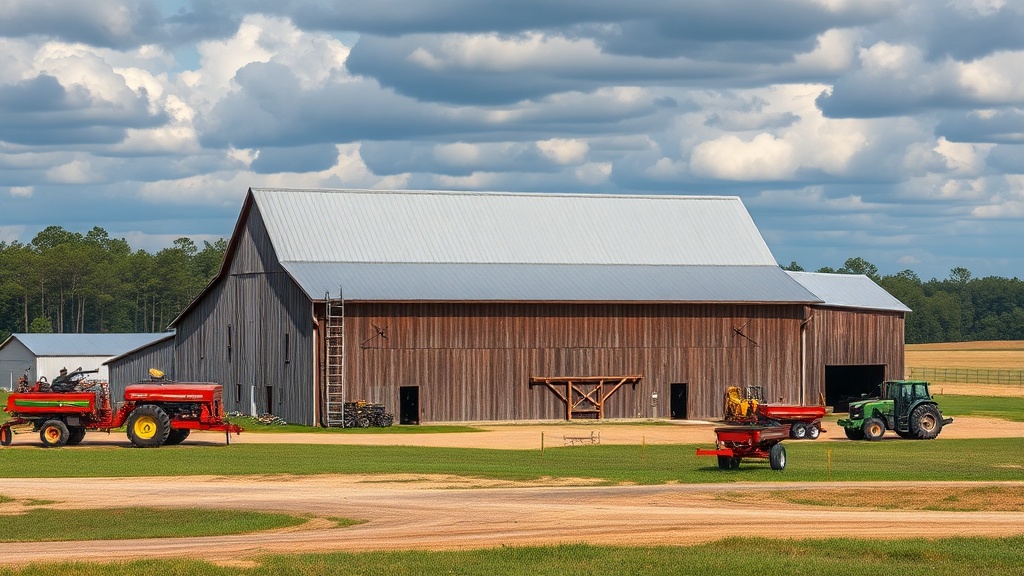
A single storm in 2025 left seventeen horse barns across the Lowcountry with collapsed roofs—and every single one had the same type of roofing. The horses survived, but the vet bills, equipment losses, and reconstruction costs told a different story. Here’s what most agricultural property owners don’t realize: the roofing material you choose for your barn isn’t just about keeping rain out. It’s about ventilation, temperature control, fire safety, and whether your structure survives the next tropical system that rolls through South Carolina.
If you’re standing in front of an aging barn or planning a new agricultural building, you’re facing a decision that’ll affect your operation for the next 20 to 50 years. Let’s cut through the marketing noise and look at what actually works in South Carolina’s unique climate.
Why Barn Roofing Demands Different Thinking Than Your House
Your barn operates under completely different rules than residential structures. The stakes are higher, and the challenges more complex. Here’s what separates agricultural building roofing from typical home projects.
The Ventilation-Protection Balance
Barns need massive air circulation to manage humidity, ammonia buildup from livestock, and hay moisture. But they also need protection from wind-driven rain that South Carolina delivers with impressive force. Traditional roofing materials often excel at one while failing at the other. Metal roofing systems can be engineered to provide both, but only if properly designed with ridge vents and adequate overhang.
A poorly ventilated barn with livestock can reach condensation levels that rot wooden structures from the inside out—regardless of how waterproof your roof appears from the outside.
Load Requirements Most People Underestimate
Agricultural buildings typically span wider distances without interior support walls. Your barn’s roof system needs to handle not just its own weight, but snow loads (yes, even in South Carolina’s upstate), equipment suspended from rafters, and hurricane-force wind uplift. A roofing material that works perfectly on a 30-foot residential span might fail catastrophically on a 60-foot barn.
Here’s what contractors won’t always tell you: cheaper roofing materials near me might save money upfront but require structural reinforcement that erases those savings.
The Fire Factor Nobody Discusses
Hay storage and fire risk go together like Charleston and humidity. A single spark from equipment, lightning strike, or electrical fault can turn a barn into an inferno within minutes. The roofing material you choose directly impacts whether a small fire stays contained or spreads to destroy your entire facility—and potentially threatens livestock lives.
Metal Roofing Systems: The Modern Agricultural Standard
Walk through any new equestrian facility or commercial farming operation in South Carolina, and you’ll spot a trend: metal roofing dominates. There are legitimate reasons this shift happened.
TimberSteel and Standing Seam: Understanding Your Metal Options
Not all metal roofing for agricultural buildings performs equally. TimberSteel roofing systems offer concealed fasteners and enhanced weather resistance—critical when your barn houses valuable horses or expensive equipment. Standing seam metal roofing provides similar benefits with vertical leg systems that handle thermal expansion better than exposed fastener panels.
The difference matters in South Carolina’s temperature swings. A metal roof in Columbia might experience a 60-degree temperature differential between a January morning and July afternoon. Panels that can’t accommodate that expansion will eventually leak at fastener points.
The Real Cost Analysis
Here’s where numbers tell the full story. A quality metal roofing installation on a 40×60 barn runs approximately $12,000-$18,000 in 2026, depending on panel type and complexity. Traditional asphalt shingles might cost $8,000-$11,000 for the same structure. But here’s the catch: that metal roof will last 40-50 years with minimal maintenance, while asphalt shingles need replacement in 15-20 years.
Run the actual lifecycle costs, and metal roofing saves $8,000-$15,000 over three decades—even before factoring in the reduced insurance premiums many carriers offer for metal-roofed agricultural buildings.
Temperature Control Your Livestock Will Notice
Anyone who’s walked into a metal barn on a July afternoon knows they can turn into ovens—unless properly designed. Modern metal roofing systems with reflective coatings and adequate ventilation actually outperform traditional options. A light-colored metal roof can reduce interior temperatures by 10-15 degrees compared to dark asphalt shingles.
For dairy operations, horse boarding facilities, or any barn housing livestock during summer months, this temperature differential directly impacts animal health and comfort. Heat-stressed animals produce less milk, lose weight, and face increased health risks.
Wind Resistance That Matters in Hurricane Alley
South Carolina’s coastal agricultural operations know this reality: it’s not if a hurricane threatens, but when. Properly installed standing seam metal roofing can withstand winds exceeding 140 mph. Compare that to traditional asphalt shingles rated for 90-110 mph winds, and you understand why insurance companies care which roofing material you choose.
After Hurricane Debby skirted the coast in 2024, property damage assessments revealed a clear pattern: metal-roofed barns near Charleston and Mount Pleasant sustained significantly less damage than those with traditional roofing materials.
Traditional Roofing Options: When They Still Make Sense
Metal isn’t always the automatic answer. Certain situations favor traditional approaches, and pretending otherwise does you no favors.
Asphalt Shingles: The Budget-Conscious Starting Point
For small equipment storage buildings, hobby farms, or situations where you’re planning to upgrade within a decade anyway, quality asphalt shingles provide adequate protection at lower upfront cost. They’re also easier to repair with local materials when damage occurs—a consideration for remote properties.
The key word is “quality.” Bottom-tier shingles on a barn become a maintenance nightmare. If you’re going the asphalt route, invest in architectural shingles rated for high winds. The $1,500 difference in material cost saves thousands in emergency repairs.
Tin and Corrugated Metal: Understanding the Difference
Not all metal is created equal. Traditional tin roofing or basic corrugated metal panels cost considerably less than TimberSteel or standing seam systems, but they come with tradeoffs. Exposed fasteners mean more potential leak points. Thinner gauge metal dents more easily. And the lifespan drops from 40+ years to 25-30 years.
For utility buildings, run-in sheds, or hay storage where aesthetics matter less, these economical metal options still vastly outperform asphalt shingles in durability and fire resistance.
Wood Shakes: The Heritage Option
Some historic properties or high-end equestrian facilities opt for wood shakes to maintain authentic agricultural aesthetics. Cedar shakes offer natural insulation and stunning appearance, but they demand regular maintenance, carry higher fire risk, and cost more than metal roofing upfront.
In South Carolina’s humid climate, wood shakes also battle mold, mildew, and rot—particularly on north-facing roof sections that stay shaded. Unless you’re committed to the look and have the maintenance budget, modern roofing materials provide better performance.
Installation Factors That Separate Success From Disaster
Even the best roofing material fails when poorly installed. Agricultural building roofing presents unique challenges that weekend warriors and inexperienced contractors consistently underestimate.
Pitch and Drainage Considerations
Barns often feature lower roof pitches than residential structures—sometimes as low as 2:12 or 3:12. This creates drainage challenges that require specific installation techniques. Metal roofing systems handle low pitches better than asphalt shingles, but they need proper underlayment and fastener sealing to prevent water infiltration.
Here’s what surprises people: a barn roof in Aiken or Columbia with inadequate pitch can hold standing water that eventually finds its way through even small installation flaws. The result is insidious rot that goes unnoticed until structural damage becomes severe.
Thermal Movement and Fastener Failure
Metal roofing expands and contracts with temperature changes—sometimes up to several inches on large barn roofs. Fasteners that don’t accommodate this movement will either pull loose or create elongated holes that leak. This is why TimberSteel roofing and standing seam systems use concealed clip systems rather than exposed screws.
Hixons Roofing sees this issue repeatedly when called to fix metal roofs installed by contractors without agricultural building experience. Those exposed fastener panels seem fine for three years, then suddenly develop multiple leak points as the fastener holes enlarge from thermal cycling.
Ventilation Engineering
Proper barn ventilation isn’t just about adding a few vents—it requires calculating air exchange rates based on building volume, animal units, and climate factors. Your roofing contractor should work with ventilation requirements, not against them.
Ridge vents, soffit vents, and gable vents need coordination with your roofing material choice. Metal roofing integrates beautifully with modern ventilation systems, while traditional shingle installations sometimes compromise ventilation effectiveness to prevent wind-driven rain penetration.
Regional Considerations Across South Carolina
South Carolina spans from the Blue Ridge foothills to the Atlantic coast, and roofing requirements shift dramatically across that geography.
Coastal Zone Challenges
Properties near Charleston, Mount Pleasant, and Summerville face salt air corrosion, hurricane threats, and intense UV exposure. Galvalume metal roofing with kynar coatings resists corrosion far better than painted steel. Traditional asphalt shingles deteriorate faster in coastal environments, often failing at 60-70% of their expected lifespan.
Coastal agricultural operations should prioritize wind resistance above almost all other factors. A roof that survives 120 mph winds protects not just the structure but the animals and equipment inside.
Midlands Heat and Storm Patterns
Columbia, Aiken, and surrounding areas experience brutal summer heat combined with intense afternoon thunderstorms. Reflective metal roofing materials provide measurable cooling benefits, reducing the load on barn ventilation systems.
The Midlands also see occasional ice storms that load roofs with unexpected weight. Metal’s smooth surface sheds ice and snow more effectively than textured shingles, reducing structural stress.
Upstate Weather Variability
The upstate experiences more temperature extremes and occasional significant snow. Roofing materials need to handle both thermal cycling and occasional heavy loads. Metal roofing’s strength-to-weight ratio makes it ideal for these conditions—it handles the load without adding significant structural weight.
Making Your Decision: A Framework That Works
You’ve got the information. Now here’s how to actually choose for your specific situation.
Start With Your Timeline and Budget Reality
If you’re planning to sell the property within ten years, the full lifecycle benefits of premium metal roofing may not materialize for you. A quality asphalt installation might make more financial sense. But if this barn will serve your operation for decades, the metal investment pays dividends.
Be honest about maintenance capacity too. Metal requires almost no maintenance. Traditional roofing materials demand periodic inspection, cleaning, and minor repairs. Factor your time and available labor into the decision.
Match Material to Function
A climate-controlled equestrian facility housing valuable show horses justifies premium roofing investment. An open equipment shed storing tractors needs weather protection but not climate control. Hay storage demands fire resistance above all else. Let your barn’s primary function guide material selection.
Don’t Skip the Engineering Assessment
Before committing to any roofing material, have a structural engineer evaluate whether your barn’s framing can support the option you prefer. Metal roofing is lighter than asphalt shingles, but installation methods and ventilation modifications might require structural adjustments.
This assessment costs $300-$800 but prevents expensive surprises during installation.
Work With Agricultural Roofing Specialists
The contractor who does great residential work might lack agricultural building expertise. You need someone who understands livestock ventilation requirements, wide-span structural considerations, and agricultural building codes.
Hixons Roofing brings specific experience with barn roofing across South Carolina’s agricultural regions—from horse farms in Aiken to cattle operations in Beech Island. That specialized knowledge prevents the costly mistakes that turn a good material choice into a problematic installation.
Moving Forward With Confidence
Your barn roof represents a significant investment in your agricultural operation’s future. Whether you choose modern metal systems or traditional roofing materials, the decision should rest on your specific needs, timeline, and budget—not industry trends or contractor convenience.
The South Carolina agricultural community has shifted heavily toward metal roofing for good reasons: superior longevity, better wind resistance, lower lifecycle costs, and improved fire safety. But that doesn’t make it the universal answer for every situation. Small operations, budget-constrained projects, or buildings with limited remaining lifespan might benefit from traditional approaches.
What matters most is matching the right roofing material to your barn’s function, your property’s location, and your long-term plans. A properly installed roof—regardless of material—protects your livestock, equipment, and investment far better than premium materials poorly applied.
Ready to discuss roofing options for your South Carolina agricultural property? Hixons Roofing provides free consultations that assess your specific situation without sales pressure. We’ll evaluate your barn’s structural condition, discuss material options suited to your needs and budget, and provide transparent pricing for both metal and traditional installations. Contact us today to schedule your assessment and get answers from a team that understands agricultural building roofing requirements across South Carolina.