
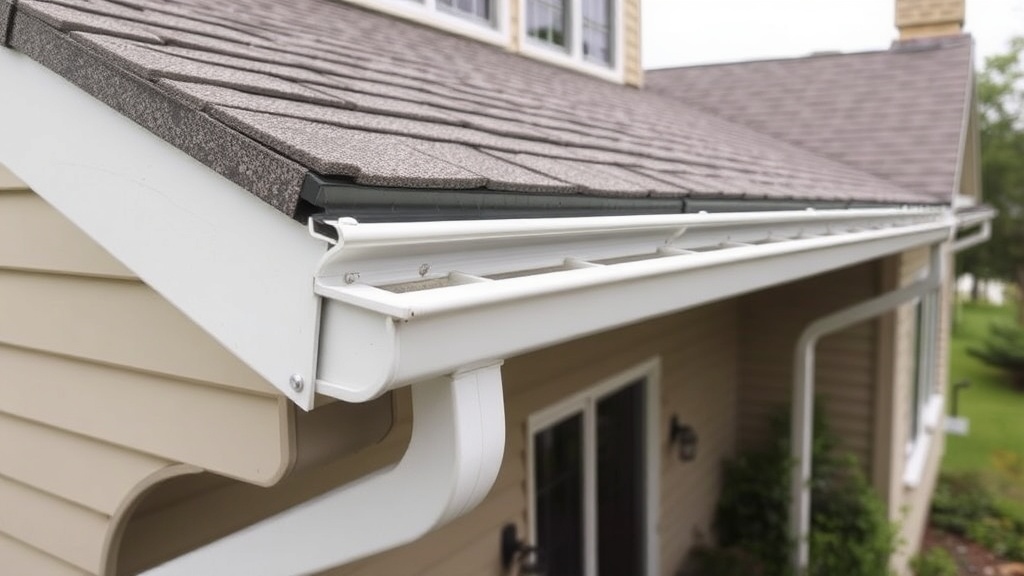
The CSRA’s Dirty Secret: Your Gutters Are Losing a Battle Against Pine Trees
A single mature longleaf pine drops somewhere between 1,500 and 4,000 needles per square foot of canopy each fall — and that’s before accounting for the second wave in spring. Pair that with sweet gum balls, oak pollen, and the kind of summer storms that dump three inches of rain in forty minutes, and you start to understand why Aiken and Augusta homeowners spend more time cleaning gutters than almost anywhere else in the Southeast.
Open gutters in this climate aren’t just an inconvenience. They become a genuine roof maintenance concern. Clogged gutters back up water under your drip edge, accelerate fascia rot, and create the perfect conditions for mosquito breeding — all from a problem that started with a handful of pine needles.
So the question isn’t really “are gutter guards a nice upgrade?” For a lot of CSRA homeowners, the real question is whether the upfront investment beats what you’re already spending in cleaning costs, ladder injuries, and water damage repairs.
Open Gutters in the CSRA: What “Low Maintenance” Actually Looks Like
The Real Cleaning Schedule
Talk to any homeowner in Aiken who has mature pines on their property and they’ll tell you the same thing: twice-a-year gutter cleaning is a myth. The standard advice assumes a temperate climate with a clean fall drop. The CSRA’s debris calendar doesn’t cooperate with that assumption.
Between pine needle drop (October through December), sweet gum and oak leaf fall, spring pollen buildup, and the general gunk that collects after summer thunderstorms, most homes near tree cover need gutters cleared three to four times per year to stay fully functional. Professional gutter cleaning in the Augusta area typically runs $150 to $300 per visit depending on home size and access. Over four visits, that’s $600 to $1,200 annually — year after year.
What Happens When Cleaning Gets Skipped
Skipping a cleaning cycle isn’t just a minor cosmetic issue. Standing water in a clogged gutter weighs roughly five pounds per gallon, and a 20-foot gutter run holding even a shallow layer of wet debris can add 30 to 50 pounds of stress to your fascia board. Over time, that weight pulls gutters away from the roofline and compromises the seal.
Water that can’t flow through a clogged gutter goes somewhere — and it rarely goes somewhere good. It either overflows and saturates the soil against your foundation, or it backs up under the roof edge and soaks into the decking. Neither outcome is cheap to fix.
What Gutter Guards Actually Do — and Don’t Do
The Basic Mechanics Worth Understanding
Gutter guards come in several formats — screen mesh, micro-mesh, reverse curve, and foam inserts being the most common. They don’t eliminate all maintenance, and any contractor who tells you otherwise isn’t being straight with you. What they do is dramatically reduce the frequency and depth of maintenance needed by blocking the bulk of debris from entering the gutter channel.
Micro-mesh systems, which include options like LeafBlaster gutter guards, work by allowing water to pass through extremely fine stainless steel mesh while blocking debris as small as pine needles and shingle grit. That last point matters specifically for the CSRA: most basic screen guards let pine needles pass right through or accumulate in the mesh itself. Micro-mesh systems are engineered to handle exactly the kind of needle-heavy debris load that Aiken and Augusta homes deal with constantly.
The Pine Needle Problem That Trips Up Cheaper Systems
This is where a lot of homeowners get burned after making a budget purchase at a big-box store. Standard 3/8-inch screen guards — the kind that cost $1 to $2 per linear foot — have openings wide enough that pine needles slide right in or stand upright in the mesh and block water flow. Homeowners who install these and stop thinking about their gutters often end up with overflow problems that are harder to diagnose than a simple clog.
LeafBlaster gutter guards use a corrugated micro-mesh design that channels water down into the gutter while debris rolls off or dries and blows away. In field testing across CSRA homes with significant pine tree coverage, the performance difference between micro-mesh and standard screen is significant — especially in the fall needle-drop window between October and December.
What Gutter Guards Cost in Aiken and Augusta (Real Numbers)
Breaking Down the Investment
Professionally installed gutter guards on a typical single-story home in Augusta typically run $900 to $2,200 depending on linear footage and the system selected. A larger two-story home with 200 or more linear feet of gutters can push that to $3,000 or beyond with a premium micro-mesh product.
LeafBlaster gutter guards sit in the mid-to-upper range of professionally installed options — generally $3 to $6 per linear foot installed, depending on roof complexity and access. That’s more than foam inserts or basic screens, and less than some of the nationally franchised gutter protection systems that can run $15 to $30 per linear foot.
The Break-Even Math Most Homeowners Skip
Run the numbers against what you’re currently spending. If you’re paying $200 per cleaning three times per year, that’s $600 annually. A $1,500 guard installation on a mid-sized home breaks even in 2.5 years. After that, you’re ahead — and that’s before accounting for the avoided cost of one fascia repair or one downspout replacement from water damage.
The math shifts even more in your favor if you factor in the avoided aggravation of climbing a ladder four times a year. Ladder falls send roughly 500,000 Americans to the emergency room annually according to the Consumer Product Safety Commission, and a disproportionate share of those happen during home maintenance tasks exactly like gutter cleaning.
The First Year After Installation: What to Expect
The Adjustment Period That Catches Homeowners Off Guard
Most homeowners who install gutter guards expect to never think about their gutters again. That expectation sets them up for unnecessary frustration, because the first year often involves a learning curve — not because the system is failing, but because the gutters and the guard system are still calibrating to your specific debris environment.
In the first fall after installation, some debris will accumulate on top of the guards rather than blowing off cleanly. This is especially true if the guards are installed on a low-slope roofline where debris doesn’t have gravity helping it clear. A single light rinse or brush-off in the first December is common and doesn’t indicate a product problem — it’s simply the system settling into its rhythm with your specific tree cover.
What Ongoing Maintenance Actually Looks Like After Year One
By the second year, most homeowners with quality micro-mesh guards find they’ve gone from three or four cleaning cycles down to one annual inspection — typically a quick visual check and occasional rinse in late fall. That’s the real-world outcome for the majority of CSRA homes: not zero maintenance, but a dramatic reduction.
There is one exception worth knowing: homes directly under trees with heavy spring pollen drop sometimes see a brief period in March or April where surface debris on the guards temporarily slows flow during heavy rain. A garden hose solves this in minutes. For a deeper look at how this plays out across different home types in the region, the article Gutter Guards: Are They Worth It for CSRA Homeowners? covers the full breakdown.
How Gutter Guards Connect to Your Broader Roof Health
Gutters Are a Roofing System, Not an Accessory
A lot of homeowners treat gutters as an afterthought — something separate from roof maintenance for homeowners who take their roofing seriously. But gutters are the drainage layer of your entire roofing system. When they fail, the consequences travel upward into your fascia, decking, and attic before they travel downward into your foundation.
Hixons Roofing has been serving CSRA homeowners for years, and among the most consistent findings across roof inspections is that preventable water intrusion — the kind that starts with a backed-up gutter — accounts for a significant share of premature fascia and decking failures. A roof that should last 25 years can develop serious edge damage in 10 to 12 years when gutters are consistently overwhelmed.
Pairing Guard Installation with Gutter Installation and Roofing Work
If you’re already planning a roof replacement or new gutter installation and roofing work at the same time, adding guards during that project is almost always the most cost-effective window. Installers are already on the roof, the gutters are fresh and properly pitched, and the incremental labor cost of adding guards is a fraction of what it would be as a standalone project later.
For homeowners researching roofing services in Augusta GA, this kind of bundled approach — where gutter protection is built into a roofing or gutter replacement project rather than treated as a separate upgrade — often delivers the best long-term value. The timing alignment matters more than most people realize when they’re planning project budgets.
So Are Gutter Guards Worth It in the CSRA?
For homes with mature tree coverage in Aiken or Augusta, the answer is almost always yes — provided you choose a system designed for pine needle environments and have it professionally installed at the correct pitch. A $1,500 to $2,500 investment that eliminates $600 to $1,200 in annual cleaning costs while reducing the risk of water damage is straightforward arithmetic.
The homeowners who feel burned by gutter guards are almost always the ones who bought a cheap screen system, skipped professional installation, or expected zero maintenance forever. Set realistic expectations, choose the right product for your specific debris load, and guards will do exactly what they promise.
Written by the Hixons Roofing team — local roofing and gutter specialists serving Aiken, Augusta, and the greater CSRA with hands-on experience across hundreds of residential gutter and roofing projects.
To find out which gutter guard system fits your home’s specific tree coverage and roof profile, reach out to Hixons Roofing at hixonsroofing.com to schedule a gutter assessment.