
Your Insurance Adjuster Already Knows the Difference — Do You?
A severe storm rolls through Columbia or Aiken, and within 48 hours your neighbor has a tarp on his roof and an insurance claim filed. You look at your own shingles and wonder: is that damage from the storm, or was it already there?
This question costs homeowners thousands of dollars every year — not because the damage isn’t real, but because they can’t articulate what they’re looking at. Insurance adjusters are trained to distinguish storm-related damage from pre-existing deterioration. If you can’t make that case clearly, your claim gets denied or underpaid.
Knowing what separates a hail strike from simple aging isn’t just useful — it’s money. And in 2026, with storm seasons across South Carolina hitting harder and more frequently, this knowledge is more relevant than ever.
What Hail Actually Does to a Roof (It’s Not What You’d Expect)
The Bruise You Can’t Always See
Hail damage on asphalt shingles rarely looks dramatic from the ground. A trained eye looks for bruising — soft spots on the shingle surface where the granule layer has been knocked loose by impact, exposing the underlying fiberglass mat. Press gently on these spots and they feel slightly spongy compared to the surrounding material.
Random circular or semi-circular marks with a dark center and missing granules in a concentrated area are classic hail signatures. The key word is random — hail falls in unpredictable patterns. If the granule loss follows a straight line or appears only on one flat area, that’s age or foot traffic, not impact.
Hail size matters too. Quarter-sized hail (about an inch in diameter) is generally the threshold where asphalt shingles begin to sustain functional damage. Smaller hail may dislodge granules cosmetically but leave the shingle structurally intact — which is exactly what an adjuster will argue when they’re trying to minimize your payout.
The Metal Test Nobody Talks About
One of the fastest ways to confirm storm-related impact — and one that adjusters heavily rely on — is to check soft metals on your property. Gutters, downspouts, metal flashing around chimneys, and HVAC units all show hail strikes clearly as small dents or dings with a uniform shape. If those metals show fresh impact marks and your shingles have granule loss in the same timeframe, that correlation is powerful documentation for your claim.
No metal dings but suspiciously bare shingles? That’s a sign the granule loss happened gradually over time, not from a single weather event.
Wind Damage vs. Wear: A Different Kind of Problem
How Lifted Shingles Reveal Their Cause
Wind damage tends to be more obvious than hail, but it’s still misread constantly. Shingles that are fully missing, curled at the edges, or visibly lifted along one side of the roof are often storm-related — but only if the pattern matches wind behavior. Wind damage concentrates at roof edges, ridges, and corners, where uplift force is greatest. A missing shingle in the center field of a roof, surrounded by intact neighbors, is far more likely to be a manufacturing defect or improper installation.
Normal aging produces a different pattern: shingles that curl upward at the edges across the entire surface (called cupping), or shingles that crack and split uniformly as the asphalt dries out over years. These aren’t caused by a single wind event — they develop slowly and uniformly across the roof plane.
The Sealant Strip Tells a Story
Every asphalt shingle has a factory-applied adhesive strip along its lower edge that bonds it to the shingle below. When wind lifts shingles prematurely, it often tears this bond rather than peeling the shingle cleanly. A professional inspector — or a careful homeowner on a safe, accessible section — can look for shingles where this strip has separated but the shingle remains in place. That’s a storm signature. A shingle where the strip is intact but the shingle itself is cracked or brittle points to age and UV degradation.
Normal Wear Patterns: What Aging Actually Looks Like
Standard asphalt shingles installed correctly in South Carolina typically last 20 to 25 years before requiring replacement. As they age, granules shed gradually and accumulate in gutters — a tablespoon or two after every significant rain is normal for a roof over 15 years old. Heavy granule deposits after a storm on an older roof can muddy the waters significantly, because the storm accelerated what was already happening.
Moss and algae growth, while visually alarming, is not storm damage — it’s a moisture management and shading issue. Dark streaking from algae spores is a maintenance concern, not a claim-worthy event. Similarly, flashing that has cracked or pulled away from a chimney over years of thermal expansion is wear, not weather.
Poor original installation is another category entirely. Nails driven too high on a shingle (called “high nailing”) leave the tab unsecured and create early failure that looks like wind damage — but it isn’t. In our experience serving the Augusta and Aiken markets, high nailing is one of the most common mistakes we find on roofs that failed well before their expected lifespan, and it’s a manufacturer defect argument, not an insurance one.
Emergency Roof Repair After a Storm: The Timeline That Matters
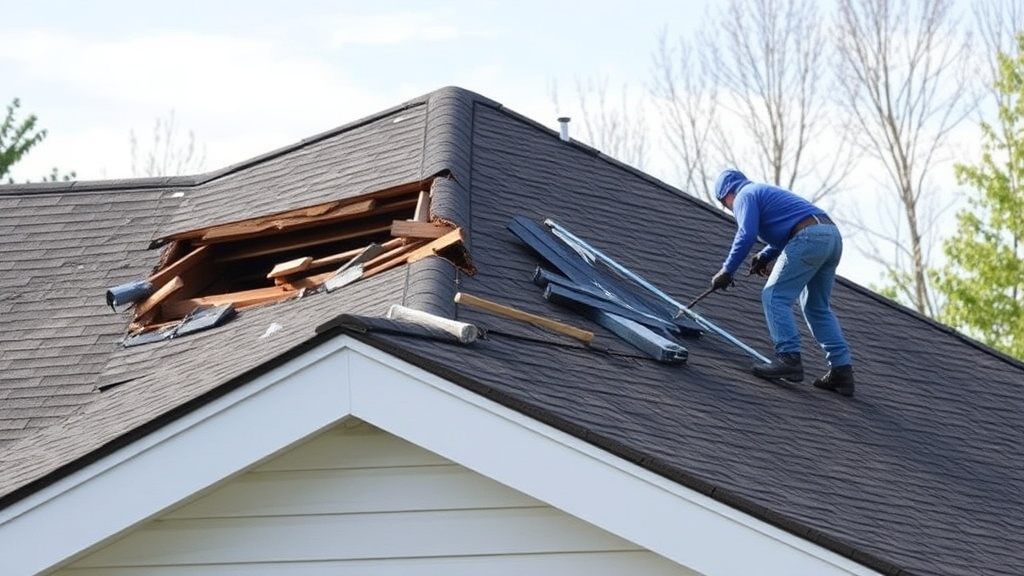
If a storm event causes immediate roof failure — active leaking, structural compromise, or large sections of missing shingles — emergency roof repair becomes a time-sensitive priority. Most insurance policies require you to take reasonable steps to prevent further damage after a loss event. That means covering exposed areas with tarps or plywood, documenting everything before repairs begin, and notifying your insurer promptly.
Waiting too long to address storm damage is one of the most expensive mistakes homeowners make. A breach that admits water for even two or three weeks can result in deck rot, mold growth in attic insulation, and interior ceiling damage that multiplies the repair cost significantly. A leak that might have been a $1,200 roof repair near me level fix becomes a $6,000 to $9,000 project once secondary damage sets in.
If you need roof leak repair quickly after a weather event, document the damage with timestamped photos before any temporary repairs are made. That photo record is your baseline evidence for the insurance claim.
What Good Documentation Actually Looks Like
The Evidence That Wins Claims
Insurance adjusters look for a direct connection between a dated weather event and the damage present on your roof. Your documentation package should include:
- Timestamped photos taken immediately after the storm, showing the roof surface, gutters, downspouts, and any soft metals with fresh dings or dents.
- A weather verification report — free services like NOAA’s storm data portal or paid options like Verisk’s weather verification tool can confirm hail size, wind speed, and storm track for your specific address and date.
- A written inspection report from a licensed roofing contractor, ideally with photo annotations identifying damage type and probable cause.
That last item is where many claims shift from denial to approval. A detailed professional inspection report that distinguishes storm-caused damage from pre-existing wear gives adjusters something they can actually process. A homeowner pointing at their roof and saying “it got hit” is much easier to dismiss.
Why Drone Inspections Change the Outcome
Traditional roof inspections require a contractor to physically walk the surface — which creates risk, limits angles, and often misses subtle damage in valleys and hard-to-reach areas. Drone technology has fundamentally changed what a thorough inspection can capture. High-resolution aerial imagery catches hail impact patterns, lifted flashing, and granule displacement across the entire roof plane in a single session, with photos that are immediately shareable with an insurance adjuster.
Hixons Roofing uses drone inspection technology as part of our post-storm assessment process. For a detailed look at how aerial inspection works and what it reveals that traditional walkovers miss, see our breakdown in Drone Roof Inspections: How Technology is Revolutionizing Roofing.
One practical note: drone imagery also provides an indisputable record of pre-storm roof condition if you have inspections done regularly — which is exactly the kind of baseline documentation that separates a smooth claim from a disputed one. Our Spring Roof Inspection Checklist for South Carolina homeowners is a good starting point for building that maintenance record.
When to Call a Roofing Contractor Before You Call Your Insurer
Many homeowners instinctively call their insurance company first after storm damage. That’s understandable, but it often puts the framing of the damage entirely in the adjuster’s hands. A roofing contractor who specializes in storm damage can walk your roof, identify damage type and likely cause, and give you an independent assessment before the adjuster arrives.
That independent assessment matters. In the Aiken and Charleston markets, we’ve seen adjusters approve claims after a contractor-provided report that they initially flagged as maintenance-only based on their own walkover. A second set of eyes — especially eyes that know the difference between a factory crease and a hail strike — changes outcomes.
Searching for roofing contractors near me or roofers near me after a storm will pull up dozens of options, but prioritize contractors who can provide a written damage assessment with photo documentation, not just a verbal quote. That report is the document that goes into your claim file.
Hixons Roofing has served homeowners across South Carolina and Georgia for years, and the pattern we see most often is simple: the homeowners who get their claims paid are the ones who documented early, got an independent inspection, and knew what they were looking at before anyone arrived to tell them otherwise.
Don’t let a denied claim be the thing that teaches you the difference between storm damage and wear. Learn it now, document your roof’s baseline condition regularly, and if a storm does hit, move fast — on documentation and on emergency roof repair before secondary damage compounds the cost.
Written by the Hixons Roofing team — experienced roofing specialists serving South Carolina and Georgia homeowners with storm damage assessments, inspections, and full roof repair and replacement services.
To schedule a professional roof inspection after storm damage, contact Hixons Roofing at hixonsroofing.com.