
Here’s something most homeowners discover at the worst possible moment: that roof insurance claim you assumed would sail through? There’s a 30% chance it gets denied or severely reduced. Not because the damage isn’t real, but because of technicalities most people never see coming until water is literally dripping through their ceiling.
The confusion around homeowners insurance roof coverage isn’t accidental. Policy language is deliberately vague, adjusters have quotas to meet, and the line between “covered storm damage” and “normal wear and tear” shifts depending on who’s interpreting it. If you’re in Aiken, Augusta, Charleston, or anywhere across South Carolina and Georgia, understanding these boundaries before disaster strikes could mean the difference between a $15,000 approved claim and a $15,000 bill you pay yourself.
Let’s cut through the industry doublespeak and reveal exactly what’s covered, what isn’t, and how to position your claim for success.
The Coverage Reality: What Actually Gets Approved on a Roof Insurance Claim
Insurance companies structure roof coverage around one deceptively simple principle: they pay for sudden, accidental damage from covered perils. Sounds straightforward until you realize how much room that leaves for interpretation.
Storm Damage: Your Best Chance for Approval
Wind, hail, and falling trees represent the holy trinity of covered roof damage. When a violent thunderstorm tears through Columbia or Charleston (as they regularly do), and you wake up to missing shingles or a tree branch through your roof deck, you’re typically looking at a covered event.
Here’s what qualifies as storm damage roof repair under most policies: wind speeds documented above 50 mph that lift or remove shingles, hail larger than one inch in diameter creating visible impact damage, falling trees or limbs that penetrate the roof structure, and debris propelled by storm winds causing direct impact damage.
The catch? You need to prove the storm caused specific, identifiable damage. “My roof started leaking after the storm” isn’t enough. Adjusters want to see dented flashing, cracked shingles with impact marks, punctured underlayment, or displaced ridge caps.
Fire, Vandalism, and Other “Named Perils”
Most homeowners policies cover a standard list of perils including fire (even from a neighbor’s property), vandalism, vehicle or aircraft impact, and weight of ice or snow. These claims typically process faster because the cause-and-effect is obvious.
What surprises people: even with these clear-cut scenarios, your roof’s age and condition still matter. If your 25-year-old roof sustains fire damage, the adjuster will depreciate the payout based on the remaining expected lifespan. You might get enough for roof repair for homes but not a full replacement.
The Denial Zone: What Homeowners Insurance Won’t Touch
This is where most people get blindsided. The exclusions in your policy aren’t highlighted or explained during the sales process, but they’re iron-clad when it’s time to file a claim.
Age-Related Depreciation: The Silent Killer of Claims
Here’s what contractors won’t tell you and insurance agents bury in footnotes: if your asphalt shingle roof is over 15-20 years old, many insurers in South Carolina and Georgia won’t provide full replacement cost coverage, even for covered perils.
Instead, they’ll apply actual cash value (ACV) depreciation. For a 20-year-old roof with a 25-year lifespan, you might only receive 20% of the replacement cost after depreciation. On a $12,000 roof replacement, that means you get $2,400 and you’re responsible for the remaining $9,600.
Some carriers in 2026 are taking this even further, moving to a sliding depreciation scale starting at year 10. Others refuse to renew policies unless you replace your roof once it hits a certain age, regardless of its condition.
Wear and Tear: The Insurer’s Favorite Rejection
Insurance explicitly excludes damage from “normal wear and tear, deterioration, or lack of maintenance.” In practice, this becomes the adjusters’ go-to reason for denying claims that probably should be covered.
Missing granules from weathering? Wear and tear. Seals that failed from years of thermal cycling? Deterioration. Small leaks that developed over time? Lack of maintenance. Even if a storm was the final straw that broke your compromised roof, insurers will argue the underlying cause was age and neglect.
This is where roof maintenance for homeowners becomes legally important, not just practically smart. If you can’t produce maintenance records showing you’ve had regular inspections and addressed minor issues, adjusters use that absence as evidence of neglect.
The Installation and Manufacturing Gray Area
Leaks caused by improper installation or defective materials typically aren’t covered by homeowners insurance. The insurer’s position? That’s a problem for the contractor or manufacturer who did the work.
The problem surfaces when damage has multiple causes. Maybe faulty flashing installation created a vulnerability, but wind-driven rain during a storm caused the leak. Who pays? Often, nobody wants to claim responsibility, leaving you stuck in the middle of finger-pointing between your insurance company, your previous roofing contractor, and possibly the manufacturer.
The Age Factor: How Old Roofs Change Everything
If there’s one factor that determines whether your roof insurance claim succeeds or fails, it’s the age of your roof. In 2026, this has become even more critical as insurers tighten underwriting standards in response to increased claim frequency from severe weather events.
The 15-Year Cliff
Most standard three-tab asphalt shingle roofs hit a coverage threshold around the 15-year mark. Architectural shingles might get you to 20 years. After that, even companies that don’t explicitly exclude coverage will depreciate payouts so severely that filing a claim barely makes financial sense.
Metal roofing and standing seam metal roofing systems typically maintain full coverage longer due to their extended lifespans, which is one reason homeowners in Summerville and Mount Pleasant are increasingly choosing metal for replacements. When you’re thinking about how much does a new roof cost, factor in not just the initial investment but how long you’ll maintain full insurance coverage.
The Inspection Requirement Nobody Mentions
Here’s something most people don’t realize until they file a claim: your insurance company can require a professional roof inspection at any time, and they’re increasingly doing so for roofs over 10 years old.
If that inspection reveals any maintenance issues, even minor ones unrelated to your claim, the insurer can deny the entire claim or non-renew your policy. Some carriers in high-risk areas like coastal Charleston and North Charleston now require inspection certifications before they’ll even write a new policy on homes with roofs over 12 years old.
Documentation That Gets Claims Approved: The Evidence Game
Filing a successful roof insurance claim isn’t about having damage. It’s about proving you have damage that meets policy criteria. Adjusters work from a presumption of denial until evidence overcomes it.
The Golden 48-Hour Window
The most important documentation happens immediately after damage occurs, ideally within 48 hours. Weather patterns change, temporary repairs alter conditions, and memories fade. Here’s what you need to capture right away.
Photograph everything from multiple angles: wide shots showing your entire roof, close-ups of specific damage, interior photos of any leaks or water damage, shots of debris or fallen tree limbs, and pictures of damaged property around your home (dented cars, damaged siding, neighbors’ damage proving storm severity).
Date and time stamp everything. Your phone does this automatically, but verify the metadata is embedded. If you’re using a separate camera, make sure the date setting is correct.
Document the weather event itself. Screenshot weather service reports showing wind speeds, hail size, and storm timing. Local news coverage of the storm strengthens your case that this was a significant weather event, not routine rain.
The Professional Inspection That Changes Everything
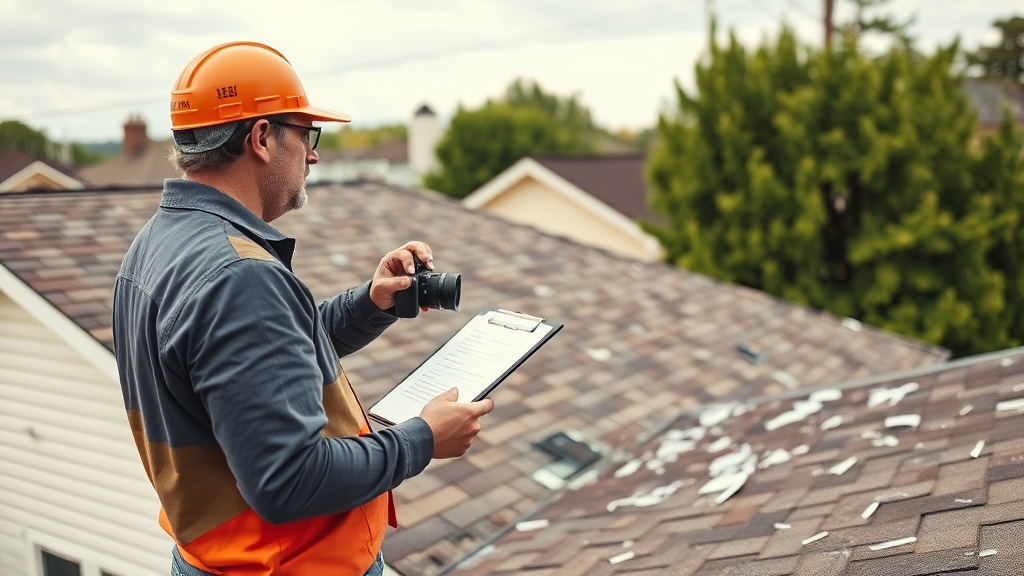
Before you even call your insurance company, get your own professional assessment. At Hixons Roofing, we’ve documented thousands of insurance claims across South Carolina and Georgia, and we know exactly what adjusters look for and what they try to dismiss.
A professional roofing contractor’s assessment serves multiple purposes. It provides an independent damage evaluation before the insurance company frames the narrative. It establishes specific damage details that adjusters can’t easily dispute. It gives you repair cost estimates to compare against the adjuster’s figures. Most importantly, it shows you’re serious about the claim, not fishing for a free roof replacement.
Don’t wait weeks to get this inspection. The insurance company will send their adjuster within days, and you want your documentation ready before they arrive. Having a contractor present during the adjuster’s inspection is even better, creating real-time accountability for what gets noted and what gets overlooked.
The Maintenance Record You Wish You’d Kept
Insurers love to deny claims based on “lack of maintenance,” but they rarely define what adequate maintenance looks like. Any records you have showing regular inspections, minor repairs, or preventive work strengthen your position dramatically.
Going forward, keep receipts for gutter cleaning, any roof repairs, inspection reports (even if no work was needed), and photographs showing your roof’s condition before the damage. Create a simple digital folder for each property you own and update it annually.
Working With Adjusters: The Negotiation Most People Lose
The adjuster who shows up at your door seems friendly and helpful. They might genuinely be a decent person. But never forget: their job is to minimize payout, and they’re very good at it.
What Adjusters Look For (And Miss on Purpose)
Insurance adjusters work from scripts and checklists designed to find reasons to deny or reduce claims. They’ll focus hard on any pre-existing damage, age-related wear, or maintenance issues while minimizing or ignoring legitimate storm damage.
Common adjuster tactics include attributing obvious impact damage to “weathering,” claiming damage visible from the ground didn’t penetrate to the underlayment (so it doesn’t warrant replacement), measuring hail damage in ways that conveniently fall below the coverage threshold, and taking photos that make damage look less severe than it actually is.
This is why having your own contractor present matters. When an adjuster from Augusta says those circular marks on your shingles are just “normal degradation,” having someone from Hixons Roofing there to point out the clear hail impact patterns and show matching damage to flashing and vents makes it much harder to lowball the claim.
The Initial Denial Isn’t Final
Here’s something that would shock most homeowners: a significant percentage of initially denied claims get approved on appeal. Insurance companies count on you accepting the first answer.
If your claim is denied or the payout seems absurdly low, you have options. Request a detailed explanation in writing of what was denied and why. Ask for a second inspection from a different adjuster. Submit additional documentation that addresses the denial reasons. Escalate to a supervisor or the company’s appeals process.
For significant damage where the initial offer doesn’t come close to covering actual repair costs, consider hiring a public adjuster. They work for you, not the insurance company, and typically recover enough additional money to more than cover their fee (usually 10-15% of the claim payout).
Storm Protocols: Your First 24 Hours After Damage
When a severe storm hits Beech Island or anywhere in the region, the actions you take in the first 24 hours directly impact whether your claim succeeds or fails. Here’s the exact sequence that maximizes your chances.
Emergency Mitigation (That Won’t Void Coverage)
You have a duty to prevent further damage after a storm, and failure to do so can actually void your coverage for subsequent damage. But you also can’t make repairs that destroy evidence of the original damage.
The solution: temporary protective measures only. Cover holes or damaged areas with tarps secured with sandbags (not nails through the roof). Place buckets under active leaks and remove valuables from affected areas. Board up any broken skylights or damaged areas accessible to weather or animals.
Document everything before you cover it. Take extensive photos, then take more photos showing your temporary repairs. Keep all receipts for materials. These emergency mitigation costs are typically reimbursable as part of your claim.
The Notification Timeline
Most policies require “prompt” notification of damage, which typically means within a few days. Some policies specify exact timeframes. Don’t wait weeks to report damage hoping it will resolve itself. That delay gives insurers ammunition to deny the claim.
However, you don’t need to have everything figured out before calling. The initial report can be basic: “We had damage from the storm on [date] and need to file a claim.” That starts your claim clock while giving you time to gather proper documentation.
Getting Expert Help: When to Call Hixons Roofing
The smartest time to call a professional roofing contractor isn’t after your claim is denied. It’s immediately after you discover damage, before you even file.
Hixons Roofing has worked with hundreds of homeowners throughout South Carolina and Georgia on hail damage roof repair and storm damage roof repair claims. We know what adjusters look for, how to document damage properly, and what details make the difference between a denied claim and an approved one.
We provide free storm damage inspections that give you a clear picture of what you’re dealing with before you commit to filing a claim. Sometimes the damage doesn’t meet your deductible, and filing would be pointless. Other times, damage that seems minor actually qualifies for a full roof replacement once properly documented.
Whether you need roof repair for homes or a complete replacement, whether you’re considering traditional asphalt shingles or upgrading to metal roofing or even solar shingles installation, we’ll walk you through the insurance process honestly. We don’t manufacture damage to inflate claims, and we don’t pressure you to file when it doesn’t make sense. We just tell you the truth about what we see and what your options are.
Beyond Insurance: When You’re Paying Out of Pocket
If your claim gets denied or the payout doesn’t cover costs, you’re not without options. We work with homeowners to find solutions that fit real-world budgets, from financing options to phased repair approaches that address critical damage first while planning for complete replacement later.
The worst decision is ignoring roof damage because insurance didn’t come through. A small leak today becomes structural damage tomorrow, and that definitely isn’t covered by insurance.
The Bottom Line: Knowledge Before Crisis
The time to understand your homeowners insurance roof coverage isn’t when you’re staring at storm damage or arguing with an adjuster. It’s right now, while you can still review your policy, document your roof’s condition, and make informed decisions about maintenance and upgrades.
Pull out your policy and look for these critical details: the exact definition of covered perils, depreciation schedules based on roof age, your deductible (wind/hail deductibles are often higher than standard), any exclusions specific to roofs or weather damage, and requirements for maintenance or inspections.
If your roof is approaching 15 years old, start planning for replacement before you lose full coverage. If you’re in high-wind zones near the coast or areas prone to hail damage, consider upgrades to impact-resistant materials that might qualify for insurance discounts.
Most importantly, establish a relationship with a trusted roofing contractor before disaster strikes. When severe weather hits and every homeowner in Mount Pleasant or North Charleston is calling for emergency inspections, you’ll get faster response and better service from a company you’ve already worked with.
At Hixons Roofing, we’re not just here for insurance claims. We’re here to help you maintain, repair, and when necessary, replace your roof with quality workmanship that stands up to whatever South Carolina and Georgia weather throws at it. Whether you’re dealing with storm damage today or planning ahead for tomorrow, we’re ready to provide the honest expertise you deserve.
Contact Hixons Roofing for a comprehensive roof inspection and clear guidance on your insurance coverage options. We serve Aiken, Augusta, Charleston, Columbia, and communities throughout the region with the same straightforward approach: assess the damage honestly, document it thoroughly, and fight for the coverage you’re entitled to receive.