
Your neighbor just spent $2,400 on gutter guards and swears they’re the best investment he’s made in years. Your cousin spent the same amount and regrets every penny. So which one’s right?
The truth is more nuanced than most gutter guard companies want you to know. In the CSRA, where towering loblolly pines drop needles year-round and oak trees shed leaves like confetti every fall, the gutter guard question isn’t just about whether they work—it’s about whether they work for your specific situation.
Let’s break down the real math, tackle the problems unique to Augusta and Aiken homes, and figure out if gutter guards make financial sense for your property.
The CSRA Gutter Problem: Why We’re Different
If you lived in Arizona, your gutters might need cleaning once a year. Lucky you—but that’s not your reality.
The Central Savannah River Area presents a perfect storm for clogged gutters. Our climate creates three distinct challenges that homeowners in other regions simply don’t face with the same intensity.
Pine Needles: The Silent Gutter Killer
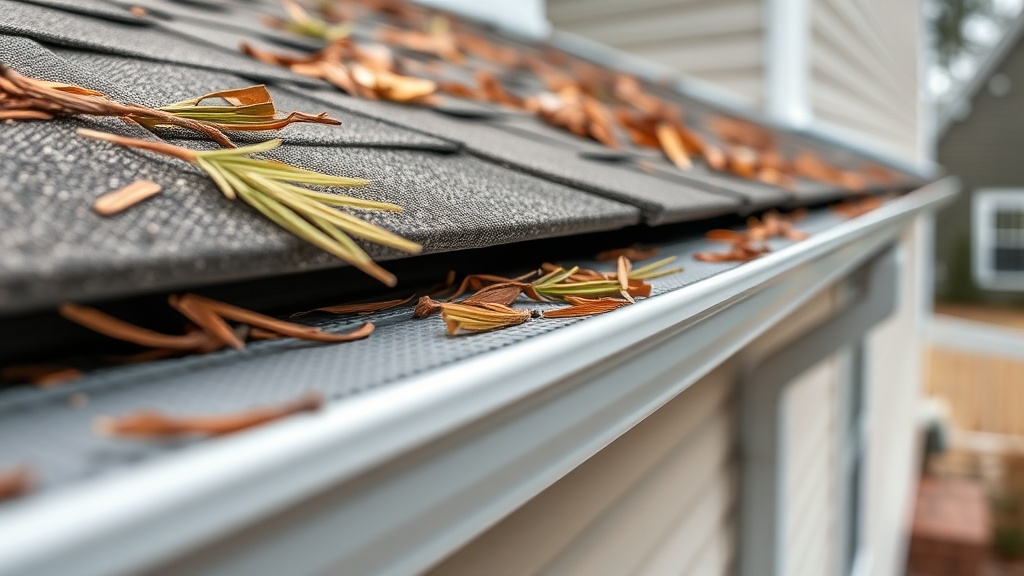
Those picturesque longleaf and loblolly pines blanketing CSRA properties? They’re dropping thousands of needles every single day. Unlike leaves that sit on top of gutter screens, pine needles are narrow enough to slip through many gutter guard designs, forming dense mats that trap water and create ice dams in our occasional winter freezes.
Here’s what most people don’t realize: pine needles don’t just clog gutters—they acidify as they decompose, accelerating rust in metal gutters and degrading standard aluminum guards within 5-7 years instead of the advertised 20.
Oak Trees and the Fall Deluge
Come October and November, CSRA oak trees drop leaves so aggressively that even the best gutter guards can’t keep up. We’re talking 3-4 inches of leaf accumulation on your roof in a matter of weeks. Those leaves eventually wash into gutters, and while guards prevent some from entering, they create a dam at the gutter opening that backs water onto your roof—exactly what you’re trying to prevent.
Our Heavy Rain Events
When CSRA storms hit, they don’t mess around. We regularly see 2-3 inch downpours in under an hour. Most gutter guards work great during gentle rain, but during heavy rainfall, water can overshoot even micro-mesh systems, defeating their entire purpose. If your home has roof repair for homes issues from water damage, inadequate gutters during storms could be the culprit.
The Real Cost Breakdown: Numbers That Matter
Let’s talk money. Not theoretical savings from a sales brochure, but actual costs you’ll face in 2026 and beyond.
Professional Gutter Guard Installation Costs
For an average 2,000 square foot home in Augusta or Aiken with 150-200 linear feet of gutters, here’s what you’re looking at:
- Basic screen guards: $3-$6 per linear foot ($450-$1,200 installed)
- Micro-mesh systems like LeafBlaster: $15-$25 per linear foot ($2,250-$5,000 installed)
- Premium reverse-curve systems: $20-$35 per linear foot ($3,000-$7,000 installed)
At Hixons Roofing, we typically see homeowners investing between $2,500-$4,000 for quality micro-mesh gutter guard installation that actually holds up to CSRA conditions. Anything significantly cheaper usually means corners were cut on materials or installation quality.
The Ongoing Cleaning Alternative
Without guards, you’re looking at professional gutter cleaning 3-4 times per year in the CSRA—more if you’re surrounded by pine trees. The going rate is $125-$200 per cleaning, depending on your home’s size and height. That’s $500-$800 annually.
Over 10 years, you’re spending $5,000-$8,000 on cleaning. Over 20 years? $10,000-$16,000. Suddenly that $3,500 gutter guard investment looks different, doesn’t it?
The Hidden Costs Nobody Mentions
Here’s the insider knowledge: gutter guards aren’t maintenance-free. They need annual inspection and occasional cleaning—usually $100-$150 per visit because it’s more complex than standard cleaning. Some systems trap debris on top, requiring you to blow off or brush away leaves and needles.
Also, if you ever need roof repair for homes or gutter replacement, removing and reinstalling guards adds $500-$1,200 to your project cost. Many homeowners forget to factor this in.
LeafBlaster and Micro-Mesh Systems: Do They Actually Work?
LeafBlaster has become practically synonymous with gutter protection in the Southeast, and for good reason—it’s one of the few systems designed specifically for our climate challenges.
The Micro-Mesh Advantage
Unlike cheaper screen guards, LeafBlaster uses a surgical-grade stainless steel micro-mesh (275 microns for the technically curious) that blocks debris while handling high water volumes. In CSRA’s heavy rains, this matters enormously.
The mesh is fine enough to keep out pine needles—the Achilles heel of most gutter protection. It also prevents the shingle grit accumulation that clogs standard screens, especially critical if you have asphalt shingle roofing that’s shedding granules.
Where LeafBlaster Falls Short
Even premium systems have limitations. During intense fall leaf drop, you’ll still see accumulation on top of the guards. While this doesn’t clog your gutters, it does require occasional clearing—usually 1-2 times per year versus 3-4 without guards.
And here’s something installers won’t always tell you: micro-mesh systems require proper roof pitch and overhang. If your roof edge doesn’t align correctly with the guard, water can still overshoot during heavy rain. Professional installation matters enormously here.
The DIY vs. Professional Installation Question
Big box stores sell DIY gutter guards for $2-$4 per foot. They’re tempting, but there’s a reason professionals charge more. Proper installation requires:
- Precise alignment with your shingle drip edge
- Correct angle to manage water flow without overshooting
- Secure fastening that won’t void your roof warranty
- Understanding of how your specific roof design affects water volume
We’ve seen dozens of homeowners at Hixons Roofing spend $800 on DIY guards, struggle through installation, then pay us another $2,500 to remove them and install a proper system. Save yourself the headache.
When Gutter Guards Make Perfect Sense
Gutter guards aren’t right for everyone, but they’re absolutely worth it in specific situations common throughout the CSRA.
You Have Pine Trees Within 50 Feet
If pine trees surround your Aiken or North Augusta home, you already know the pine needle nightmare. Quality micro-mesh guards will cut your gutter maintenance by 60-70%, even if they don’t eliminate it entirely. The ROI here is typically 4-6 years.
You Have a Two-Story Home or Complex Roofline
Cleaning second-story gutters is expensive and dangerous. If you’re paying $250+ per cleaning due to height or roof complexity, guards pay for themselves in 5-7 years. The safety factor alone makes them worthwhile—ladder falls cause 500,000+ injuries annually.
You’re Planning Long-Term
Planning to stay in your Columbia or Mount Pleasant home for 10+ years? The math almost always favors guards. Even with occasional maintenance, you’ll save thousands versus regular cleaning, plus you’ll avoid the water damage that costs an average of $3,200 to repair.
You’re Combining with Other Roof Work
Installing guards during gutter installation and roofing projects or metal roofing for homes upgrades reduces labor costs significantly. If you’re already having work done, adding guards typically costs 20-30% less than a standalone project.
When You Should Skip Gutter Guards
Honesty time: there are situations where guards don’t make financial sense, and you deserve to know them.
You Have Minimal Tree Coverage
If your home has few nearby trees and your gutters stay relatively clean, you’re looking at maybe 1-2 cleanings per year. At $150 per cleaning, you’d need 12-15 years to break even on a $3,000 guard investment. Your money might be better spent elsewhere.
Your Roof Needs Replacement Soon
Planning a roof replacement in the next 2-3 years? Wait. You’ll have to remove and reinstall guards, adding unnecessary cost. Better to tackle gutter guards when you do your metal roofing for homes or shingle replacement project.
You’re on a Tight Budget
If spending $3,000-$4,000 strains your finances, don’t do it. A $200 gutter cleaning twice a year is more manageable than a large upfront cost, and you won’t risk choosing a cheap, ineffective system just to save money.
You Have Low-Slope or Flat Roof Sections
Gutter guards work best on standard-pitched roofs. If you have flat or low-slope sections, water doesn’t flow into gutters with enough force to self-clean the guards, creating debris buildup that defeats their purpose.
Making the Right Choice for Your CSRA Home
The gutter guard question ultimately comes down to your specific situation, not a one-size-fits-all answer.
Start by honestly assessing your current gutter maintenance needs. Walk your property and count the trees within falling distance of your roofline. Check your gutters right now—are they clogged? How often have you cleaned them in the past year? Your past behavior predicts future costs better than any sales pitch.
Next, consider your timeline. If you’re staying put for 7+ years, guards make increasingly compelling financial sense. If you might move in 2-3 years, the investment won’t pay off for you (though it might add appeal to future buyers).
Get multiple quotes, but focus on quality over price. A $1,200 system that fails in three years costs more than a $3,500 system lasting 20 years. Ask contractors specifically about their experience with CSRA’s pine needle challenges. If they don’t mention it, they’re not the right installer for your home.
Questions to Ask Before You Buy
When you’re getting quotes for gutter guard installation, ask these critical questions:
- How does this system handle pine needles specifically?
- What’s the warranty, and does it cover both materials and labor?
- Will installation affect my roof warranty?
- How often will the guards need maintenance, and what does that cost?
- Can you provide references from CSRA homeowners who’ve had your system for 5+ years?
The answers matter more than the sales pitch.
Bottom Line: The CSRA Verdict on Gutter Guards
For most CSRA homeowners dealing with pine trees, oak trees, and our aggressive weather patterns, quality gutter guards are worth the investment—if you choose the right system and plan to stay in your home long enough to realize the savings.
Systems like LeafBlaster deliver the best performance for our region’s challenges, typically paying for themselves in 5-8 years through reduced cleaning costs and prevented water damage. The safety benefits and peace of mind during storm season are bonuses you can’t put a price tag on.
But cheaper alternatives rarely deliver value in CSRA conditions. And if your situation doesn’t fit the profile—minimal tree coverage, short-term occupancy, or pending roof work—waiting makes more sense than rushing into an investment you won’t fully benefit from.
At Hixons Roofing, we’ve installed gutter protection systems across Augusta, Aiken, and throughout the CSRA for over a decade. We’ve seen what works in real-world conditions and what’s just marketing hype. If you’re trying to decide whether guards make sense for your specific home, we’re happy to give you an honest assessment—even if it means recommending you wait or skip them entirely.
Because the best investment is the one that actually solves your problem, not just the one someone’s trying to sell you. Ready to get a straight answer about your gutters? Contact Hixons Roofing for a no-pressure evaluation of your home’s needs.